
Field cricket
Gryllus campestris
Description
How to identify
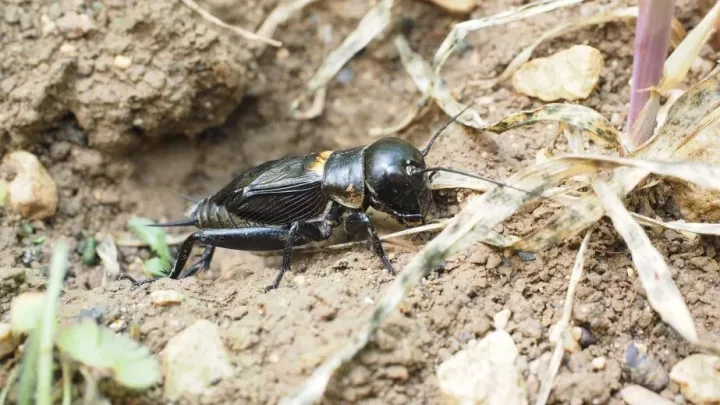
The field cricket (Gryllus campestris) is a member of the Gryllidae family. It is a robust, black-colored insect reaching up to 26–30 mm in length with a shiny appearance.
These insects are recognizable by their large, powerful heads and strong mandibles designed for chewing through plant stems. Males are famous for their loud, distinctive chirping.
They are primarily subterranean dwellers, digging deep, vertical burrows in the soil. These burrows serve as both a home and a refuge from environmental stressors and predators.
Nymphs look like smaller, wingless versions of the adults. They undergo incomplete metamorphosis, growing in size through several molting stages until they reach maturity.
They prefer warm, open, and sun-exposed habitats, such as grassy fields, meadows, and agricultural land with well-packed soil, making them a common sight in rural landscapes.
What it damages
Field crickets are generalist feeders with strong chewing mouthparts. They cause significant damage by feeding on the tender stems and leaves of various young plants.
Crops frequently impacted include cereal seedlings, various vegetable crops like tomatoes, cabbage, and eggplants, as well as sunflowers and sugar beets during their emergence stage.
The insects often clip the stems of young plants at ground level, which leads to the collapse and death of the seedling, often resulting in sparse or patchy crop stands.
Beyond the seedling stage, crickets can also feed on flowers, developing seeds, and fruits, which directly reduces the overall harvest yield and economic value of the produce.
Damage is typically most severe near the edges of fields adjacent to wild, uncultivated areas, where cricket populations are often highest and migration into the crops occurs.
When it appears
The life cycle of the field cricket is typically annual. They overwinter as late-stage nymphs in deep underground burrows, emerging once soil temperatures rise in the spring.
Adults generally reach their peak activity and reproductive phase during the early summer months. This corresponds with the critical growth period for many vegetable and cereal crops.
Mating and egg-laying occur throughout the summer. Eggs are deposited directly into the soil, where they hatch and begin the development process for the next generation.
Environmental factors, particularly temperature and humidity, play a major role in their activity levels. Dry and warm weather promotes faster development and higher activity.
By late summer, the population grows as new nymphs emerge, preparing to store energy and seek out suitable deep burrows to survive the coming winter months.
Signs of infestation
The presence of 1–2 cm wide holes in the soil surface, leading into deep vertical tunnels, is a primary indicator of a field cricket infestation in the vicinity.
One of the most obvious signs is the appearance of clipped, fallen seedlings on the ground, particularly in the morning after the crickets have been active at night.
A loud, rhythmical chirping sound emanating from the fields during dusk and night is a clear sign that a significant population of adult crickets is present.
Dark frass (droppings) near the entrance of the burrows, combined with visible remains of plant tissue, confirms the feeding activity of these insects in the area.
Unexpected thinning of crop rows, where plants appear to have been cut off cleanly at the base, is a classic symptom of nocturnal cricket feeding damage.
Control measures
Cultural control, particularly deep autumn plowing, is the most effective method to disrupt their life cycle and destroy the overwintering burrows in the soil.
Maintaining clean fields by removing weeds and plant debris is essential, as these areas provide the cover and food necessary for cricket populations to thrive.
The use of toxic baits, consisting of a mix of grains and appropriate insecticides, can be placed near burrow entrances to effectively control local infestations.
Monitoring using light traps can help determine the density of the adult population, allowing farmers to apply targeted insecticide treatments only when thresholds are exceeded.
- Deep autumn tillage to destroy burrows.
- Strict weed management to reduce shelter.
- Use of insecticide-treated seeds to protect young sprouts.
- Application of bait stations in infested areas.
- Irrigation management to discourage favorable soil conditions for nesting.
Taxonomy
- Latin name
- Gryllus campestris
- Order
- Orthoptera (locusts)
- Family
- Gryllidae
- EPPO code
- ACHTCA
Discussion
No discussions yet — be the first.