
Two-spotted cricket
Gryllus bimaculatus
Description
How to identify
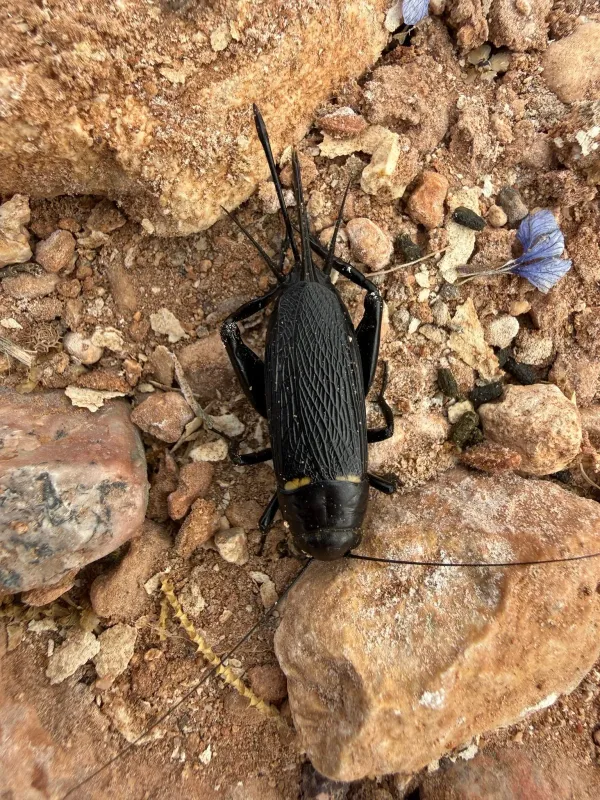
The two-spotted cricket (Gryllus bimaculatus) is a member of the Gryllidae family within the order Orthoptera.
These insects are typically robust, reaching 20–25 mm in length, and possess a shiny black or dark brown exoskeleton.
The name derives from two distinct yellow spots located at the base of the forewings, which serve as a primary identification feature for this species.
They feature powerful chewing mouthparts, long filiform antennae, and elongated hind legs adapted for jumping and quick movement.
As insects with incomplete metamorphosis, they progress through egg, nymph, and adult stages, thriving in warm and humid environments.
What it damages
This species is a generalist feeder (polyphagous) that can cause significant economic damage in agricultural and horticultural settings.
They are particularly destructive in greenhouses, where they target young seedlings, tender leaves, and succulent stems of various crops.
Feeding often occurs at the base of the plant, where adults and nymphs sever the stems, resulting in the rapid death of young seedlings.
Besides structural damage to seedlings, they consume large areas of foliage, which weakens plants and inhibits their growth potential.
Large populations can devastate entire greenhouse beds in a very short time, particularly when young, vulnerable transplants are present.
When it appears
In warm climates, the two-spotted cricket remains active throughout the warmer months, with peaks in population occurring during mid-to-late summer.
Within controlled indoor environments like greenhouses, they can maintain a year-round life cycle if temperatures remain consistently above 20°C.
They are nocturnal insects, spending daylight hours hidden in soil crevices, beneath pots, or within dark, moist debris.
Their developmental cycle is highly dependent on ambient temperature, which dictates how quickly eggs hatch and nymphs reach maturity.
Activity levels significantly decrease during cooler periods, causing the crickets to seek sheltered areas where they can survive or continue breeding if conditions permit.
Signs of infestation
The primary symptom of an infestation is the sudden appearance of severed seedlings and ragged, irregularly chewed leaf margins.
The distinctive, repetitive chirping sound made by males, especially at night, is a reliable auditory indicator of their presence.
One may find small, well-defined burrows in the soil near the base of damaged plants, serving as refuge during the day.
Droppings left on the soil surface near the affected plants are another sign indicating active feeding sites.
Plants often exhibit wilting or sudden collapse due to the damage inflicted on their stem tissues near the soil level.
Control measures
Sanitation is the first line of defense; removing debris, wood, and organic waste eliminates hiding spots for crickets in greenhouses.
Regular cultivation and deep tillage of the soil can help destroy egg clusters and disturb nymph development, reducing the overall population.
Light traps are highly effective for monitoring and capturing adults during the night, as the insects are naturally attracted to light sources.
Physical exclusion, such as fine-mesh screening on greenhouse vents, helps prevent adults from entering the growing space.
In cases of severe infestation, targeted chemical applications according to local regulations may be necessary to protect high-value greenhouse crops.
Taxonomy
- Latin name
- Gryllus bimaculatus
- Order
- Orthoptera (locusts)
- Family
- Gryllidae
- EPPO code
- ACHTBI
Discussion
No discussions yet — be the first.