
House cricket
Gryllodes
Description
How to identify
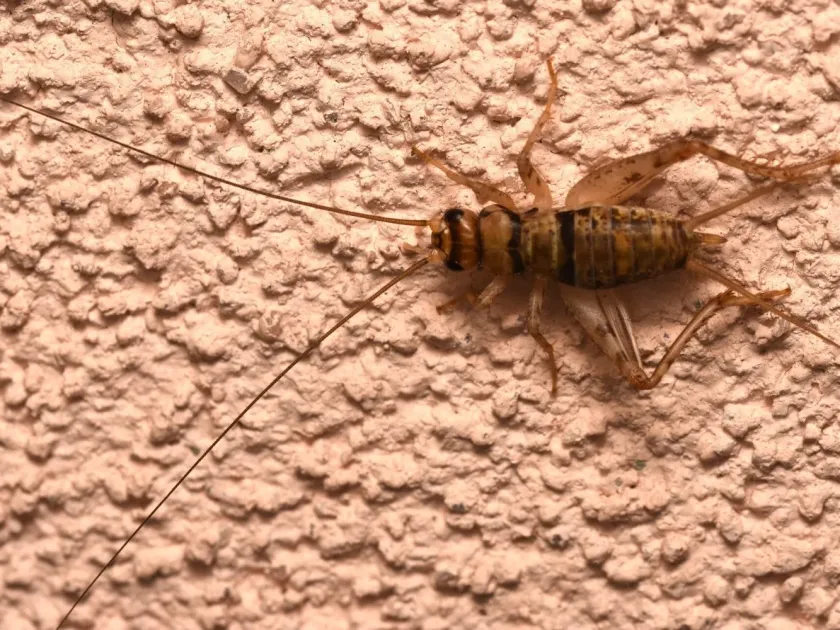
The house cricket (Gryllodes sigillatus) belongs to the order Orthoptera, family Gryllidae. Adults reach 15–20 mm in length and have a yellowish-brown color.
They are characterized by very long, thread-like antennae and well-developed hind legs adapted for jumping, although they prefer walking.
While they have wings, they rarely fly, favoring crawling through plant debris or burrowing into the soil for shelter.
Females possess a long ovipositor, which they use to insert eggs into moist soil or the stems of tender plants during the breeding season.
The life cycle consists of eggs, several nymphal stages, and adults, with development rates heavily influenced by ambient temperature and humidity.
What it damages
As opportunistic polyphagous insects, house crickets pose a significant threat to various greenhouse and ornamental plants.
They feed primarily on seedlings, severing stems at the base or devouring tender leaves, which often results in the immediate death of young plants.
Fruits are also subject to damage, as crickets chew deep holes into tomatoes or peppers, rendering them unmarketable and susceptible to rot.
Because they feed at night, the cumulative damage to a crop can become severe before the infestation is even noticed by the grower.
Their droppings and general presence contaminate the growing environment, creating conditions that favor the spread of fungal pathogens.
Signs of infestation
The primary audible sign of a cricket infestation is the high-pitched chirping sound produced by males during the night.
Visual inspection often reveals irregular, ragged holes in foliage and seedlings that appear to have been cut down overnight.
Small burrows or tunnel entrances in the soil surface near plant roots are classic indicators of a cricket nesting site.
Using a flashlight at night can quickly reveal the crickets as they move across the soil or climb onto plant stems to feed.
Small black, grain-like fecal pellets found scattered around the base of plants are tell-tale signs of their ongoing feeding activity.
Control measures
Sanitation is the first line of defense: remove all plant debris, weeds, and hiding spots from the greenhouse to limit their habitat.
Soil disinfection before planting is a recommended practice to eliminate eggs and nymphs that might be present in the substrate.
Sticky traps and bait stations treated with contact insecticides are highly effective at reducing the population density in small areas.
For larger infestations, chemical control using approved insecticides may be necessary, ensuring direct application to their harborages.
Biological control methods, such as the use of entomopathogenic nematodes applied to the soil, provide an effective and eco-friendly solution.
Taxonomy
- Latin name
- Gryllodes
- Order
- Orthoptera (locusts)
- Family
- Gryllidae
- EPPO code
- GRYDSP
Discussion
No discussions yet — be the first.