

Pear psylla
Cacopsylla pyri
Description
How to identify
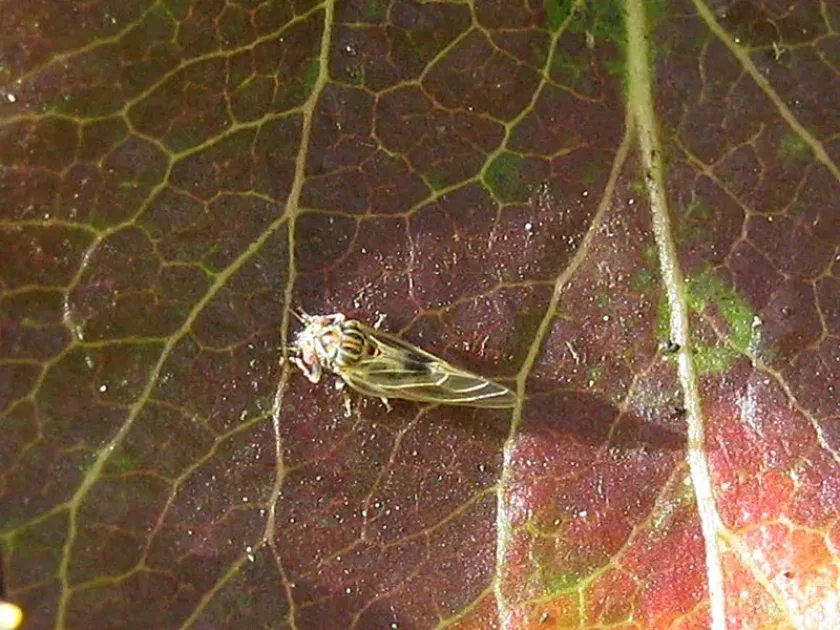
The pear psylla (Cacopsylla pyri) is a small insect belonging to the family Psyllidae, commonly known as jumping plant lice. Adult insects are approximately 3 mm long and resemble miniature cicadas with translucent wings.
Their coloration varies significantly with the season, transitioning from light green or yellow in the summer to dark brown or black in overwintering generations. They possess powerful hind legs designed for jumping.
The nymphs go through five developmental stages, progressively increasing in size. They are flattened and often covered in a sticky substance known as honeydew, which they secrete while feeding on the plant sap.
Eggs are elongated and typically yellow to orange. Females lay them in chains or clusters on the buds, leaf margins, and fruit stalks, anchoring them firmly to the plant tissue.
The life cycle is highly temperature-dependent. Depending on the geographical region and climate, Cacopsylla pyri can complete multiple generations per year, often up to five in warm southern climates.
What it damages
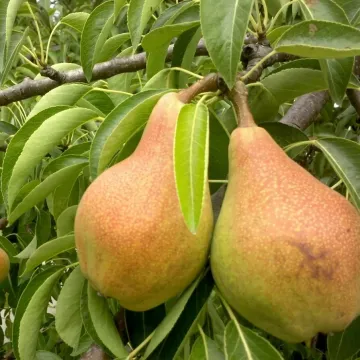
The pear psylla is primarily a pest of the common pear tree (Pyrus communis). While it can occasionally be found on apple trees or other rosaceous plants, the economic impact is most severe on commercial and backyard pear crops.
Both adults and nymphs use their piercing-sucking mouthparts to feed on plant sap. This process saps the tree's vitality and injects toxins that disrupt normal physiological processes and development.
Infested leaves become curled, yellowed, and often drop prematurely. The growth of new shoots is severely stunted, and the internodes become shortened, impacting the tree's ability to set fruit buds for the following year.
Fruit quality is significantly degraded. Infested pears are often deformed, undersized, and marked by the sticky honeydew secreted by the nymphs, making them unmarketable for fresh consumption.
The honeydew provides an ideal substrate for the growth of sooty mold fungus. This black fungal coating covers leaves and fruit, reducing photosynthesis and weakening the overall health of the tree.
When it appears
Adults overwinter in protected areas, such as bark crevices, leaf litter, or debris at the base of the trees. Activity typically begins in late winter or early spring as temperatures rise above 5°C.
Early spring is the most critical time for control, as adults migrate to buds to lay eggs. Synchronizing control efforts with the phenological development of the pear tree is essential for success.
Summer generations overlap, leading to a constant presence of all life stages throughout the growing season. Warm, dry weather is particularly favorable for the rapid proliferation of the population.
As autumn approaches, the winter generation of adults begins to move towards hibernation sites. These individuals are generally more resilient to environmental stress and chemical applications than summer generations.
Ongoing monitoring throughout the season is necessary to detect population spikes and intervene before damage reaches an economic threshold that threatens the harvest.
Signs of infestation
The most visible symptom is the presence of sticky honeydew on foliage, branches, and fruits. This substance is highly attractive to ants and wasps, which are often indicators of an active psylla infestation.
Careful inspection of the leaf undersides and shoot tips will reveal the flattened, wax-coated nymphs. They often aggregate in the axils of leaves, shielded by their own secretions.
The appearance of a black, sooty mold coating on leaves and bark is a clear sign of chronic infestation and high population density, indicating that the tree has been stressed for some time.
Distorted, curled shoot growth is a classic indicator. If the shoots seem stunted or the leaves appear brittle and discolored, it is highly likely that psylla nymphs are actively feeding in the area.
If you shake a branch and observe small insects jumping into the air, this is a definitive confirmation of a pear psylla presence that requires immediate management attention.
Control measures
Integrated Pest Management (IPM) is the most effective approach. Over-reliance on insecticides can destroy natural predators such as lacewings and anthocorid bugs, which are crucial for maintaining balance in the orchard.
Cultural practices are fundamental: regular pruning to open the canopy, thinning of water sprouts, and scraping loose bark in winter can significantly reduce overwintering populations. Avoiding excessive nitrogen fertilizer helps keep growth manageable and less attractive to the pest.
Chemical control should be targeted during the early season and at specific stages of nymphal development. Utilizing selective insecticides ensures that natural enemies are preserved whenever possible.
Rotating chemical classes is vital to prevent the development of resistance within the psylla population. Always apply products thoroughly to ensure coverage of the leaf undersides.
- Promote natural predators: conserve beneficial insects in the orchard.
- Use dormant oils: effective in reducing overwintering adult populations.
- Monitor: use yellow sticky traps to track adult flight activity.
- Selective insecticides: apply according to economic thresholds and timing.
In brief
3
Damages crops
Content graph
Damages crops · 3
Reference
Connections · Pear psylla
Most often together:
Marketplace
Products · 8




Biology
Taxonomy
- Latin name
- Cacopsylla pyri
- Order
- Hemiptera (bugs, aphids, leafhoppers)
- Family
- Psyllidae
- EPPO code
- PSYLPI
Community
Discussion
No discussions yet — be the first.