
Acacia psyllid
Acizzia jamatonica
Description
How to identify
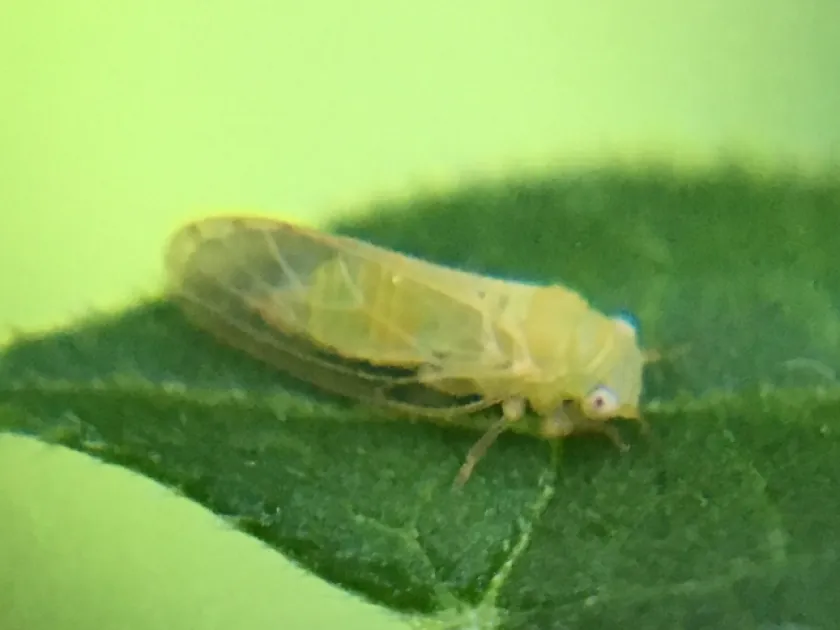
The Acacia psyllid (Acizzia jamatonica) is a small hemipteran insect belonging to the Psyllidae family. Adult specimens typically measure between 2 to 3 mm in length, making them difficult to spot without close inspection.
The insects vary in color from pale green to brownish, which acts as effective camouflage on the host plant. They possess clear, transparent wings that are held in a roof-like position over their abdomen when at rest.
Nymphs are the immature life stage, characterized by a flatter body shape. They are often found in clusters on the underside of leaves, surrounded by waxy secretions and honeydew.
Originally from Asia, this species has become an invasive pest in many parts of the world, particularly within urban landscapes where the Albizia julibrissin tree is commonly planted.
The rapid life cycle of this psyllid allows it to build up large populations in a relatively short period, often overwhelming the host tree if left unmonitored during the growing season.
What it damages
The primary host plant for this pest is the Persian silk tree (Albizia julibrissin). The insects feed exclusively on the sap of these trees, which can lead to significant physiological stress.
Feeding damage manifests as curled, stunted, or yellowing leaves. In severe cases, premature leaf drop occurs, which impacts the tree's ability to undergo photosynthesis and store energy for the winter.
Large amounts of honeydew produced by the psyllids cover the foliage and branches. This substance provides a medium for the growth of sooty mold, which appears as a thick black coating.
The aesthetic value of the trees is severely diminished by the presence of sticky honeydew and black sooty mold. This makes the affected trees undesirable for decorative garden or park settings.
Repeated yearly infestations can weaken the tree's overall structure and vitality, making it more susceptible to secondary pathogens and environmental stressors.
When it appears
The life cycle of the Acacia psyllid is synchronized with the growth of its host tree. Adults begin feeding and laying eggs as soon as the buds burst in the early spring.
Summer is the period of peak activity. Warmer temperatures accelerate the insect's development, allowing for multiple generations to occur between June and August in most temperate climates.
As autumn approaches and temperatures drop, the rate of reproduction slows down significantly. The insects begin to look for overwintering sites, often settling in bark crevices or protected areas.
In regions with mild winters, the insect may remain active for longer periods. Monitoring is essential from the very first signs of spring growth to prevent large population explosions.
The number of generations per year depends heavily on local climate conditions, with warmer regions seeing more consistent pressure from this pest throughout the entire season.
Signs of infestation
Early signs of an infestation include the curling of young, tender leaves. Upon closer inspection, one may notice the tiny, jumping adults or their nymphs on the undersides of the foliage.
Sticky honeydew on the leaves and branches is a primary indicator of a psyllid presence. This substance is often highly visible and can even drip onto sidewalks or objects under the tree.
Sooty mold growth, which looks like a black, dusty layer on the leaves, is a secondary symptom caused by the buildup of honeydew over time.
The presence of white, cotton-like waxy filaments on twigs or leaves indicates where nymphs are developing and protecting themselves from the elements.
Increased ant activity on the tree is also a common sign, as ants are attracted to the sweet honeydew secreted by the psyllids.
Control measures
Chemical control involving systemic insecticides is the most effective approach for large or heavily infested trees. Products containing acetamiprid or thiamethoxam are often recommended for their ability to be absorbed by the plant.
Application should be timed to coincide with the hatching of nymphs, as they are most vulnerable at this stage of development. Proper coverage of the entire canopy is crucial for success.
Biological control methods, such as encouraging natural predators like ladybirds (coccinellids) and lacewings, can help manage populations in an integrated pest management (IPM) framework.
Good cultural practices, including consistent watering and proper tree nutrition, help maintain the host tree's natural defenses, allowing it to better withstand psyllid damage.
- Use systemic insecticides for established infestations.
- Prune and destroy heavily infested branches.
- Monitor the tree starting in early spring.
- Encourage beneficial predatory insects.
- Avoid over-fertilization, which can encourage new soft growth favored by psyllids.
Taxonomy
- Latin name
- Acizzia jamatonica
- Order
- Hemiptera (bugs, aphids, leafhoppers)
- Family
- Psyllidae
- EPPO code
- ACIZJA
Discussion
No discussions yet — be the first.