
Acizzia
Acizzia
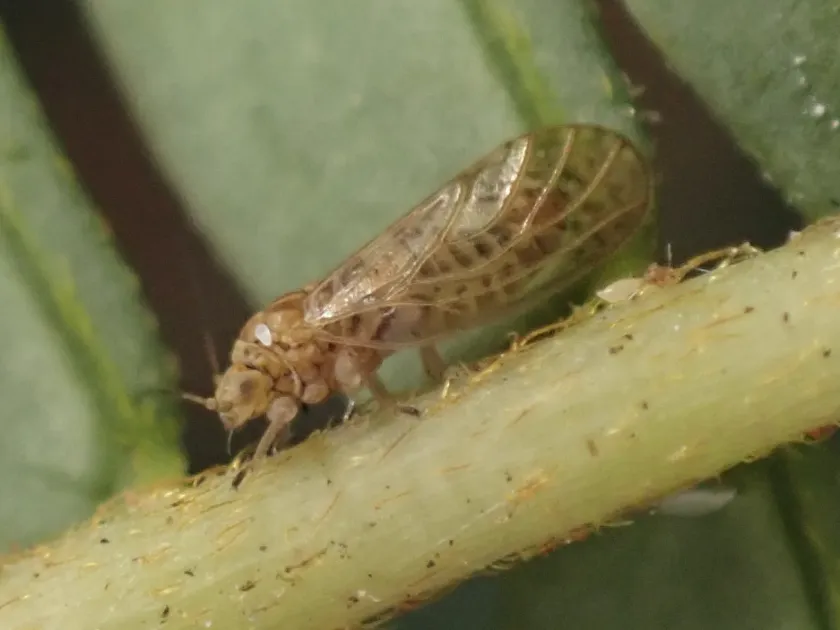
Description
How to identify
Acizzia is a genus of jumping plant lice within the Psyllidae family. These insects are small, typically measuring 2 to 4 millimeters in length, and are known for their ability to jump using powerful hind legs.
Adults exhibit a color palette ranging from green to brownish, providing excellent camouflage against the foliage of their host plants, which makes early detection difficult.
The nymphs are relatively sedentary and are often found protected by waxy secretions or lerps, which act as a shield against predators and harsh environmental conditions.
As members of the Hemiptera order, they possess specialized piercing-sucking mouthparts designed to extract nutrient-rich sap directly from the plant's vascular system.
Proper identification of specific species within the Acizzia genus requires expertise, as many species are highly host-specific and rely on distinct morphological characteristics for classification.
What it damages
Acizzia species predominantly affect plants in the Fabaceae family, with species like Acacia and Albizia being the most frequent hosts for these pests.
By feeding on the phloem sap, these insects deprive the plant of vital nutrients, leading to stunted development, chlorosis, and general physiological weakness.
The feeding process often causes the characteristic curling and distortion of young leaves, which significantly impacts the aesthetic quality of ornamental trees in urban landscapes.
Heavy infestations are frequently followed by the development of sooty mold, a fungus that thrives on the honeydew excreted by the psyllids, further hindering the tree's photosynthetic ability.
In nursery settings, unchecked Acizzia populations can cause severe growth retardation, resulting in significant commercial losses and reduced plant viability.
When it appears
The life cycle of Acizzia is closely synchronized with the phenology of the host plant, with activity peaking during the spring when fresh, succulent growth is available.
Depending on the climatic zone and temperature conditions, these insects can complete several generations throughout a single growing season.
Warm and dry weather conditions generally accelerate the development rate of nymphs, leading to rapid population explosions during the mid-summer months.
As temperatures begin to drop in late autumn, the insects enter a state of dormancy or search for overwintering sites to survive the cold period.
Hibernation typically occurs in the adult stage, with the insects sheltering in crevices of the bark or deep within the dense growth of the tree canopy.
Signs of infestation
The primary visual indicator of an Acizzia infestation is the distortion of terminal shoots and the curling of leaves, often accompanied by yellowing or chlorosis.
A sticky, shiny residue known as honeydew covers the leaves and branches, which is a clear sign that the colony is actively feeding and excreting waste.
The presence of ants, wasps, or bees gathering on the foliage is a secondary indicator, as these insects are attracted to the sugary honeydew produced by the psyllids.
Over time, the honeydew becomes colonized by black sooty mold, giving the leaves a scorched appearance and preventing the tree from producing energy efficiently.
- Distorted, curled, or stunted young leaves.
- Sticky honeydew residue on foliage.
- Black sooty mold accumulation.
- Presence of small jumping insects on underside of leaves.
Control measures
Good horticultural practice involves regular pruning of heavily infested branches, which helps to mechanically reduce the population pressure on the tree.
Biological control can be effectively employed by encouraging the presence of natural predators, such as ladybird beetles, lacewings, and parasitic wasps.
Chemical intervention should be reserved for severe infestations and ideally involves the use of systemic insecticides that target the sap-feeding insects effectively.
When applying pesticides, thorough coverage is essential, ensuring that the spray reaches the undersides of the leaves where the nymphs reside.
Regular monitoring using yellow sticky traps can provide early warning of an infestation, allowing for timely control measures before the population reaches damaging levels.
Taxonomy
- Latin name
- Acizzia
- Order
- Hemiptera (bugs, aphids, leafhoppers)
- Family
- Psyllidae
- EPPO code
- ACIZSP
Discussion
No discussions yet — be the first.