
Acacia psyllid
Acizzia acaciaebaileyana
Description
How to identify
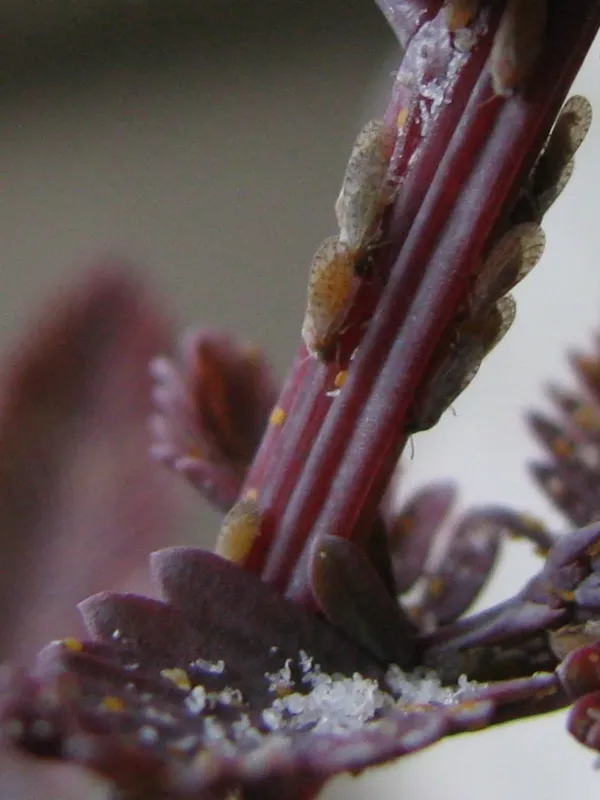
The acacia psyllid (Acizzia acaciaebaileyana) is a small sap-sucking insect belonging to the family Psyllidae, order Hemiptera. Measuring only 2–3 mm in length, these insects are commonly known as jumping plant lice due to their agility.
Adults are brownish-yellow in color, often featuring distinct patterns on their wings. They tend to settle on tender foliage where they mate and deposit their eggs, ensuring the next generation has immediate access to food.
Nymphs of this species are flattened and secrete a waxy, cotton-like substance that provides protection from predators and environmental stress. These wax deposits are a key diagnostic feature for field identification.
The life cycle is rapid, especially in warm climates, allowing for multiple generations per growing season. This high reproductive capacity is what makes the species a significant pest for ornamental nurseries.
They are host-specific, primarily targeting Acacia species, with a notable preference for Cootamundra wattle (Acacia baileyana) and related varieties used in landscaping and horticulture.
What it damages
Acacia psyllids feed on the phloem sap of the host tree by piercing the leaf tissue with their specialized mouthparts. This feeding process drains the tree of vital nutrients, leading to stunted growth.
One of the most visible symptoms of an infestation is severe leaf curling and distortion of new growth. As the leaves grow, they become twisted, yellowed, and stunted, significantly reducing the aesthetic value of the plant.
The insects excrete a sugary substance known as honeydew while feeding. This sticky liquid coats the leaves and stems, serving as an ideal medium for the growth of sooty mold, a fungus that turns affected plant parts black.
Sooty mold prevents sunlight from reaching the leaf surface, effectively blocking photosynthesis. This added stress can lead to branch dieback and an overall decline in the health of the tree.
Severe and repeated infestations can cause premature leaf drop and strip the tree of its foliage, making it vulnerable to secondary pests and various environmental pathogens.
Signs of infestation
Distorted, curled, or "crinkled" young leaves are the most prominent sign of an infestation. If you notice new shoots failing to develop properly, a psyllid infestation is likely the cause.
Looking closely at the undersides of leaves or along the leaf axils, you may find clusters of flat nymphs wrapped in white, fluffy, wax-like material. This is often the most definitive proof of presence.
A shiny, sticky layer on the foliage indicates the presence of honeydew. Ants are often seen patrolling these areas, as they are attracted to the sweet secretions of the psyllids.
The presence of a thick black coating, or sooty mold, on leaves and stems indicates that the infestation has been present for a significant amount of time.
Disruption of the branches often causes adult psyllids to jump or fly off in small clouds, allowing for easy verification of their presence even in high-canopy ornamental trees.
Control measures
Integrated Pest Management (IPM) is the most effective approach. Start by pruning and disposing of heavily infested branches to reduce the total population of the insects in the garden.
Systemic insecticides, particularly those containing imidacloprid or acetamiprid, are highly effective as they are absorbed by the plant, targeting the insects as they feed.
Encourage natural predators such as lady beetles, lacewings, and parasitic wasps. These beneficial insects can often keep psyllid numbers below the threshold of economic damage if broad-spectrum pesticides are avoided.
When applying treatments, target the undersides of the leaves where nymphs congregate. Ensure treatments are applied during early morning or late evening to minimize plant stress.
- Monitor trees regularly during the spring growth flush.
- Use horticultural soaps or oils to wash away honeydew and suppress nymphs.
- Maintain tree health with proper irrigation and fertilization.
- Avoid overuse of fertilizers that produce excessive tender growth, which attracts psyllids.
Taxonomy
- Latin name
- Acizzia acaciaebaileyana
- Order
- Hemiptera (bugs, aphids, leafhoppers)
- Family
- Psyllidae
- EPPO code
- PSYLAB
Discussion
No discussions yet — be the first.