
Reference · Pests
Other pests
The European mole cricket (Gryllotalpa gryllotalpa) is a large insect of the order Orthoptera, belonging to the family Gryllotalpidae. It is considered a major subterranean pest that is highly adapted to digging tunnels in the soil, making it a significant threat to various agricultural and ornamental crops.
1 423
sections
What the section contains
Mango spider mite
Oligonychus mangiferus
Mantids
17 items
Mantis shrimp (Squillidae)
2 items
Mantispids
4 items
Mantophasmids
4 items
 Many-plumed moths
Orneodes
Many-plumed moths
Orneodes
 Maple gall mite
Phytoptus aceris
Marina gall midge
Phaenobremia marina
Maple gall mite
Phytoptus aceris
Marina gall midge
Phaenobremia marina
 Masuda's flat-headed borer
Poecilonota masudai
Mayflies
3 items
Masuda's flat-headed borer
Poecilonota masudai
Mayflies
3 items
 McDaniel spider mite
Eotetranychus macdanieli
McDaniel spider mite
Eotetranychus macdanieli
 Meadow plant bug
Lygus pubescens
Mealybug
Pseudococcus deceptor
Meadow plant bug
Lygus pubescens
Mealybug
Pseudococcus deceptor
 Mealybug Planococcus cryptus
Planococcus cryptus
Mealybug Planococcus cryptus
Planococcus cryptus
 Medlar mealybug
Phenacoccus mespili
Medlar mealybug
Phenacoccus mespili
 Megacopta cribraria
Coptosoma formosana
Megalonychids
2 items
Megacopta cribraria
Coptosoma formosana
Megalonychids
2 items
 Meganola strigula
Megapodes
4 items
Meganola strigula
Meganola strigula
Megapodes
4 items
 Melitara conotalis
Melitara conotalis
Melitara conotalis
 Melon gall midge
Cecidomyia citrulli
Melon gall midge
Cecidomyia citrulli
 Melon mite
Tetranychus cucurbitacearum
Melon mite
Tetranychus cucurbitacearum
 Menochilus sexmaculatus
Menoponidae
8 items
Menuridae
2 items
Menochilus sexmaculatus
Menochilus sexmaculatus
Menoponidae
8 items
Menuridae
2 items
 Mesapamea
Metaseiulus columbiensis
Metaseiulus columbiensis
Mesapamea
Mesapamea
Metaseiulus columbiensis
Metaseiulus columbiensis
 Metasyrphus
Metasyrphus meadii
Metasyrphus meadii
Metasyrphus wiedemanni
Metasyrphus wiedemanni
Metretopidae
2 items
Micro-caddisflies
2 items
Metasyrphus
Metasyrphus
Metasyrphus meadii
Metasyrphus meadii
Metasyrphus wiedemanni
Metasyrphus wiedemanni
Metretopidae
2 items
Micro-caddisflies
2 items
 Microceropsylla
Millipedes
14 items
Mimidae
6 items
Mobulid rays
2 items
Moinidae
2 items
Mole salamanders
2 items
Microceropsylla
Microceropsylla
Millipedes
14 items
Mimidae
6 items
Mobulid rays
2 items
Moinidae
2 items
Mole salamanders
2 items
 Monarch butterfly
Danaus archippus
Monarch butterfly
Danaus menippe
Monarchs
2 items
Mongooses
7 items
Monarch butterfly
Danaus archippus
Monarch butterfly
Danaus menippe
Monarchs
2 items
Mongooses
7 items
 Monima
Monitor lizards
2 items
Monodi spider mite
Eutetranychus monodi
Monodontidae
4 items
Monima
Monima
Monitor lizards
2 items
Monodi spider mite
Eutetranychus monodi
Monodontidae
4 items
 Montpellier snake
Malpolon monspessulanus
Montpellier snake
Malpolon monspessulanus
 Moon caddisfly
Limnephilus lunatus
Moray eels
2 items
Moritziella
Moritziella
Moon caddisfly
Limnephilus lunatus
Moray eels
2 items
Moritziella
Moritziella
 Mormidea poecila
Mormidea poecila
Mormidea poecila
 Mossop's whitefly
Trialeurodes mossopi
Mossop's whitefly
Trialeurodes mossopi
 Mountain spider mite
Eotetranychus monticola
Mouse-tailed bats
2 items
Mousebirds (Coliidae)
2 items
Mud turtles
2 items
Mudminnows
2 items
Mugilidae
4 items
Multisetose spider mite
Tetranychus multisetis
Musk deer (Moschidae)
2 items
Mountain spider mite
Eotetranychus monticola
Mouse-tailed bats
2 items
Mousebirds (Coliidae)
2 items
Mud turtles
2 items
Mudminnows
2 items
Mugilidae
4 items
Multisetose spider mite
Tetranychus multisetis
Musk deer (Moschidae)
2 items
Many-plumed moths
Orneodes
Maple gall mite
Phytoptus aceris
Marina gall midge
Phaenobremia marina
Masuda's flat-headed borer
Poecilonota masudai
Mayflies
3 items
McDaniel spider mite
Eotetranychus macdanieli
Meadow plant bug
Lygus pubescens
Mealybug
Pseudococcus deceptor
Mealybug Planococcus cryptus
Planococcus cryptus
Medlar mealybug
Phenacoccus mespili
Megacopta cribraria
Coptosoma formosana
Megalonychids
2 items
Meganola strigula
Meganola strigula
Megapodes
4 items
Melitara conotalis
Melitara conotalis
Melon gall midge
Cecidomyia citrulli
Melon mite
Tetranychus cucurbitacearum
Menochilus sexmaculatus
Menochilus sexmaculatus
Menoponidae
8 items
Menuridae
2 items
Mesapamea
Mesapamea
Metaseiulus columbiensis
Metaseiulus columbiensis
Metasyrphus
Metasyrphus
Metasyrphus meadii
Metasyrphus meadii
Metasyrphus wiedemanni
Metasyrphus wiedemanni
Metretopidae
2 items
Micro-caddisflies
2 items
Microceropsylla
Microceropsylla
Millipedes
14 items
Mimidae
6 items
Mobulid rays
2 items
Moinidae
2 items
Mole salamanders
2 items
Monarch butterfly
Danaus archippus
Monarch butterfly
Danaus menippe
Monarchs
2 items
Mongooses
7 items
Monima
Monima
Monitor lizards
2 items
Monodi spider mite
Eutetranychus monodi
Monodontidae
4 items
Montpellier snake
Malpolon monspessulanus
Moon caddisfly
Limnephilus lunatus
Moray eels
2 items
Moritziella
Moritziella
Mormidea poecila
Mormidea poecila
Mossop's whitefly
Trialeurodes mossopi
Mountain spider mite
Eotetranychus monticola
Mouse-tailed bats
2 items
Mousebirds (Coliidae)
2 items
Mud turtles
2 items
Mudminnows
2 items
Mugilidae
4 items
Multisetose spider mite
Tetranychus multisetis
Musk deer (Moschidae)
2 items
Marketplace
Products in this section · 12


Other pests
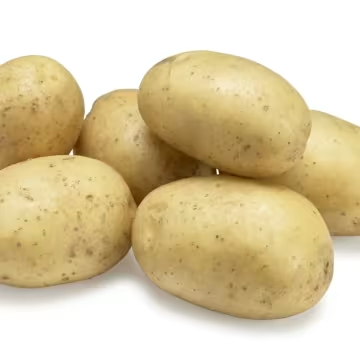
This pest affects a wide range of plants, including potatoes, tomatoes, cucumbers, carrots, and various leafy vegetables. It also poses a threat to lawns, golf courses, and young saplings in tree nurseries. Mole crickets are particularly destructive in moist, organic-rich soils where they can easily burrow and feed.
The life cycle of the mole cricket typically lasts from one to three years, depending on the environmental conditions. Both adults and nymphs overwinter deep in the soil. In late spring, females build subterranean nest chambers where they deposit batches of eggs. After hatching, the nymphs develop through several instars, feeding on roots and organic matter.
The damage caused by mole crickets is mainly due to their burrowing activity and feeding habits. They sever plant roots and stems just below the soil surface, causing plants to wilt and die suddenly. Their extensive tunneling also disturbs the soil structure, leading to poor plant growth and significant yield losses in infested areas.
- Deep autumn plowing to expose and destroy overwintering sites.
- Setting traps using manure or moist compost to attract and catch adults.
- Application of specialized insecticidal baits placed in the soil.
- Using biological control agents such as nematodes or entomopathogenic fungi.
- Frequent cultivation of soil between rows to disrupt existing tunnels.