
Megacopta cribraria
Coptosoma formosana
Description
How to identify
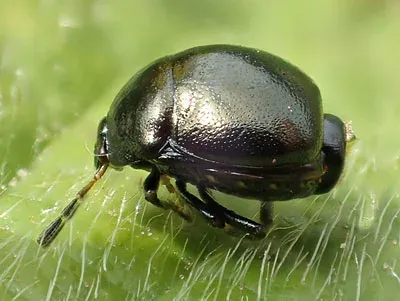
Megacopta cribraria, widely known as the kudzu bug or bean plataspid, is a member of the Plataspidae family within the order Hemiptera. It is characterized by its small, rounded, and highly convex body shape, resembling a miniature shield.
The adult insects are olive-brown in color with a speckled pattern, typically measuring about 4 to 6 millimeters in length. Their distinctive shape makes them easily distinguishable from other agricultural bugs.
The nymphs go through several developmental stages (instars) and look similar to the adults but lack fully developed wings and have a lighter, often yellowish-brown coloration. They are frequently found in groups feeding on host plant stems.
A unique biological feature of this species is its obligate symbiosis with bacteria, which are passed from mother to offspring. These bacteria reside in specialized gut structures and are essential for the bug's survival on plant sap.
This invasive species is known for its ability to aggregate in large numbers, making it a significant pest that can quickly colonize soybean fields and other leguminous crops.
What it damages
The primary hosts for the kudzu bug are plants within the Fabaceae family, with soybeans being the most economically significant crop affected by their feeding activities.
In addition to soybeans, the insect thrives on wild kudzu, which acts as a primary reservoir throughout the season, allowing the population to build up before moving into cultivated areas.
These bugs feed by piercing plant tissues with their needle-like mouthparts and sucking out phloem sap. This constant extraction of plant nutrients leads to severe stress and stunted growth of the affected vegetation.
Damage symptoms include yellowing of leaves, wilting, and a significant reduction in pod set. In cases of heavy infestation, the entire plant may show signs of senescence before maturity, leading to substantial yield losses.
Furthermore, the feeding sites created by the bugs may facilitate the secondary entry of various plant pathogens, potentially increasing the incidence of viral and fungal diseases in the field.
When it appears
The kudzu bug's activity cycle is closely linked to temperature patterns. Adults overwinter in protected areas, such as leaf litter, under tree bark, or in man-made structures, emerging in early spring.
The first generation typically develops on wild host plants. As the season progresses, subsequent generations migrate to soybean fields, where they reach peak population levels during the flowering and pod-filling stages.
Depending on the climatic zone, the pest can complete two to three generations per year. Warmer temperatures accelerate their developmental cycle, potentially leading to faster population growth.
As temperatures drop in the autumn, the bugs seek overwintering sites, often clustering on the walls of houses, sheds, and other sheltered locations, which can become a nuisance for homeowners.
Effective monitoring should commence shortly after crop emergence. Scouts should inspect the undersides of leaves and the bases of stems, where the insects tend to cluster during the day.
Signs of infestation
The most obvious sign of an infestation is the presence of the insects themselves. They are highly active and will often drop or fly away when plants are disturbed, making them easy to spot during scouting.
Small, necrotic spots on stems, petioles, and leaves are indicative of past and present feeding activity. Leaves may appear chlorotic or display signs of drought stress despite adequate soil moisture.
Egg masses are another clear indicator. Females deposit their eggs in two parallel rows on the underside of leaves; finding these suggests that the population is actively breeding in the area.
A strong, unpleasant odor released by the bugs when threatened or crushed is a characteristic sign of their presence, especially when they are gathered in high densities on a crop.
Poor pod development and reduced seed quality at harvest time are the final indicators that an infestation has significantly impacted the productivity of the soybean crop.
Control measures
Managing the kudzu bug requires an integrated pest management (IPM) strategy that focuses on prevention and timely intervention when economic thresholds are reached.
- Remove wild kudzu and other leguminous weeds from field margins to reduce reservoir populations.
- Implement crop rotation strategies to minimize localized outbreaks.
- Use pheromone-baited traps or light traps to monitor adult arrival and population trends.
- Apply contact or systemic insecticides during the peak nymph stage, as they are most vulnerable at this time.
- Encourage natural biological control by protecting beneficial predators and parasitic wasps in the ecosystem.
Chemical control should be applied judiciously. It is essential to select products that minimize impact on beneficial insects while effectively targeting the kudzu bug population.
Field edge management is critical, as the bugs usually migrate into fields from adjacent wild habitats. Early detection along the perimeter can prevent a widespread infestation within the main crop.
Regular scouting and adherence to economic threshold guidelines ensure that control measures are both environmentally responsible and economically viable for the producer.
Discussion
No discussions yet — be the first.