
Graptostethus servus
Graptostethus servus
Description
How to identify
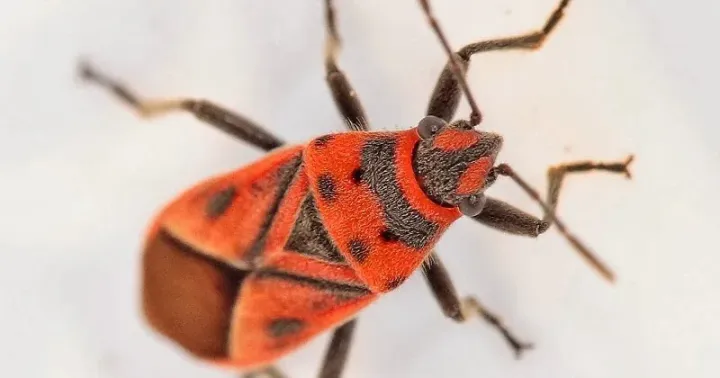
Graptostethus servus is a member of the family Lygaeidae, commonly known as seed bugs. It is recognized for its striking coloration, featuring a distinct pattern of black, red, and white markings.
Adult insects typically measure between 7 and 10 mm in length. Their bodies are elongated, and the pronotal area displays clear light-colored markings that serve as a key morphological feature for identification.
Like other hemipterans, this bug possesses a specialized piercing-sucking mouthpart called a rostrum, which it uses to extract plant fluids from various host tissues.
The nymphs go through several developmental stages, resembling the adults but with smaller bodies and underdeveloped wings, gradually increasing in size and color intensity.
These insects are primarily terrestrial, often found congregating on the stems, leaves, and fruits of their host plants, particularly during the warmer months of the year.
What it damages
This pest affects a wide range of plants, including industrial crops like cotton, various legumes, and several horticultural species. It is particularly damaging when it attacks the reproductive parts of plants.
Both adults and nymphs feed by piercing the plant tissue and sucking the sap. This feeding behavior can lead to significant physiological stress for the plant, resulting in stunted growth.
The most severe damage occurs when the bugs feed on developing seeds or fruits. This leads to reduced seed viability, deformed kernels, and substantial losses in agricultural production.
Besides the direct removal of nutrients, the punctures created by the bugs allow pathogens, such as fungi and bacteria, to enter the plant, causing secondary infections and rotting.
In high densities, the infestation can lead to the total loss of individual plant parts, as the bugs tend to aggregate on nutrient-rich fruits, causing premature shedding.
When it appears
The lifecycle of Graptostethus servus is heavily influenced by ambient temperatures. In tropical and subtropical regions, multiple generations can occur within a single growing season.
Adults overwinter in protected areas, including leaf litter, crop residues, or under the bark of trees, emerging when temperatures rise sufficiently in the spring.
The peak activity and reproductive cycles usually coincide with the flowering and fruiting stages of host plants, providing optimal nutritional conditions for the bug's development.
During the summer months, reproduction is rapid, and the population can reach economic thresholds quickly if left unmonitored in the field.
As autumn approaches and temperatures drop, the bugs begin to search for suitable overwintering sites to enter a state of diapause, effectively ending their active feeding cycle.
Signs of infestation
Early detection is crucial for managing infestations. One of the first signs is the presence of the adult bugs themselves on the foliage or the fruit surfaces.
Close inspection of the fruit or seeds often reveals tiny, localized necrotic spots or discoloration, which indicate the exact location where the bug has inserted its rostrum.
Visual symptoms on the plant include yellowing of the leaves, premature drop of flower buds, and a general decline in the quality of the developing produce.
The presence of insect excrement on the plant surface is another indicator of infestation, often accompanied by a pungent odor when the colony is disturbed.
- Necrotic tissue on fruit surfaces.
- Stunted or deformed seed development.
- Premature shedding of buds and blossoms.
- Visible bug clusters on stems.
Control measures
Effective management begins with strict sanitation practices, such as removing and destroying crop residues post-harvest to eliminate overwintering sites.
Weed control is essential, as many non-crop hosts, particularly those in the Malvaceae and Fabaceae families, provide a reservoir for the pest to thrive throughout the season.
Implementing a robust crop rotation plan helps disrupt the lifecycle of the bugs, making it difficult for the population to sustain itself in a single location.
When the economic threshold is met, the application of appropriate insecticides is recommended, ensuring that the chemicals are applied during the bug's most vulnerable stages.
Encouraging natural predators, such as spiders and certain parasitic wasps, can provide biological control and keep the bug population below damaging levels.
Taxonomy
- Latin name
- Graptostethus servus
- Order
- Hemiptera (bugs, aphids, leafhoppers)
- Family
- Lygaeidae
- EPPO code
- GRATSE
Discussion
No discussions yet — be the first.