
Brown singing cicada
Graptopsaltria nigrofuscata
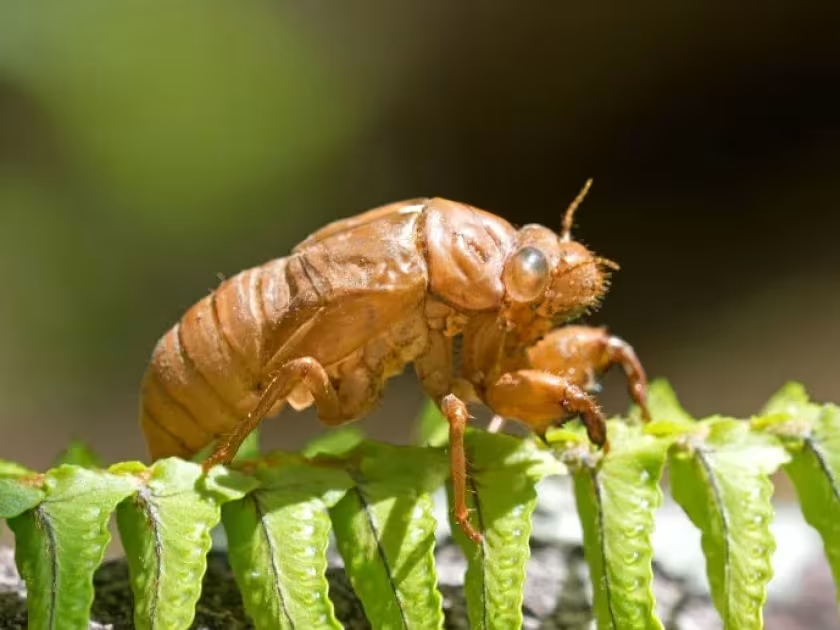
Description
How to identify
The Brown singing cicada is a member of the order Hemiptera and the family Cicadidae. These insects are distinguished by their robust bodies and brown or brownish-black coloration, which provides excellent camouflage against the bark of host trees.
Adults possess strong, clear wings with distinct dark veins and specialized sound-producing organs called tymbals located on the abdomen. Their heads are broad, featuring large compound eyes, allowing them to remain highly alert to environmental threats.
What it damages
This pest targets a wide variety of woody plants, frequently affecting orchard trees such as apples, pears, and various stone fruits. Both adults and nymphs contribute to the damage, though through different mechanisms of feeding.
Nymphs remain underground for several years, feeding on the xylem sap of tree roots, which inhibits nutrient uptake. Adults feed on branches, but their most significant impact occurs when females use their saw-like ovipositors to insert eggs into twigs, causing physical trauma to the wood.
When it appears
The life cycle is remarkably long, with nymphs spending several years (typically 3 to 5) maturing in the soil. Once they emerge as adults, the active phase is relatively short, lasting through the warmer months of summer.
Adult activity peaks during the height of the summer heat, typically between June and August. During this period, the air is filled with the mating calls of the males, signaling the time for reproduction and the start of the next cycle.
Signs of infestation
The primary indicators of an infestation include the presence of split or scarred twigs, which are the result of oviposition sites created by females. These wounded areas often serve as entry points for secondary infections or fungal diseases.
Other signs include the loud, continuous buzzing sound prevalent in the orchard and the physical observation of large insects on the trunks. Severely infested trees may show signs of yellowing leaves, stunted growth, and a general decline in vitality.
Control measures
Integrated pest management is the most effective approach. Pruning and destroying infested twigs during the dormant season helps remove eggs before they hatch, which is critical for reducing future pest populations.
In cases of severe outbreaks, targeted insecticide applications may be necessary during the peak emergence of adults. It is recommended to prioritize systemic or contact insecticides that are labeled for use on the specific fruit crops being treated.
Taxonomy
- Latin name
- Graptopsaltria nigrofuscata
- Order
- Hemiptera (bugs, aphids, leafhoppers)
- Family
- Cicadidae
- EPPO code
- GRAOCO
Discussion
No discussions yet — be the first.