
Graphium teredon
Graphium teredon
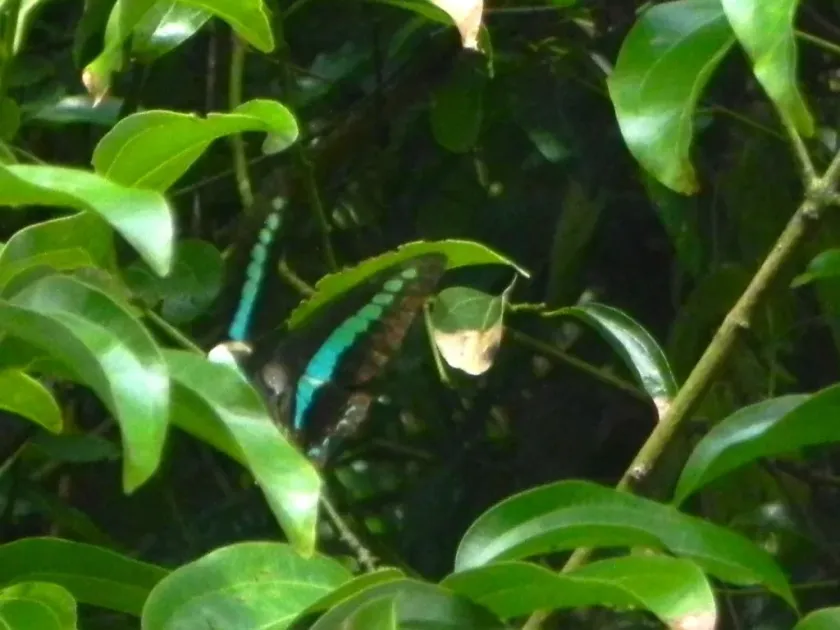
Description
How to identify
Graphium teredon belongs to the order Lepidoptera and the family Papilionidae. This species is a specialized butterfly whose larvae act as phytophagous pests on specific woody host plants.
The adult form is a butterfly with distinct wing patterns typical of the Swallowtail family, featuring dark coloration with light-colored spots. The imago stage is primarily focused on reproduction and nectar feeding.
The larvae are characterized by protective coloration, which provides excellent camouflage while feeding on the leaves of host plants. The caterpillars undergo several molts as they increase in size throughout their development.
The pupal stage is often attached to twigs, where its appearance closely mimics dry plant debris, serving as an effective survival mechanism against predators.
Due to its niche host requirements, the distribution of this species is usually localized, though it can become a significant issue in specific agricultural settings.
What it damages
The primary hosts of this species are members of the Annonaceae family. These plants are frequently cultivated in orchards for fruit production, making the pest a concern for growers.
The larvae show a high preference for young, succulent shoots and tender leaves, which are vital for the vigorous growth of young trees.
Economic damage is caused by the reduction of photosynthetic surface area. Severe defoliation can lead to stunted growth and reduced vigor of the host plant.
Feeding on floral buds and young fruit sets can directly lead to crop losses, impacting the overall yield of the orchard.
Weakened trees become susceptible to secondary infections and opportunistic pests, necessitating careful observation and management strategies.
When it appears
The pest's activity is closely linked to the phenology of its host plants. Adults typically emerge from pupae at the onset of the growing season.
The species may complete multiple generations within a single season, depending on the local climate and temperature profiles.
The peak of larval activity coincides with the period of rapid vegetative growth, during which the larvae cause the most significant damage to the host.
As the season progresses toward autumn, the population transitions into the pupal stage to enter diapause and survive the winter months.
Monitoring the flight period of adults using pheromone traps is essential for predicting the timing of larval outbreaks and planning control measures.
Signs of infestation
The most noticeable sign of infestation is irregular defoliation, where the caterpillars consume leaf tissue and leave behind only the midribs or main veins.
The presence of larval frass on the leaves beneath feeding sites serves as a clear indicator of active infestation within the canopy.
Careful inspection of the underside of young leaves often reveals egg clusters, which are laid by females in early stages of the population cycle.
Premature leaf drop, occurring without evidence of classic fungal or bacterial diseases, is frequently a consequence of extensive larval feeding.
Locating the pupae fixed to the branches confirms the establishment of the pest in the area and highlights the need for active management.
Control measures
Effective management follows the Integrated Pest Management (IPM) approach, emphasizing prevention and low-toxicity controls before chemical intervention.
Manual removal of caterpillars is highly effective in small-scale plantings, significantly reducing the pest population without chemical residue.
Biological control agents, such as microbial insecticides based on Bacillus thuringiensis, provide safe and targeted control of young larval stages.
- Sanitary pruning to remove and destroy infested plant parts.
- Encouraging natural predators such as parasitic wasps and predatory bugs.
- Using pheromone traps for early detection and timing of necessary treatments.
Promoting tree health through proper fertilization and irrigation improves the plant's recovery capacity and overall resistance to future insect attacks.
Taxonomy
- Latin name
- Graphium teredon
- Order
- Lepidoptera (butterflies)
- Family
- Papilionidae
- EPPO code
- GRFITE
Discussion
No discussions yet — be the first.