
Common Bluebottle
Graphium sarpedon
Description
How to identify
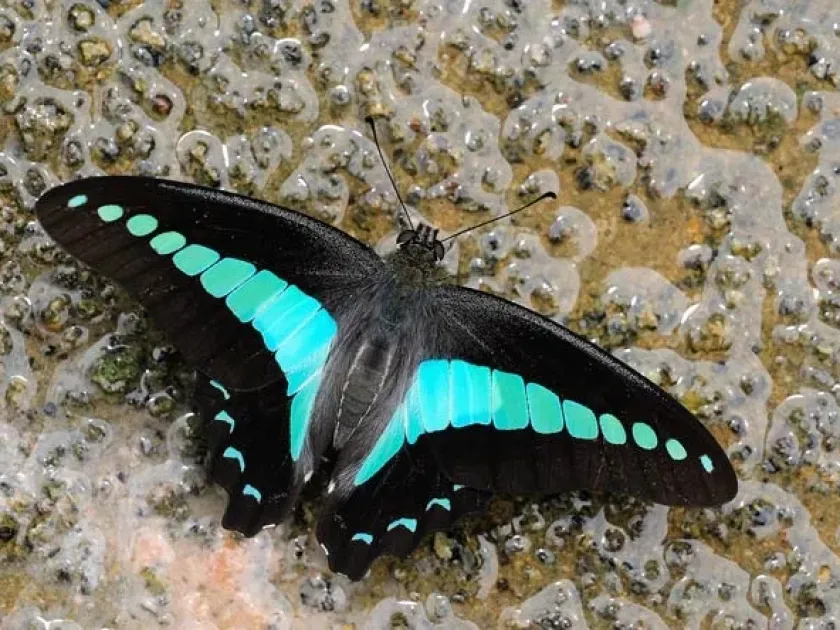
The Common Bluebottle (Graphium sarpedon) is a species of swallowtail butterfly (family Papilionidae) known for its distinctive dark wings featuring a prominent iridescent blue-green band.
The larvae, or caterpillars, undergo several developmental stages, growing significantly in size and displaying vibrant colors with yellow markings as they mature.
As part of the order Lepidoptera, these insects are characterized by a complete metamorphosis involving egg, larva, pupa, and adult stages, each requiring specific host plants for survival.
The pupae are cryptically colored and shaped to resemble leaves or tree twigs, providing excellent camouflage against predators in their natural habitat.
Females are selective when laying eggs, placing them on the underside of young, tender leaves to ensure the emerging caterpillars have immediate access to high-quality nutrition.
What it damages
The Common Bluebottle primarily infests trees in the Lauraceae family, including camphor trees and various cinnamon species, which are vital in certain agricultural sectors.
Caterpillars cause damage by feeding voraciously on the foliage, often consuming large portions of the leaf blade and leaving behind only the tougher midribs or bare stems.
In nursery settings, heavy infestations can lead to significant defoliation, which severely hampers the growth, vigor, and aesthetic value of young trees and ornamental saplings.
Repeated loss of leaves reduces the plant's overall photosynthetic capacity, making it more susceptible to secondary diseases and environmental stress throughout the growing season.
While often considered a beautiful butterfly, in high densities, it can reduce the productivity of camphor or cinnamon plantations, necessitating professional pest control measures.
When it appears
The activity cycle of Graphium sarpedon is highly dependent on temperature and local weather patterns, with the most active phases occurring during warmer months.
Multiple generations can occur throughout the year in tropical and subtropical regions, leading to overlapping life stages where eggs, larvae, and adults are present simultaneously.
During the warmer season, adult butterflies are frequently seen flying near host plants, actively searching for suitable sites for oviposition to maintain the population cycle.
Pupation occurs when the caterpillar is ready, and in cooler climates, the pupal stage may serve as a means to survive unfavorable conditions until spring arrives.
Rainfall and humidity play a crucial role in the survival rate of the larvae, as excessive moisture or drought can alter the availability of suitable young host foliage.
Signs of infestation
The most noticeable sign of a Graphium sarpedon infestation is the presence of eaten leaves with irregular margins or completely stripped branches showing only skeletal structures.
Scat (droppings) observed on the ground beneath the canopy is a clear indicator that a colony of caterpillars is actively feeding in the upper foliage of the tree.
Caterpillars can be identified on the plant during early morning or late evening hours, as they often retreat to safer spots on the stem or branch during the heat of the day.
Silk webbing may be found where the caterpillars have pulled leaf edges together, providing a protected area for them to rest and feed with minimal exposure to predators.
- Ragged leaf edges on young growth.
- Clusters of larvae feeding on tender shoots.
- Visible pupae attached to stems or twigs.
- Sudden thinning of the tree canopy.
Control measures
Manual removal of caterpillars is a highly effective control measure for small gardens or individual trees, providing immediate relief without the use of chemical inputs.
Biological control agents, such as microbial sprays containing Bacillus thuringiensis, are effective against young larvae while preserving the populations of beneficial predatory insects.
For severe infestations in agricultural or nursery settings, targeted application of contact or systemic insecticides may be necessary to protect the plant's structural integrity.
Cultural practices, including regular pruning of heavily infested branches and keeping the planting area clean of debris, help reduce the overwintering success of pupae.
Maintaining a diverse garden environment that attracts birds, wasps, and other natural predators is an excellent strategy for long-term population management of this butterfly.
Taxonomy
- Latin name
- Graphium sarpedon
- Order
- Lepidoptera (butterflies)
- Family
- Papilionidae
- EPPO code
- PAPISA
Discussion
No discussions yet — be the first.