
Glaucopsyche
Glaucopsyche
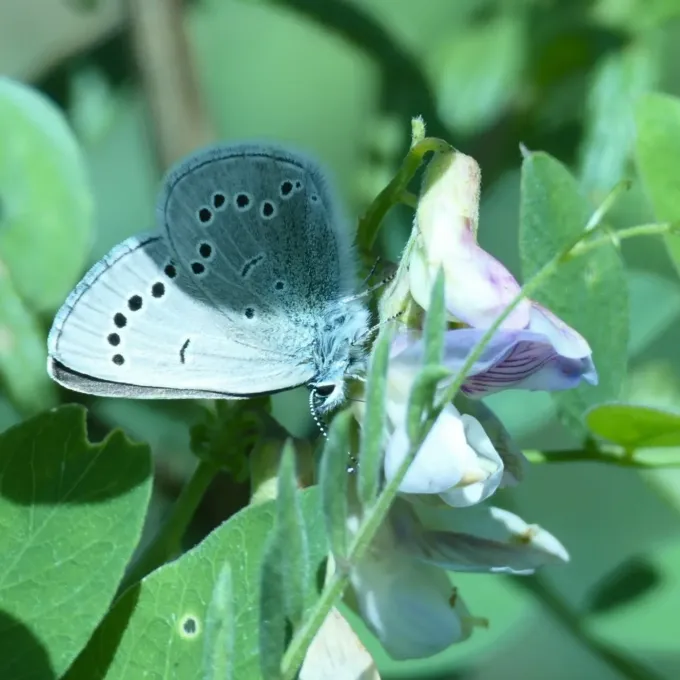
Description
How to identify
The genus Glaucopsyche belongs to the Lycaenidae family, commonly known as blues. Adult butterflies are characterized by a wingspan of approximately 25–35 mm, with the dorsal side typically showcasing a striking blue or grey-blue coloration bordered by darker margins.
The larvae, or caterpillars, exhibit the typical onisciform (woodlouse-like) shape common to the Lycaenidae family. They are relatively short, plump, and covered with fine, short hairs, which act as camouflage within the dense foliage of host plants.
The life cycle encompasses a complete metamorphosis, including egg, larva, pupa, and adult stages. In most temperate regions, the species undergoes one to two generations per year, with the pupal stage serving as the primary overwintering phase in soil debris.
Adults are diurnal insects that thrive in sunny environments. While the butterflies are effective pollinators, the larval stage is strictly herbivorous, focusing its development on specific legume host plants.
Identifying this pest in the field can be challenging due to the cryptic nature of the larvae. Monitoring usually focuses on detecting the presence of adults during the flight period or identifying signs of larval feeding on reproductive parts.
What it damages
The primary damage is caused by larvae that feed on the reproductive tissues of various legumes, including clover, alfalfa, peas, and vetch. They selectively consume flower buds and developing pods, leading to significant yield reduction.
By hollowing out the buds and young ovaries, the caterpillars directly prevent the formation of seeds. This localized destruction can escalate into massive yield losses when pest populations reach outbreak levels in seed-production fields.
Secondary damage occurs as the feeding process weakens the plant's overall reproductive success. In many cases, the affected flowers simply drop off, failing to produce any fruit, which impacts the economic viability of the legume crop.
While leaf feeding can occur, it is generally considered secondary to the severe impact on flowers and pods. The focus of the larvae on generative organs makes them a highly targeted pest for agronomic management.
Glaucopsyche exhibits a strong affinity for both agricultural crops and wild legume species, allowing it to maintain stable populations even when fields are rotated, provided that secondary host plants are present nearby.
Signs of infestation
Early signs of infestation include premature bud drop and the appearance of withered or browned flowers. Careful inspection of the inflorescences often reveals small, ragged holes in the buds.
The presence of larval frass, appearing as tiny dark pellets near the base of the stems or within the flower clusters, serves as a diagnostic indicator of active feeding activity.
Mechanical damage to the developing pods provides an entry point for opportunistic pathogens, leading to further decay of the plant tissue. Such symptoms are often visible once the larvae have matured and relocated.
The adult flight phase serves as a vital indicator. Observing butterflies congregating in legume fields during the budding stage suggests potential oviposition, signaling that scouting efforts should be intensified.
Overall plant development might seem stunted in severely infested areas due to the redirection of plant energy away from fruit production and the physical damage to the active growth points of the inflorescences.
Control measures
Effective management requires a combination of cultural and chemical strategies. Maintaining proper spatial isolation between new legume seed plots and older perennial meadows is essential for limiting initial infestations.
Deep plowing in the autumn helps to disrupt the pupal stages located in the upper soil layers, significantly reducing the density of the next season's emerging adult population.
Chemical intervention is justified when the pest density exceeds economic injury levels. Treatments are most effective when applied during the budding stage before the flowers fully open.
- Application of selective insecticides during the peak of the budding phase.
- Biological control using Bacillus thuringiensis based preparations.
- Strategic use of pheromone traps for monitoring and early detection.
Regular field scouting using sweeping nets or visual inspection is recommended to identify the optimal timing for treatment, ensuring high efficacy while reducing unnecessary chemical application.
Taxonomy
- Latin name
- Glaucopsyche
- Order
- Lepidoptera (butterflies)
- Family
- Lycaenidae
- EPPO code
- GLPSSP
Discussion
No discussions yet — be the first.