
Kerry spotted slug
Geomalacus maculosus
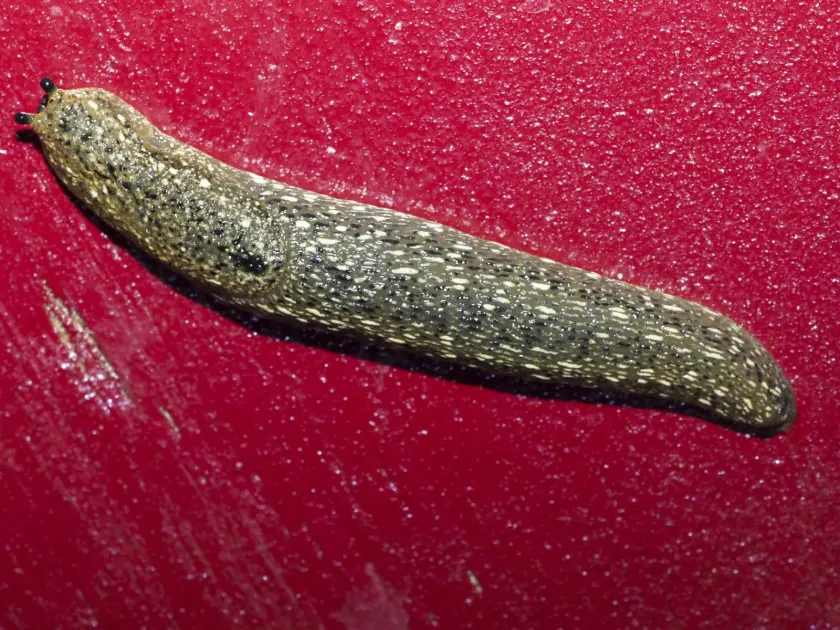
Description
How to identify
The Kerry spotted slug (Geomalacus maculosus) belongs to the Arionidae family and the order Stylommatophora, known for its distinctive appearance.
It typically measures 7–8 cm and possesses a unique, mottled or spotted body pattern that serves as camouflage against mossy rocks and tree bark.
The body is covered in a thick layer of mucus, which is crucial for preventing desiccation and facilitating movement across various surfaces.
The respiratory pore is located on the right side of the mantle, a key diagnostic feature for identifying this specific gastropod species.
As a hermaphroditic organism, this slug has a high reproductive potential, allowing it to colonize suitable habitats rapidly when moisture levels are sufficient.
What it damages
Geomalacus maculosus is a generalist feeder that consumes a wide variety of plant materials, including crops and ornamental garden species.
It poses a significant threat to young vegetable seedlings, leafy greens, and various flowers, often causing severe damage during the early growing stages.
By using its radula, the slug scrapes away plant tissue, resulting in ragged holes in leaves and sometimes destroying entire plants in a short period.
In greenhouses, where humidity is consistently high, these slugs can thrive and cause substantial economic loss by compromising both foliage and ripening fruits.
The damage often leaves plants vulnerable to secondary fungal or bacterial infections that enter through the feeding sites left by the slugs.
When it appears
The activity of the Kerry spotted slug is strictly controlled by environmental humidity and temperature, peaking during rainy or temperate weather patterns.
They are primarily nocturnal, emerging from their daytime shelters during the night or overcast days to feed and reproduce under favorable moisture.
During dry spells, these slugs retreat into moist micro-habitats such as cracks in the soil, underneath stones, or within leaf litter to avoid dehydration.
The main period of activity spans from late spring through autumn, which aligns with the planting and growing cycles of many vulnerable garden crops.
Egg-laying occurs in moist areas, ensuring that the next generation of slugs survives to emerge when environmental conditions become suitable again.
Signs of infestation
The most tell-tale signs of a slug infestation are the dried, silvery, glistening slime trails left on surfaces where they have crawled.
Irregular, jagged holes in the leaves of plants are common indicators of slug feeding activity, often seen in the morning after a damp night.
Active slugs can often be spotted on damp soil, under pots, or clinging to the underside of foliage during early morning or late evening hours.
- Clusters of slugs found hiding under moist garden debris or wooden boards.
- Damaged lower stems that can cause the wilting of entire seedlings.
- Presence of slug feces on the soil surface near damaged crops.
Visual inspections combined with the use of simple traps, like damp cardboard or boards, can confirm the presence of this pest in your garden.
Control measures
Cultural control involves maintaining a clean garden by removing weeds and plant debris, which serves as a natural shelter for the slugs during the day.
Regular soil cultivation helps expose egg clusters to sunlight and predators, significantly reducing the success rate of the next generation.
Chemical control can be implemented using slug pellets containing iron phosphate, which is an effective and environmentally safer option for mollusk management.
Physical barriers such as coarse sand, gravel, or copper tape can be placed around sensitive plants to deter slugs from crossing over into the garden beds.
Encouraging local predators, such as toads, frogs, hedgehogs, and ground beetles, creates a balanced ecosystem that naturally regulates the slug population.
Taxonomy
- Latin name
- Geomalacus maculosus
- Order
- Molluscs
- Family
- Arionidae
- EPPO code
- GEOAMA
Discussion
No discussions yet — be the first.