
Spruce cone bug
Gastrodes grossipes
Description
How to identify
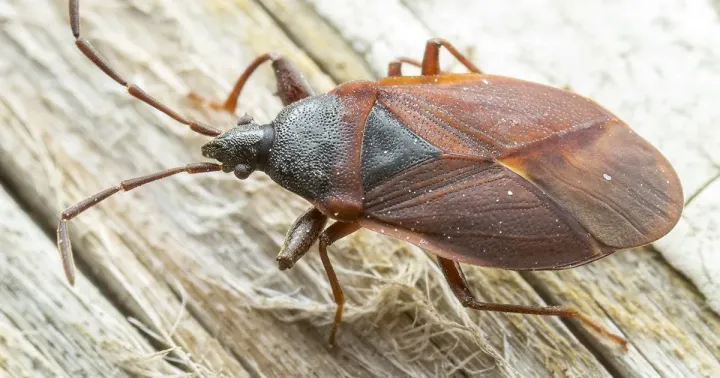
The spruce cone bug (Gastrodes grossipes) is a member of the Aradidae family, specifically adapted to live within and feed on the reproductive parts of spruce trees.
The adult insect has a flattened, elongated body, usually dark brown in color, ranging from 6 to 8 millimeters in length, providing excellent camouflage on conifer bark.
It possesses a specialized piercing-sucking mouthpart, which is structurally evolved to penetrate the tough, overlapping scales of spruce cones.
Adults are fully winged and capable of flight, allowing them to disperse throughout the canopy to locate suitable cones for feeding and reproduction.
Nymphs resemble smaller, wingless versions of adults and develop through several instars before reaching maturity, often found in clusters within a single cone.
What it damages
The primary damage caused by Gastrodes grossipes is the destruction of spruce seeds, as both adults and nymphs feed on the developing kernels.
By extracting fluids from the seeds, the bug significantly reduces their viability, which directly impacts the natural regeneration of spruce forests.
In addition to seed loss, the bug's feeding activities on the cone scales can cause premature drying and malformation of the cone, hindering proper seed release.
High infestation levels can lead to severe economic losses in seed orchards, where the production of quality seed material is of paramount importance.
The feeding sites also leave the cones susceptible to secondary fungal pathogens, which can exacerbate the physical damage caused by the insects.
When it appears
The life cycle of the spruce cone bug is closely synchronized with the phenology of spruce flowering, ensuring a constant food supply for the developing population.
Adults typically overwinter in protected areas, such as bark crevices or within the shelter of old cones, and become active again when spring temperatures rise.
The most intense feeding period occurs during the summer months when spruce cones are fully developed and seeds are rich in essential nutrients.
A new generation of adults usually emerges by late summer or autumn, subsequently seeking out sheltered sites to enter winter diapause.
The species generally follows a univoltine cycle, meaning one generation per year, although environmental factors can influence the timing of their emergence.
Signs of infestation
One of the most reliable indicators of a spruce cone bug infestation is the presence of tiny, pin-prick markings on the outer surface of cone scales.
Dissecting infested cones often reveals the presence of nymphs or adults, as well as darkened, shriveled seeds that have been emptied of their contents.
Affected cones may show signs of premature browning or yellowing, often looking dry and withered while still attached to the tree branch.
Accumulations of frass, or insect droppings, can sometimes be found tucked between the scales of the cones where the bugs have been actively feeding.
A decrease in the weight of the cone crop and a low seed-to-cone ratio during harvesting indicate a high likelihood of damage by this specific pest.
Control measures
Management strategies for the spruce cone bug focus on integrated pest management (IPM) techniques to minimize damage in forest and nursery settings.
Silvicultural practices, such as the removal of heavily infested trees or old, discarded cones, can significantly reduce the local population of the pest.
The use of pheromone-based traps is an effective tool for monitoring population dynamics and timing necessary insecticide applications in high-value seed orchards.
Encouraging the presence of natural predators, such as predatory beetles and wasps, can help maintain the bug population at manageable levels.
- Remove and burn infested cone debris after harvest.
- Monitor cone development during the peak growing season.
- Apply systemic insecticides in professional nurseries if infestation threshold is exceeded.
Taxonomy
- Latin name
- Gastrodes grossipes
- Order
- Hemiptera (bugs, aphids, leafhoppers)
- Family
- Lygaeidae
- EPPO code
- GASTGR
Discussion
No discussions yet — be the first.