
Gastrodes
Gastrodes
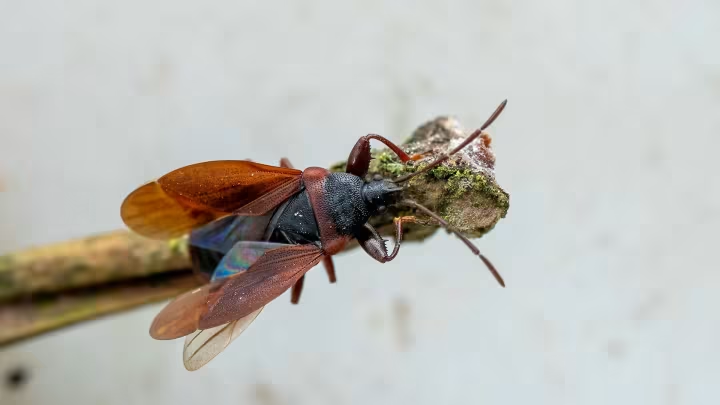
Description
How to identify
Gastrodes is a genus of true bugs belonging to the family Rhyparochromidae. The most prominent species is Gastrodes grossus, which is frequently found in spruce and pine forests.
The adult insect measures approximately 7 to 10 millimeters in length and features a flattened, brown body that provides excellent camouflage against tree bark and pine needles.
They possess four-segmented antennae and a specialized piercing-sucking mouthpart, which is evolved to penetrate hard protective scales of cones to reach the developing seeds.
The nymphs resemble smaller, wingless versions of the adults. They typically stay in sheltered areas, such as the gaps between cone scales or beneath bark, to avoid detection.
Due to their nocturnal behavior and cryptic coloration, these bugs are difficult to spot during the day, requiring careful inspection of the canopy or forest litter.
What it damages
This pest is highly specialized, feeding primarily on the seeds of coniferous trees, such as the Norway spruce (Picea abies) and various pine species.
By inserting their proboscis through the cone scales, they drain the nutrients from the developing seeds, effectively killing the embryo and destroying the seed's viability.
In seed orchards and forest nurseries, Gastrodes can cause significant economic loss by drastically reducing the quality and quantity of the harvestable seed crop.
Beyond direct damage to the seeds, the puncture wounds created by the bugs may facilitate the entry of fungal pathogens, causing further decay of the cones.
High infestation levels can lead to a significant drop in natural regeneration capacity of the forest, making this pest a priority in silvicultural management.
When it appears
The life cycle typically spans one year, with activity beginning in early spring as temperatures rise, signaling the emergence of adults from hibernation.
Adults hibernate during the winter in protected locations, such as forest leaf litter, deep bark crevices, or inside old, fallen cones on the forest floor.
Reproductive activity and the development of nymphs occur during the summer months, coinciding with the peak period of seed development inside the cones.
By late autumn, nymphs reach maturity and seek out suitable sites to overwinter, effectively ceasing their feeding activities as the weather turns colder.
Climate conditions, specifically mild winters, significantly influence the population density of the following year by ensuring a higher survival rate of the overwintering adults.
Signs of infestation
The most reliable sign of a Gastrodes infestation is the discovery of empty, shriveled, or damaged seeds when opening harvested cones for inspection.
Minute puncture marks on the exterior of the cone scales, often accompanied by small amounts of resin, indicate previous or active feeding sites.
The presence of fine, dark excrement spots on the needles or debris directly beneath the affected branches can serve as a diagnostic indicator of pest activity.
Stunted development or premature drying of specific parts of the cone may also suggest that the seeds within have been compromised by the feeding of the bugs.
- Premature cone drop from the branches.
- Reduced seed yield in forestry inventory.
- Presence of live bugs in bark samples during autumn.
- Secondary fungal growth on punctured cone scales.
Control measures
Sanitation is the most effective cultural control measure; removing and destroying fallen cones helps to reduce the number of overwintering sites for the pest.
In high-value seed orchards, chemical control using systemic or contact insecticides may be necessary if monitoring reveals that the infestation threshold is exceeded.
Maintaining the overall health and vigor of coniferous plantations is crucial, as stressed trees are significantly more susceptible to pest outbreaks.
Integrated Pest Management (IPM) strategies, including the use of pheromone traps for population monitoring, help in timing insecticide applications precisely.
Regular forest health assessments during the active growth season allow for early detection and targeted interventions, which minimize the need for broad-spectrum pesticide use.
Taxonomy
- Latin name
- Gastrodes
- Order
- Hemiptera (bugs, aphids, leafhoppers)
- Family
- Lygaeidae
- EPPO code
- GASTSP
Discussion
No discussions yet — be the first.