
Spiny Orb-weaver
Gasteracantha cancriformis
Description
How to identify
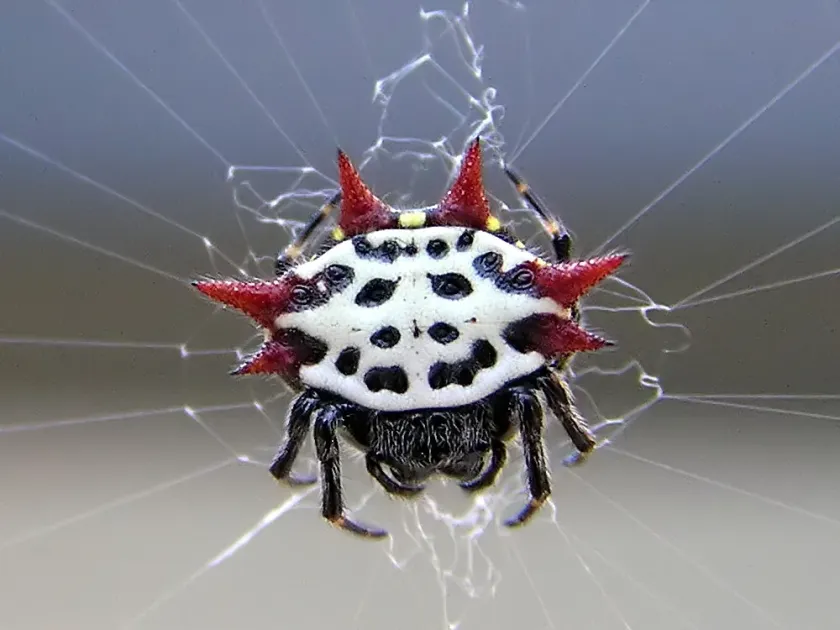
The Spiny Orb-weaver, scientifically known as Gasteracantha cancriformis, is a fascinating spider species easily recognized by its crab-like shape. Adult females possess a hard, wide abdomen equipped with six prominent, thorn-like spines along the edges.
The coloration of these spiders is highly diverse, ranging from white and yellow to red and black, serving as a warning to potential predators. They typically measure about 10–13 millimeters across, making them quite noticeable when they occupy a plant.
Males are significantly smaller and lack the dramatic spiny abdomen of the females. They are less frequently seen because they do not construct large, conspicuous webs, instead wandering in search of mates throughout the growing season.
These spiders are best identified by their large, circular, and strong vertical webs. They often construct these webs between branches of citrus trees, fruit trees, or shrubs, anchoring them securely to ensure they can trap flying insects effectively.
While they are beneficial predators of various insects, their habit of building large webs on high-value crops can cause agricultural inconvenience, leading growers to seek ways to manage their presence in intensive farming systems.
What it damages
The Spiny Orb-weaver does not feed on plant tissues, as it is strictly a predatory arachnid. However, the indirect damage caused by its web-spinning behavior can be significant for the health of young or delicate plants.
Dense webs can cover buds, flower clusters, and young leaves, physically hindering their expansion. This interference often results in stunted growth and restricted air circulation, which are critical for the healthy development of fruit-bearing trees.
Accumulated debris and dust within the spider silk provide a substrate for mold and fungal growth. If left unchecked, these fungal patches can spread to the leaves themselves, causing lesions and weakening the overall plant physiology.
In high-density cultivation, the presence of numerous webs creates a logistical challenge for laborers. Frequent web clearing can lead to mechanical breakage of tender shoots and buds, causing unnecessary physical stress to the crop.
Furthermore, webs can trap moisture against the bark or leaf surfaces during humid weather. This micro-environment often attracts secondary pests, such as aphids or mealybugs, that thrive in sheltered and humid conditions created by the silk.
When it appears
The activity cycle of the Spiny Orb-weaver is highly dependent on climate and seasonal transitions. In tropical regions, they may remain active year-round, whereas, in temperate zones, their life cycle is strictly seasonal.
During the warmer months, populations grow rapidly as food sources (flying insects) become more abundant. This is when the spiders are most active in building their webs across pathways and within the foliage of garden plants.
Reproduction typically occurs in late summer or autumn. Females deposit egg sacs on the undersides of leaves or on twigs, which remain protected during the winter months until the next generation emerges in the spring.
Environmental conditions such as high wind or extreme heat can influence where these spiders construct their webs. During harsh periods, they often move into the interior of a tree canopy, making them harder to detect but potentially more damaging to internal branches.
Understanding these seasonal patterns is essential for effective monitoring. Timing interventions such as egg sac removal before the spring hatch is a proven strategy for keeping populations below the threshold of annoyance.
Signs of infestation
The most obvious sign of infestation is the presence of large, geometric, vertical spiderwebs spun between branches. These webs are incredibly strong and resilient, often remaining intact even after heavy rain or moderate winds.
Direct sightings of the female spider resting in the center of the web are the primary diagnostic sign. Their bright colors and unusual shape make them very difficult to miss once you start looking for them in the canopy.
Egg sacs, which appear as small, whitish or beige silken clumps on the underside of leaves or on bark, are clear evidence that a population is established on the property and will likely persist through the next season.
Small white fecal spots on leaves underneath the web are another indicator. These deposits can be unsightly on ornamental plants and may require cleaning if they accumulate in large quantities during the season.
Slow development or slight discoloration of leaves shrouded in silk is a tell-tale sign that the web is negatively impacting the plant's access to light. This is particularly noticeable in young shrubs or nursery stock.
Control measures
The most straightforward way to manage Spiny Orb-weavers in a garden setting is through manual removal. Using a garden rake or a strong stream of water to break the webs will often encourage the spider to relocate to a less problematic area.
Implementing proper pruning practices that open up the tree canopy will make the environment less suitable for large web construction. Well-ventilated trees are much less attractive to these spiders than dense, overgrown ones.
Encourage natural predators such as insectivorous birds that feed on spiders. Maintaining a diverse garden ecosystem helps keep spider populations naturally balanced without the need for synthetic chemicals.
When clearing webs, avoid the use of harsh pesticides. These chemicals can eliminate beneficial insects and other predators, which might lead to a secondary outbreak of actual agricultural pests like whiteflies or mites.
If web accumulation is excessive, horticultural oils can be used to treat branches where spiders frequently anchor their silk. These oils reduce the stickiness of the surface, making it difficult for the spiders to attach their webs securely.
Taxonomy
- Latin name
- Gasteracantha cancriformis
- Family
- Araneidae
- EPPO code
- GASCCA
Discussion
No discussions yet — be the first.