
Linden lace bug
Gargaphia tiliae
Description
How to identify
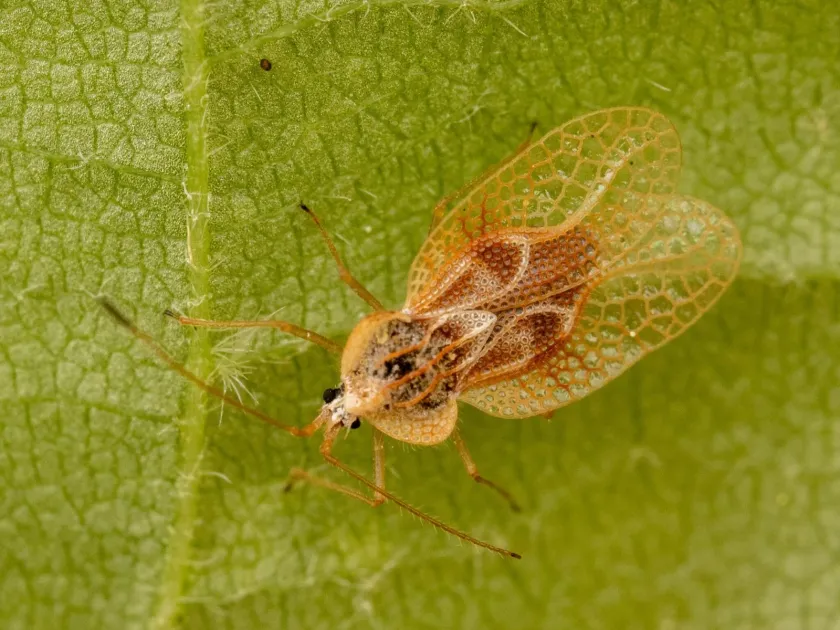
The linden lace bug, scientifically known as Gargaphia tiliae, is a common pest belonging to the Tingidae family, characterized by its lace-like wing appearance.
These insects are small, typically ranging from 3 to 5 mm in length, with intricate reticulated patterns on their wings and pronotum.
Adults are usually brownish or tan, which provides excellent camouflage against the foliage of their host plants.
They possess piercing-sucking mouthparts, which are perfectly adapted for feeding on the underside of tree leaves.
The immature stages, or nymphs, are often spiny and cluster together, making them easily identifiable during the growing season.
What it damages
The primary host for Gargaphia tiliae is the linden tree (Tilia species), which often suffers significant aesthetic and physiological damage.
By extracting sap from the leaves, the bugs cause cellular disruption and chlorosis, leading to poor tree health.
In addition to linden trees, these lace bugs can occasionally affect other ornamental plants in the landscape if populations are high.
Severe infestations reduce the photosynthetic capacity of the tree, which can stunt annual growth and vigor.
Affected trees may lose their leaves prematurely, potentially causing stress that leaves the plant susceptible to secondary diseases or bark beetles.
When it appears
Linden lace bugs typically overwinter as adults in protected locations such as bark crevices or leaf litter at the base of the tree.
Emergence occurs in early spring as temperatures rise, signaling the start of the first generation's feeding and egg-laying activity.
The pest produces multiple generations per season, meaning populations expand rapidly throughout the summer months.
Peak damage and insect density are most commonly observed from mid-summer through early autumn when conditions are most favorable.
As autumn approaches, the final generation seeks overwintering sites, remaining dormant until the following spring cycle begins.
Signs of infestation
The most prominent sign of infestation is the appearance of mottled, yellow-white stippling on the upper surface of the leaves.
If you flip the leaf over, you will often find clusters of the bugs, their dark excrement spots, and cast-off nymphal skins.
Severe cases result in the leaves turning brown, drying out, and curling along the edges before dropping prematurely.
The presence of honeydew secreted by these insects can encourage the growth of sooty mold, coating the leaves in a black, sticky layer.
Extensive stippling can make a tree look withered and sickly, significantly reducing its ornamental value in parks and urban landscapes.
Control measures
Sanitation is a critical control measure, as raking and destroying fallen leaves in autumn eliminates many overwintering adults.
If chemical control is necessary, apply insecticidal soaps or systemic insecticides when nymphs are actively feeding in the early stages.
Encouraging natural predators such as lady beetles, lacewings, and parasitic wasps can help maintain lace bug populations below damaging thresholds.
Maintaining tree health through proper irrigation and mulching helps the plant withstand the stress caused by lace bug feeding.
- Monitor leaf undersides regularly during the spring and summer.
- Use a forceful water spray to wash nymphs off the leaves in small infestations.
- Apply horticultural oils carefully to avoid damaging sensitive foliage.
Taxonomy
- Latin name
- Gargaphia tiliae
- Order
- Hemiptera (bugs, aphids, leafhoppers)
- Family
- Tingidae
- EPPO code
- GARGTI
Discussion
No discussions yet — be the first.