
Lace bugs
Gargaphia
Description
How to identify
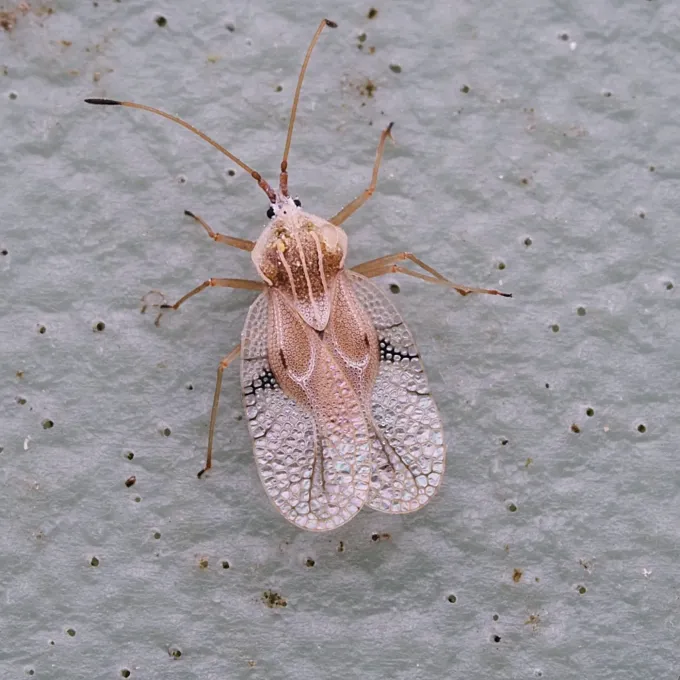
The genus Gargaphia belongs to the family Tingidae, commonly known as lace bugs. These insects are easily recognized by their unique, elaborate, lace-like wing structure which gives them their common name.
Adult lace bugs are quite small, typically ranging between 3 to 5 millimeters in length. Their bodies are flattened, and they often exhibit a brownish or grayish color, providing effective camouflage against the leaf surfaces where they reside.
Nymphs, or the immature stages of these insects, differ significantly from the adults. They are often wingless and may be covered with small spines or protuberances, which serve as a defense mechanism against potential predators.
Gargaphia species are known for being relatively sedentary. They tend to congregate in groups on the underside of leaves, where they remain for extended periods while feeding, making them somewhat easy to spot upon close inspection.
Correct identification of a specific Gargaphia species usually requires a magnifying lens to examine the structure of the pronotum and antennae, as different species exhibit slight morphological variations.
What it damages
Lace bugs are notorious for damaging a wide variety of host plants, including various vegetable crops, legumes, and several ornamental shrubs. Their feeding behavior can lead to significant aesthetic and physiological damage.
These insects use their piercing-sucking mouthparts to extract sap from the plant cells. This process removes chlorophyll, which is essential for photosynthesis, ultimately weakening the entire plant structure.
When feeding, they cause chlorotic stippling on the upper leaf surface. Over time, these spots coalesce, leading to severe yellowing, browning, and eventually premature necrosis and leaf drop.
Heavy infestations reduce the plant's ability to produce energy, which stunts growth, reduces fruit size, and degrades overall quality. In extreme cases, the stress can make the plant susceptible to secondary pathogens.
Primary hosts include:
- Solanaceous plants (tomatoes, eggplants)
- Leguminous plants (beans, soybeans)
- Various ornamental garden trees and shrubs
When it appears
The life cycle of Gargaphia is highly dependent on environmental temperature. Adults typically emerge from their overwintering sites in early spring as soon as temperatures remain consistently above 15 degrees Celsius.
Female lace bugs lay their eggs in clusters, usually on the underside of leaves. They often cover the egg batch with a protective, dark, fecal material to safeguard the developing embryos from dehydration and predators.
Development from egg to adult is rapid in warm, dry weather conditions, often taking less than a month. Consequently, multiple generations can occur within a single growing season, leading to population explosions.
Nymphs pass through five instars before reaching adulthood. Throughout these stages, they remain largely confined to the area where they hatched, creating localized colonies that expand as the insects grow.
Winter is typically survived by the adult stage. They seek refuge in sheltered areas such as leaf litter, tree bark crevices, or under the topsoil, where they enter a state of diapause to survive the winter chill.
Signs of infestation
The most visible sign of an infestation is the presence of pale, yellowish, or whitish stippling on the upper side of the foliage. This mosaic-like appearance is caused by the destruction of leaf cells.
Upon closer examination of the leaf underside, you will observe the presence of live insects, nymphs, and their dark, sticky fecal spots, which are a hallmark of lace bug activity.
As damage progresses, the leaves lose their vibrant color, turning greyish-brown and becoming dry and brittle. This loss of vitality is often mistaken for drought stress or nutrient deficiency by inexperienced growers.
In severe cases, the plant may suffer from stunted growth and delayed maturity. Leaves that are heavily infested may curl or wilt, and the overall plant vigor will be significantly impaired.
The presence of fine, transparent-looking areas on the leaf, resembling a network of veins, is a classic indication of extensive feeding, highlighting why they are named "lace" bugs.
Control measures
Good sanitation practices are the first line of defense. Removing and destroying plant debris at the end of the season eliminates the overwintering habitat for adult lace bugs.
Biological control methods, including the use of entomopathogenic fungi or encouraging natural predators like lacewings and ladybeetles, can effectively regulate populations in garden and greenhouse settings.
Systemic insecticides are the most effective chemical intervention for heavy infestations. These products are taken up by the plant and kill the bugs as they feed on the sap, providing long-lasting protection.
Implementing proper spacing and crop rotation helps to minimize the spread of these insects. Because some Gargaphia species favor weeds, keeping the field margins clean is a crucial preventative measure.
Regular scouting is vital for success. Inspecting the undersides of leaves early in the season allows for spot treatments, which are much more environmentally friendly than broad-spectrum chemical spraying.
Taxonomy
- Latin name
- Gargaphia
- Order
- Hemiptera (bugs, aphids, leafhoppers)
- Family
- Tingidae
- EPPO code
- GARGSP
Discussion
No discussions yet — be the first.