
Longnose killifish
Fundulus similis
Description
How to identify
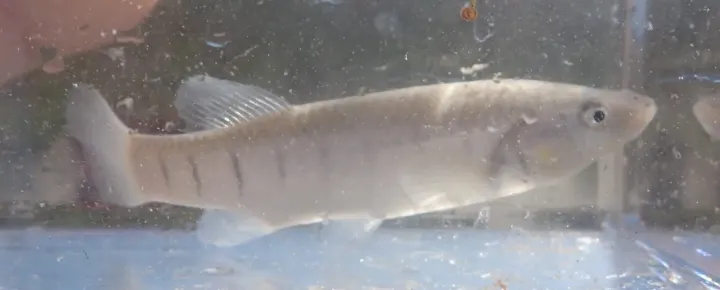
The longnose killifish (Fundulus similis) is a species of fish in the family Fundulidae, order Cyprinodontiformes. It is a marine and brackish water species native to the coastal regions of the Atlantic.
This organism is strictly aquatic and has no biological mechanism to interact with or damage agricultural crops. It is often mistakenly listed in non-academic pest databases due to classification errors.
The fish features a distinctive elongated body with vertical bars along its sides, typically reaching small sizes suitable for its coastal environment.
Its life cycle is entirely dependent on water, with spawning occurring in the substrate of coastal lagoons and estuary zones.
As a fish, it plays a specific role in the aquatic food web, consuming small crustaceans, worms, and organic debris found in estuarine habitats.
What it damages
The longnose killifish does not damage any plant species. It lacks the anatomy, such as mandibles or piercing mouthparts, required to feed on agricultural foliage or roots.
There is zero recorded evidence of Fundulus similis causing harm to farming, horticulture, or forestry operations globally.
This species is not a phytophagous organism. Any claims suggesting it causes agricultural damage are inaccurate and misinterpret the nature of the species.
Crop loss attributed to this fish is impossible as the species does not inhabit terrestrial environments where crops grow.
Farmers should be aware that this name in a list of "pests" is a clear indicator of misinformation and does not require any agricultural intervention.
Control measures
No pest management or control measures are necessary for the longnose killifish, as it is a beneficial part of the coastal ecosystem and not a pest.
Do not apply any pesticides or agricultural chemicals to manage this species, as this would be environmentally harmful and ineffective for crop protection.
If you observe damage to your crops, please consult an agronomist to identify the true biological pest rather than focusing on aquatic life.
Focus your crop protection strategies on verified pests like aphids, mites, or larvae that have proven impact on plant health.
Maintain accurate records of pests by utilizing reputable scientific databases and official agricultural extension services.
Taxonomy
- Latin name
- Fundulus similis
- Family
- Cyprinodontidae
- EPPO code
- FUNUSI
Discussion
No discussions yet — be the first.