
Chaffinch
Fringilla
Description
How to identify
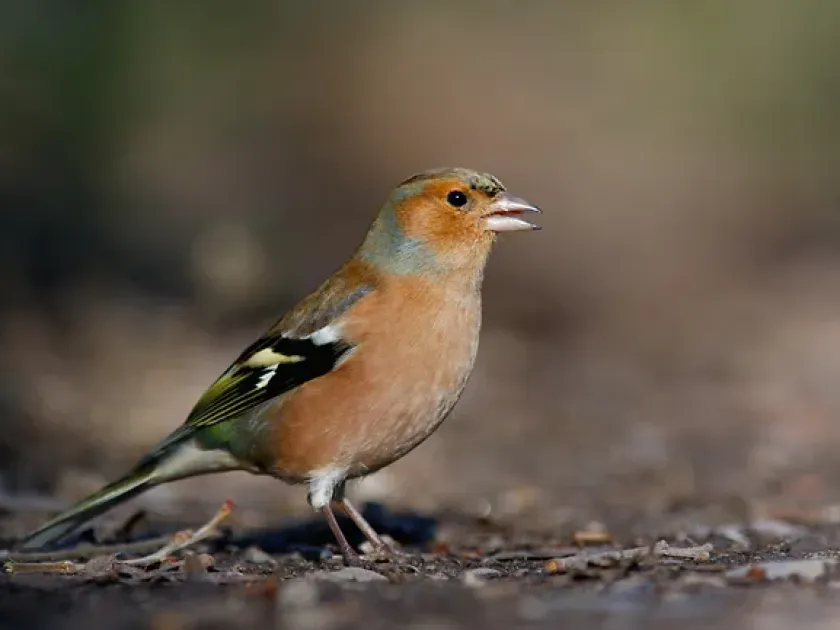
The Common Chaffinch (Fringilla coelebs) is a small passerine bird from the finch family. Adult birds measure about 14–16 cm in length and weigh approximately 20–25 grams. The male is easily recognized by its brownish-pink breast and blue-grey crown.
A key diagnostic feature is the presence of two prominent white wing bars, which are highly visible during flight. The Chaffinch possesses a strong, conical beak specifically evolved for crushing seeds, which poses a significant threat to agricultural crops.
These birds are highly social and gregarious, often forming large flocks outside the breeding season. This behavior makes them highly mobile and capable of concentrating in agricultural areas to exploit available food sources.
They are highly adaptive to human-altered landscapes, often nesting in close proximity to cultivated fields. Their ability to switch between wild weed seeds and crop grains makes them persistent visitors to farms throughout the growing season.
The biology of the Chaffinch is marked by seasonal movements. In temperate zones, they are present in fields from early spring, throughout the sowing period, and until late autumn, when the final harvesting stages are completed.
What it damages
Chaffinches cause economic damage by consuming seeds during the critical germination phase. By picking up newly sown seeds, they reduce plant density and cause patchy stands, often requiring additional sowing efforts.
During the ripening stage of cereal crops, flocks of finches attack standing wheat, barley, and oat crops. They damage the ears, either by extracting the grains or shattering them, which significantly impacts the yield quality and quantity.
Oilseed crops, such as sunflowers, are also heavily targeted. Chaffinches feed directly on the seeds within the flower heads, leaving behind damaged, empty husks that are susceptible to fungal infections and rot.
In addition to seed consumption, young seedlings are often pulled out by the birds while foraging for residual seeds attached to the roots or stems. This mechanical damage leads to the death of the plants and severe thinning of the field.
The scale of damage is highly dependent on the flock size and the availability of alternative food sources. In years when natural forest seeds are scarce, Chaffinches tend to aggregate in large numbers in agricultural zones, leading to substantial losses.
Control measures
Bioacoustic deterrents are one of the most common methods for managing Chaffinch populations. These devices emit distress calls that mimic predators or alarm signals, effectively deterring the birds from congregating on agricultural land.
Visual deterrents, including hawk kites, holographic tapes, and reflective surfaces, are useful tools. To maintain effectiveness, these devices must be moved or repositioned frequently to prevent the birds from becoming habituated to them.
Agronomic practices play a vital role in prevention. Ensuring the proper depth of sowing during the planting phase makes seeds less accessible to birds, significantly reducing the success rate of foraging attempts on the soil surface.
Protective netting is the most reliable barrier for high-value crops or research plots. By creating a physical partition between the birds and the plants, netting eliminates access to the grain during the vulnerable ripening period.
An integrated approach is recommended for effective crop protection. By combining mechanical deterrents with monitoring programs to identify peak feeding times, farmers can significantly lower the risk of bird-related yield losses.
Taxonomy
- Latin name
- Fringilla
- Family
- Fringillidae
- EPPO code
- FRINSP
Discussion
No discussions yet — be the first.