
Cicada Fidicina picea
Fidicina picea
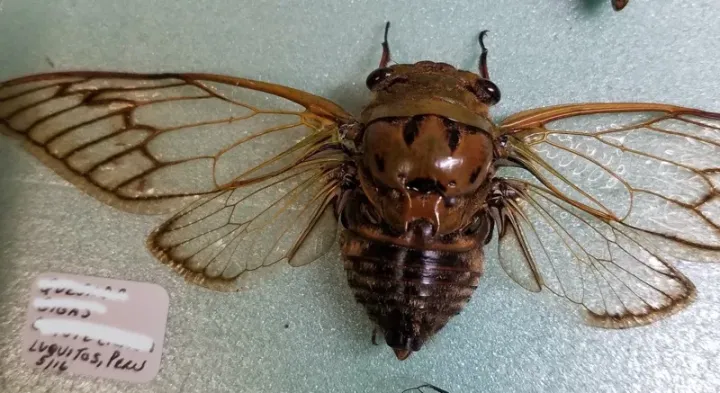
Description
How to identify
Fidicina picea is a significant species belonging to the Cicadidae family. Like other cicadas, these insects are characterized by a robust body structure and two pairs of transparent, membranous wings with detailed vein patterns.
Adults typically exhibit a dark, brownish-black coloration, which provides effective camouflage against the bark of trees where they rest and vocalize.
The nymphal stage of Fidicina picea is spent entirely underground. During this time, they develop specialized forelegs adapted for digging through soil and accessing the root systems of host plants.
Identification is primarily achieved by analyzing the distinct acoustic songs produced by the males during their mating season, as well as observing the presence of exuviae on tree trunks.
As large insects, their presence is often marked by their size and the density of their population, which can be quite high in favorable climatic conditions.
What it damages
The primary damage is caused by the nymphs, which reside in the soil for several years. They feed on plant sap by piercing the root tissues, which significantly deprives the plant of essential nutrients and water.
Young trees and saplings are most vulnerable, as their smaller root systems cannot withstand the continuous suction of sap, often leading to stunted growth or total decline.
Adult cicadas also feed on the sap of twigs and branches using their specialized mouthparts, which may cause minor wounds and structural weakness in tender plant shoots.
Widespread infestations of Fidicina picea can lead to the overall weakening of orchards and forest plantations, increasing the host plant's susceptibility to drought and secondary pathogens.
Economic damage is recorded in regions where high populations cause excessive stress to trees, resulting in reduced yields in fruit-bearing species or loss of aesthetic value in ornamental plants.
Signs of infestation
One of the earliest signs of infestation is the general lack of vigor in plants, characterized by yellowish foliage and reduced annual growth, despite sufficient soil fertilization.
During the transformation period, small cylindrical holes appear in the soil near the base of the tree, indicating where the nymphs have emerged to become adults.
The accumulation of empty nymphal skins, or exuviae, on the bark of trees is a definitive sign that a large population has emerged in the immediate vicinity.
The loud, rhythmic buzzing or clicking sounds of adult males are characteristic signs of their activity, often signaling that egg-laying is imminent.
In cases of severe root damage, trees may show signs of wilting even when soil moisture is adequate, indicating that the root system can no longer transport water effectively.
Control measures
Management of Fidicina picea is challenging due to the long subterranean life cycle of the nymphs, which makes them inaccessible to many contact insecticides.
Cultural practices, such as deep tilling or cultivation of the soil around the base of trees, can physically disrupt the nymphs and reduce their population density significantly.
Biological control agents, including entomopathogenic fungi and nematodes that attack soil-dwelling larvae, offer a sustainable and environmentally friendly approach to population management.
In severe infestation cases, targeted use of systemic insecticides may be necessary during the emergence phase, although careful consideration must be given to non-target insect species.
- Regular inspection of trunks for shed skins to monitor population peaks.
- Enhancing plant health through proper irrigation and balanced fertilization to improve recovery capacity.
- Removing and destroying heavily infested plants along with the surrounding root zone to eliminate future generations.
Taxonomy
- Latin name
- Fidicina picea
- Order
- Hemiptera (bugs, aphids, leafhoppers)
- Family
- Cicadidae
- EPPO code
- FIDCPI
Discussion
No discussions yet — be the first.