
Niobe fritillary
Fabriciana niobe
Description
How to identify
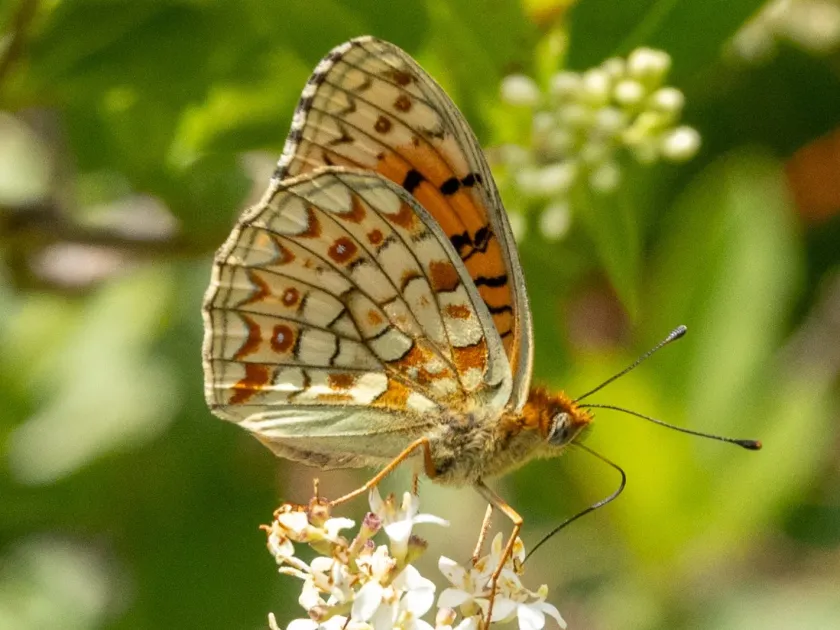
The Niobe fritillary (Fabriciana niobe) is a butterfly belonging to the Nymphalidae family and the Heliconiinae subfamily. Adult specimens typically have a wingspan ranging from 50 to 60 mm.
The wings exhibit a characteristic orange coloration with black spots and bands, typical of many fritillary species. The underside of the hindwings features distinct pearlescent spots, which is the origin of the common name.
The larvae, or caterpillars, can reach up to 40 mm in length and are dark in color with light-colored stripes along the back and sides. Their bodies are covered in numerous branched spines as a defense mechanism.
The pupae are suspended and generally have dark, camouflaging colors, allowing them to remain hidden on plant stems or within dry grass.
The species' biology is closely linked to the presence of specific herbaceous plants that serve as the primary food source for the larval stages.
What it damages
The primary damage is caused by the caterpillars, which feed on the leaves of plants from the Violaceae family, including both wild and cultivated violet species.
In agricultural and garden settings, this species can damage ornamental plantings of pansies and violets. Feeding mainly at night, caterpillars can significantly defoliate leaves.
When populations are high, the pest can completely strip plant stems, leading to stunted growth, weakened immunity, and a significant loss in the ornamental value of the crops.
Damage manifests as skeletonized leaves or complete consumption of leaf tissue, starting from the edges, which is particularly critical for young seedlings.
Although this species is rarely considered a major agricultural pest on a commercial scale, its activity in nurseries and home gardens may require active management.
When it appears
The Niobe fritillary follows a univoltine life cycle, meaning there is one generation per year. Overwintering occurs either as an egg or as a first-instar larva hidden in the plant's root zone.
The active development period for larvae occurs in the spring months, specifically April and May. During this time, the larvae feed intensively and grow rapidly.
Pupation usually occurs at the end of May or in June. The transformation process from larva to butterfly takes approximately two to three weeks, depending on the temperature.
Adult flight occurs throughout the summer, from June through August. During this stage, the butterflies actively visit various flowering plants to feed on nectar.
Females lay eggs in close proximity to food plants, ensuring that young larvae have immediate access to food after hatching or emerging from diapause.
Signs of infestation
The first sign of the pest's presence is the appearance of distinct holes or eaten leaf edges on violets, which are unique to lepidopteran feeding behavior.
Larvae can be detected by carefully inspecting the undersides of leaves or the root zone of the plant during the early morning or evening hours.
The presence of frass (droppings) on the soil surface under the plants is a clear indicator that larvae are feeding in the vicinity.
Severe infestations may result in distorted young shoots and a failure to bloom, caused by the overall stress inflicted upon the plant.
The observation of adult butterflies in the area during the peak flight season serves as a warning to monitor plantings for future egg-laying activity.
Control measures
Manual collection of caterpillars during the early morning is the most effective and eco-friendly method for controlling the population in small garden areas.
Regular weeding of the area around violet plantings reduces the habitat available for the pest to overwinter and successfully reproduce.
Biological control agents based on Bacillus thuringiensis are highly effective against lepidopteran pests without harming beneficial insects or pollinators.
- Application of systemic insecticides during severe outbreaks.
- Practicing proper crop rotation and avoiding overly dense plantings.
- Encouraging natural predators such as birds and predatory insects in the garden.
Chemical control measures should be applied according to local regulations, strictly avoiding peak flowering times to ensure the safety of bees and other pollinators.
Taxonomy
- Latin name
- Fabriciana niobe
- Order
- Lepidoptera (butterflies)
- Family
- Nymphalidae
- EPPO code
- FBRCNI
Discussion
No discussions yet — be the first.