
High brown fritillary
Fabriciana adippe
Description
How to identify
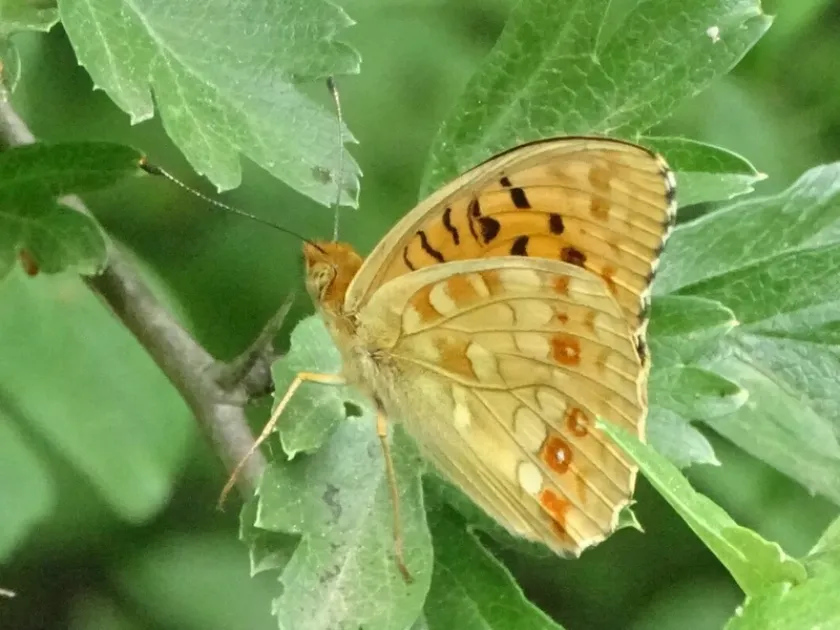
The High Brown Fritillary (Fabriciana adippe) is a butterfly belonging to the Nymphalidae family. Its wingspan ranges from 60 to 70 mm.
The upper side of the wings is orange-brown with distinct black spots and lines, while the underside features silver-colored pearlescent spots.
Larvae (caterpillars) are brown with longitudinal stripes and branched spines, reaching up to 40 mm in length during their development.
Pupae are generally suspended from stems or debris, appearing brownish with a metallic luster that provides camouflage in the natural environment.
While often associated with woodland edges, the species can occasionally reach high population levels in areas adjacent to cultivated plots.
What it damages
The primary hosts for the larvae of this species are various plants from the genus Viola, including wild and cultivated varieties.
In agricultural settings, the High Brown Fritillary can become a concern where medicinal or ornamental violets are grown in large quantities.
Caterpillars cause damage by feeding on the leaves, which reduces the photosynthetic area and weakens the overall vitality of the plant.
The damage is typically localized, but high densities of larvae can lead to severe defoliation of the crop during the spring growing season.
Such injuries negatively impact the commercial quality of leaf-based products and ornamental value of the plants.
When it appears
The High Brown Fritillary completes one generation per year, making its impact season-dependent and linked to the lifecycle of its host plants.
The winter stage is spent as an egg or a first-instar larva, usually hidden in leaf litter or near the base of the food plant.
Adult butterflies are typically active from late June through August, focusing on feeding and reproduction during this period.
The larval phase is most active in the spring, synchronized with the rapid growth of violets, which provides essential nutrition.
Environmental conditions, particularly spring temperature, determine the survival rate of the larvae and the subsequent population density.
Signs of infestation
The most common sign of infestation is the presence of irregular holes in leaves or entire leaf blades being consumed by larvae.
Small, dark fecal pellets left on the ground or on the remaining leaf tissue are strong indicators of active caterpillar feeding.
Affected plants often show stunted growth and a generally sickly appearance compared to healthy, non-infested neighboring plants.
- Evidence of grazing on leaf margins.
- Visible larvae found on the underside of leaves during early morning.
- Increased susceptibility of the plant to secondary pathogens.
In extreme cases, complete skeletonization of the leaf surface occurs, leaving only the primary veins of the foliage.
Control measures
Cultural control includes effective weed management, specifically the removal of wild violets that act as bridges for the pest to reach crops.
Manual collection of caterpillars is a practical approach for small-scale production or greenhouse environments to limit damage without chemicals.
Biological control using microbial insecticides, such as those containing Bacillus thuringiensis, is highly effective and environmentally safe.
Chemical intervention should be reserved for outbreaks and must be managed according to strict pre-harvest intervals to ensure safety.
Encouraging natural predators, such as spiders and predatory wasps, in the vicinity of the crops helps maintain the population at non-economic levels.
Taxonomy
- Latin name
- Fabriciana adippe
- Order
- Lepidoptera (butterflies)
- Family
- Nymphalidae
- EPPO code
- FBRCAD
Discussion
No discussions yet — be the first.