
Fritillary
Fabriciana
Description
How to identify
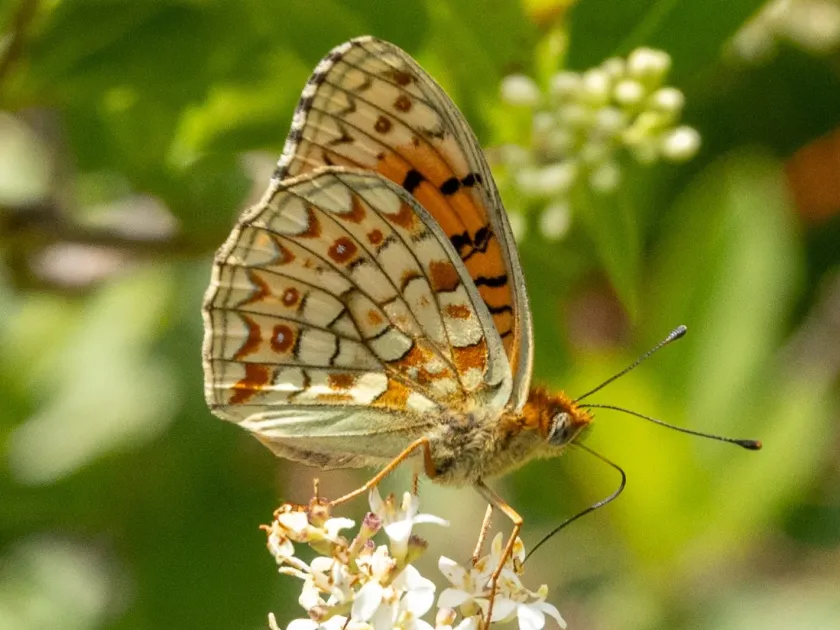
Fritillaries (genus Fabriciana) belong to the large family Nymphalidae and are known for their distinctive orange and black wing patterns.
The adult butterflies are characterized by silvery spots on the undersides of their wings, which is a key identification feature for this group.
The larvae, or caterpillars, are typically dark in color and often possess rows of branched spines as a defense mechanism against potential predators.
As members of the order Lepidoptera, they undergo a complete metamorphosis, transitioning through egg, larva, pupa, and adult stages.
Identification is usually performed by observing the specific wing patterns of adults or the appearance of caterpillars found on host plants during the growing season.
What it damages
Adult fritillary butterflies feed exclusively on flower nectar and are generally considered harmless to crops in their mature stage.
The primary damage is caused by the caterpillars, which possess chewing mouthparts and consume the leaves of various plants to sustain their growth.
While they primarily target wild vegetation, they can occasionally move onto agricultural or ornamental crops if preferred food sources are scarce.
Heavy feeding causes defoliation, which reduces the plant's capacity for photosynthesis, stunts growth, and can result in decreased overall yield.
Severe infestations can lead to the total destruction of foliage, leaving only the stem and major veins of the plant intact.
When it appears
Most fritillaries complete one generation per year, making their activity highly dependent on seasonal temperatures and climate conditions.
They typically overwinter in the larval stage, often sheltering in leaf litter or near the base of host plants to survive the colder months.
As spring temperatures rise, the caterpillars emerge to begin active feeding, which is the most critical period for agricultural monitoring.
Adult butterflies appear later in the summer, focusing on mating and laying eggs to restart the reproductive cycle for the next season.
Understanding these biological milestones allows farmers to time their inspections and interventions effectively to prevent damage.
Signs of infestation
The most common sign of infestation is the presence of irregular holes or jagged edges on the leaves, indicating recent feeding activity by larvae.
Excrement (frass) may also be visible on the foliage or the soil surface beneath the plant, serving as a clear indicator of a caterpillar's presence.
Physical inspections often reveal the caterpillars themselves, which are most active during the cooler parts of the day, such as early morning or dusk.
- Irregular chewing patterns on the leaf edges.
- Presence of dark, spiny larvae on the underside of leaves.
- Visible reduction in foliage density across the crop.
The presence of rolled or folded leaves, sometimes held together with silk, can also indicate the early stages of larval nesting.
Control measures
Cultural practices, such as rigorous weed management, are essential as they eliminate the secondary food sources that support the pest population.
Biological control agents, including Bacillus thuringiensis, offer an effective and environmentally friendly solution for targeting young caterpillars.
Mechanical cultivation of the soil post-harvest helps disrupt the life cycle by exposing overwintering larvae to environmental stressors and predators.
When infestation levels exceed the economic threshold, targeted insecticide application may be required, ensuring compliance with local safety regulations.
Promoting a healthy ecosystem that supports natural predators, such as birds and parasitic wasps, provides long-term control over fritillary populations.
Taxonomy
- Latin name
- Fabriciana
- Order
- Lepidoptera (butterflies)
- Family
- Nymphalidae
- EPPO code
- FBRCSP
Discussion
No discussions yet — be the first.