
Mugwort moth
Exaeretia canella
Description
How to identify
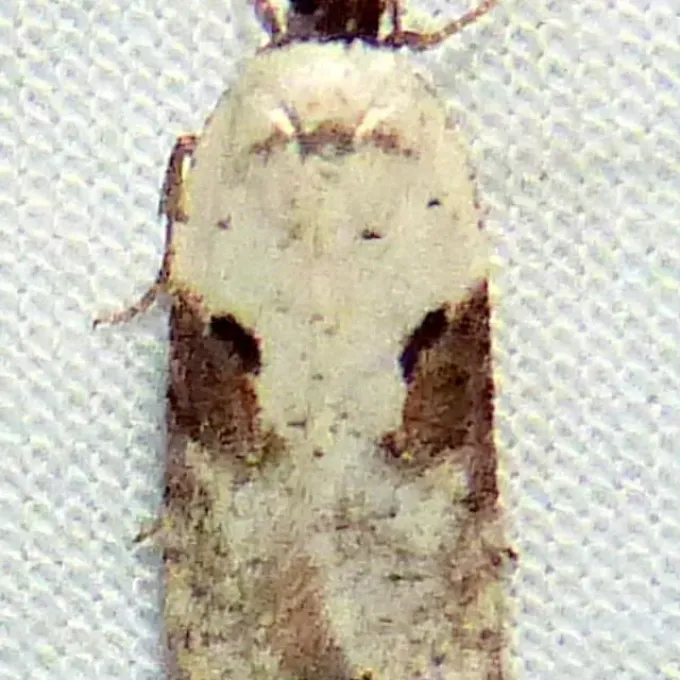
The mugwort moth (Exaeretia canella) belongs to the Depressariidae family (often classified within Oecophoridae) in the order Lepidoptera. Adults are small moths with wingspans colored in shades of brown and gray, providing excellent camouflage.
The larvae, or caterpillars, have a slender body, often pale green or yellowish, which makes them difficult to spot against the stems and leaves of their host plants.
The species follows a complete metamorphosis life cycle, consisting of egg, larva, pupa, and adult stages, with each stage specifically adapted to the host environment.
Adults are primarily nocturnal or crepuscular, hiding during the day in foliage or near the roots of the host plants, which makes monitoring more challenging.
The biological development is tightly linked to the phenology of various Artemisia species, which serve as both food sources and shelters for the larvae.
What it damages
The larvae are specialized feeders on wormwood (mugwort), consuming both the foliage and the generative parts of the plants.
By boring into the stems and buds, the caterpillars cause significant physical damage, leading to stunted growth, wilting, or even the death of the shoots.
Heavy infestations lead to substantial yield losses in essential oil production, as the plant's metabolic energy is diverted from essential oil synthesis to tissue repair.
Feeding on floral buds prevents the normal development of seeds and flowers, impacting the reproductive success of the host plants.
In addition to direct feeding damage, larval activity facilitates the entry of secondary pathogens, such as fungi, which further degrade the quality of the harvested crop.
When it appears
The emergence of the first generation of adults typically occurs in late spring, aligning with the early vegetative growth phase of the host plants.
Larval activity spans the entire summer season, coinciding with the peak vegetative growth and flowering phases of wormwood.
Depending on the climatic zone, the mugwort moth may produce one or two generations per year, with warmer climates favoring multiple life cycles.
Overwintering usually takes place at the adult or pupal stage, hidden within plant debris, leaf litter, or in the soil near the plant base.
Environmental triggers like rising soil temperatures and photoperiod shifts dictate the emergence and the timing of subsequent developmental stages.
Signs of infestation
The presence of Exaeretia canella is primarily indicated by leaves that are webbed together or rolled, which the larvae use for protection.
Accumulation of frass (larval waste) near the base of the petioles or at the points where leaves meet the stems is a reliable sign of infestation.
Visible wilting or yellowing of the terminal shoots, often appearing as if the plant is suffering from nutrient deficiency or drought, is a common symptom.
Holes bored into the flower buds or seed heads provide evidence of larval presence in the generative organs of the plant.
Adult moths may occasionally be flushed out during field inspections, displaying rapid, erratic flight patterns before resettling on nearby vegetation.
Control measures
Cultural control practices, such as autumn plowing and the removal of crop residues, are essential to destroy the overwintering sites of the pest.
Crop rotation and the management of wild Artemisia species in the vicinity of production fields help to break the life cycle of the moth.
Chemical control involving selective insecticides targeting lepidopteran larvae is effective if applied during the early stages of larval development.
Biological control, including the use of Bacillus thuringiensis sprays, provides an eco-friendly option for minimizing population densities without harming beneficial insects.
Integrated Pest Management (IPM) programs should prioritize pheromone monitoring to optimize the timing of applications, ensuring maximum efficacy and minimal pesticide use.
Taxonomy
- Latin name
- Exaeretia canella
- Order
- Lepidoptera (butterflies)
- Family
- Depressariidae
- EPPO code
- EXAICA
Discussion
No discussions yet — be the first.