
Exaeretia
Exaeretia
Description
How to identify
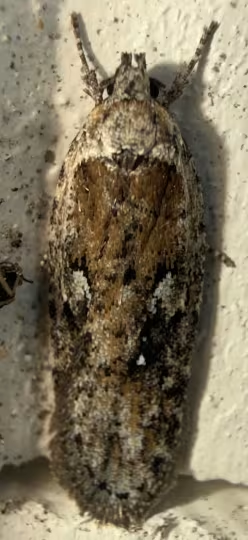
Exaeretia is a genus of moths belonging to the family Depressariidae. Adult specimens generally have a modest appearance typical of this family, featuring greyish-brown wings with indistinct patterns that allow them to camouflage perfectly on tree bark or dry plant debris.
The larvae of Exaeretia usually have a slender body, varying in color from green to yellowish-brown, often marked with dark spots or stripes. Their behavior depends on the specific species, but they all share the trait of feeding actively on plant tissues in concealed environments.
Systematically, this genus is classified under the order Lepidoptera. Identifying specific species often requires examination of genital structures, as the external morphological features of the adults are frequently insufficient for precise field diagnosis.
The insect's life cycle involves complete metamorphosis: egg, larva, pupa, and adult. In field conditions, the larval stage is the most noticeable, as it inflicts direct damage to crop plants during their active growth period.
Studying the biology of specific species within the Exaeretia genus is essential for selecting appropriate monitoring times, as many members possess narrow host-plant specialization, restricted to specific plant families.
What it damages
This pest primarily affects plants from the families Asteraceae and Apiaceae. Depending on the region, the objects of damage may include both wild herbs and valuable crops, including medicinal and essential oil-bearing varieties.
Exaeretia larvae prefer to settle in young shoots, buds, and inflorescences. By feeding on tissues inside the receptacle or stem, they disrupt the normal development of reproductive organs, which often leads to a total loss of seeds or marketable produce.
Under intensive farming conditions, Exaeretia can pose a threat to specialized crops, where damage to the growth point or reproductive parts leads to a significant decrease in biomass and quality characteristics of the raw material.
The pest's harmfulness is manifested by the weakening of plant immunity. The damage sites become entry points for secondary pathogens, including bacterial and fungal rots, which further degrade the state of the crops.
The pest poses a particular danger during periods of mass reproduction, when local populations can destroy a significant portion of inflorescences in a field, which is critical for seed-producing farms.
Signs of infestation
The first visual sign of caterpillar presence is leaf curling or the presence of silken webs where the larvae hide. The silk serves as protection against natural enemies and unfavorable environmental conditions.
During plant inspection, caterpillar frass can be found accumulating in the damaged areas. This is a typical indicator of the activity of concealed-living pests, pointing to their recent feeding in that part of the plant.
Deformation of apical shoots and premature wilting of buds are indirect signs of infestation. Larvae often eat the internal parts of ovaries; therefore, a plant that looks healthy on the outside may be completely destroyed from the inside.
During early monitoring stages, attention should be paid to color changes in young leaves, which may take on a yellowish hue due to disrupted nutrient flow. This indicates the presence of larvae near the plant's vascular system.
- Leaves curled by silken webs
- Presence of dark frass in leaf axils
- Buds unable to bloom properly
- Hollow cavities eaten out in stems or seeds
Control measures
Agronomic control methods include crop rotation and the destruction of weeds, which serve as reservoirs for the pest during the off-season. Deep autumn plowing helps destroy the overwintering stages of the insect.
The application of biological control agents, such as preparations based on Bacillus thuringiensis, shows high efficiency against young-instar larvae while being safe for entomophages and the environment.
Chemical control should only be applied when the economic threshold of harmfulness is exceeded. The use of systemic insecticides is recommended, as they can penetrate plant tissues where the Exaeretia larvae are hidden.
An important element is monitoring using pheromone traps to determine the start of moth flight. This allows for applications to be made during the most vulnerable phases of the pest's cycle, reducing the overall pesticide load.
Regular inspection of fields during the budding and flowering periods allows for the timely detection of infestation hotspots. Localized treatment of affected areas helps to halt the spread of the pest to neighboring healthy plants.
Taxonomy
- Latin name
- Exaeretia
- Order
- Lepidoptera (butterflies)
- Family
- Depressariidae
- EPPO code
- EXAISP
Discussion
No discussions yet — be the first.