
Everes argiades
Everes argiades
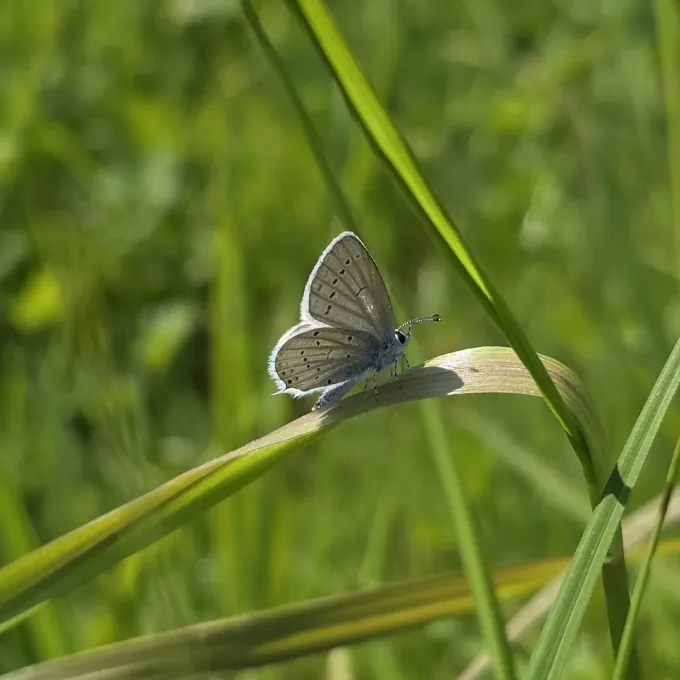
Description
How to identify
Everes argiades, commonly known as the Cupid butterfly, belongs to the order Lepidoptera and the family Lycaenidae. This small butterfly is recognized by the distinct "tails" on its hindwings.
The wingspan of the adult butterfly typically reaches 26–30 mm. Males are violet-blue on the dorsal side with a thin dark border, while females are grayish-brown, making them well-camouflaged.
The larvae are small, green, and flat, often displaying a dark longitudinal stripe. They are highly adapted to feeding on flowers and young fruits of various Fabaceae species.
The pupal stage is attached to the host plant by a silk girdle. The pupae have the remarkable ability to change their color to blend in with the surrounding environment, enhancing survival.
As a species, it is widely distributed throughout the Palearctic realm, thriving in open meadows and various agricultural landscapes rich in forage legumes.
What it damages
The primary hosts for Everes argiades larvae are leguminous plants. Major commercial crops affected include soybeans, alfalfa, clover, and vetch.
Larvae primarily damage the reproductive organs, specifically buds, flowers, and developing pods. This feeding behavior results in significant yield loss of seeds and reduced crop quality.
By consuming the internal tissues of the buds, the larvae disrupt the plant's reproductive cycle. In high-density populations, they may also feed on leaves, further weakening the plant's photosynthetic capacity.
This pest is particularly dangerous for seed production fields where the integrity of the flower and pod is essential for high yield.
The economic impact of the pest is magnified when environmental conditions are favorable, leading to multiple generations that coincide with the flowering stage of the legume host.
When it appears
Everes argiades typically produces two to three generations per year. The first generation of adults emerges in late spring, usually May or June.
The second generation, occurring in July and August, is generally the most destructive as it coincides with the peak flowering and pod-forming stages of many agricultural legumes.
The species overwinters as a mature larva in soil or plant debris, which allows it to survive low winter temperatures across diverse geographical regions.
Adult butterflies are active during sunny days, feeding on nectar and depositing eggs individually on the flower buds or young leaves of host plants.
The complete lifecycle from egg to adult takes approximately 30–45 days, enabling the population to recover quickly during the growing season following minor environmental disturbances.
Signs of infestation
The most visible sign of infestation is the presence of eaten or hollowed-out flower buds, often accompanied by the premature shedding of blossoms.
Larvae often weave small silken webs to protect themselves while feeding inside the buds, which can be spotted upon close inspection of the flowering canopy.
The presence of small dark frass (droppings) on the leaves beneath the flowers is a strong indicator of larval feeding activity on the plants above.
Deformed or damaged pods, often with small entry holes, are indicative of later larval stages feeding directly on the developing seeds inside the pod.
Frequent sightings of adult butterflies fluttering over fields during peak daylight hours serve as an early warning for farmers to initiate field scouting and monitoring.
Control measures
Cultural control methods such as crop rotation and the destruction of wild legume weeds around fields are essential to disrupt the pest's habitat and population growth.
Timely harvesting can minimize the damage caused by later generations of larvae, effectively reducing the number of individuals entering overwintering stages.
Biological control using Bacillus thuringiensis-based products has shown effectiveness against young larvae while minimizing damage to the surrounding ecosystem and beneficial insects.
Chemical control should be applied based on economic thresholds, utilizing insecticides that target the larval stage during periods of mass egg-laying or early emergence.
To protect essential pollinators, all insecticide applications must be carefully timed, preferably during late evening hours, and should strictly follow local safety regulations for non-target species.
Taxonomy
- Latin name
- Everes argiades
- Order
- Lepidoptera (butterflies)
- Family
- Lycaenidae
- EPPO code
- EVRSAR
Discussion
No discussions yet — be the first.