
Euscyrtus concinnus
Euscyrtus concinnus
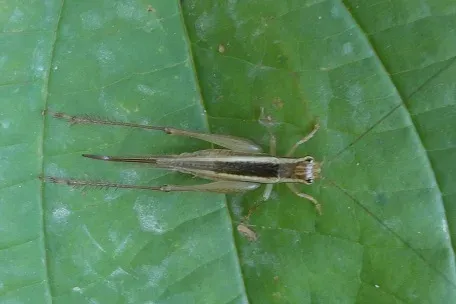
Description
How to identify
Euscyrtus concinnus is a species of cricket belonging to the order Orthoptera and the family Gryllidae. These insects are small in size, characterized by a flattened body and long antennae typical of their family.
Adults usually exhibit shades of light brown to dark brown, providing excellent camouflage against soil and plant debris. Their heads are rounded, equipped with strong mandibles adapted for cutting through fibrous plant tissues.
The hind legs of this species are robust and elongated, which facilitates rapid jumping as a primary defense mechanism. Depending on the population, wing development can vary significantly among individuals.
The nymphal stages share a similar body plan with adults but remain smaller and lack functional wings. They are often lighter in color and tend to reside deeper within the plant canopy.
This species thrives in high-humidity environments, making it a prevalent pest in tropical and subtropical rice-growing regions around the globe.
What it damages
The primary host plant for Euscyrtus concinnus is rice. These insects cause direct damage by consuming the leaves, stems, and reproductive parts of the growing crop.
Beyond cultivated rice, this cricket may feed on various wild grasses found near irrigation canals or field borders. This versatility allows the population to persist even when fields are fallow.
Feeding on leaves disrupts photosynthesis, which weakens the plant and reduces the overall biomass. Such stress is particularly damaging during the early vegetative and reproductive stages.
Large infestations can lead to the destruction of developing panicles, resulting in poor grain filling or total crop failure in heavily affected patches.
Additionally, the mechanical damage caused by feeding creates entry points for various bacterial and fungal pathogens, indirectly increasing the disease incidence in the field.
When it appears
The life cycle of Euscyrtus concinnus is closely tied to the seasonal availability of moisture in rice paddies. High activity is usually correlated with warmer, humid months.
Females deposit eggs in damp soil or soft plant tissues. The nymphs then undergo several molts as they grow, transitioning into adults that continue to feed on the crop.
During peak temperatures, these insects are most active at night. Their movement increases during twilight, when they colonize new parts of the field to feed and mate.
Migration is frequent between adjacent fields, especially if one area becomes overgrazed or harvested. Their dispersal ability makes them challenging to contain once established.
Overwintering occurs primarily in the egg or late-instar nymphal stages. They remain dormant in the soil or under vegetation, waiting for favorable conditions to begin the new season cycle.
Signs of infestation
The most common indicator of presence is the appearance of shredded leaf margins on young rice plants. Small piles of frass (insect excrement) may also be found on the leaves.
A distinct, high-pitched chirping sound is emitted by males during the evening. A high-intensity chorus often indicates a significant population buildup requiring intervention.
Severe infestations manifest as chlorosis or premature yellowing and drying of the foliage. Plants may also show signs of physical deformation or wilting due to stem damage.
Monitoring with a sweep net in the early morning or dusk is an effective way to detect the presence and approximate density of the insect population.
Deformed or empty panicles (blanking) at the harvest stage can be linked to feeding damage that occurred during the earlier stages of reproductive growth.
Control measures
Effective management begins with proper field sanitation, including the destruction of weeds and host grasses along field bunds that harbor the pests.
Water management is a critical tool. Flooding and drying cycles can disrupt the life cycle of nymphs residing in the soil, effectively reducing their survival rates.
Chemical control involving systemic or contact insecticides should only be applied when local economic thresholds are met to prevent unnecessary pesticide exposure.
Biological control, using natural predators or entomopathogenic fungi, is an increasingly important strategy to keep population levels below the damage threshold.
Regular monitoring using light traps allows for targeted and timely intervention, ensuring that the pest is managed before it causes irreversible yield loss.
Taxonomy
- Latin name
- Euscyrtus concinnus
- Order
- Orthoptera (locusts)
- Family
- Gryllidae
- EPPO code
- EUSYCO
Discussion
No discussions yet — be the first.