
Common Crow
Euploea core
Description
How to identify
The Common Crow (Euploea core) is a diurnal butterfly belonging to the Nymphalidae family and the Danainae subfamily, known for its distinctive dark coloration.
The wingspan of an adult butterfly typically ranges from 8 to 9 centimeters, featuring a deep chocolate-brown hue with white spotted margins on both forewings and hindwings.
The body is black with fine white dots. Its flight pattern is notably slow and gliding, which is a defensive strategy linked to the toxins it accumulates from its larval host plants.
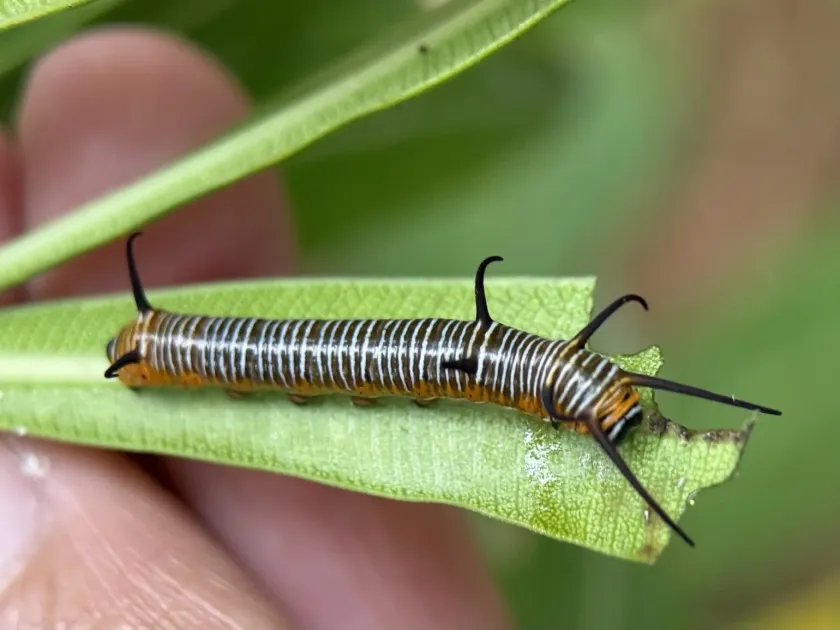
The larvae, or caterpillars, are brightly colored with fleshy filaments, serving as a warning to potential predators that they are unpalatable due to the ingested plant toxins.
The pupae are often golden or metallic in appearance, frequently found attached to the leaves or stems of host plants, blending well with the environment.
What it damages
The primary host plants for the Common Crow caterpillars include various species from the Apocynaceae family, with the oleander (Nerium oleander) being a significant target.
In addition to oleander, these caterpillars are known to feed on various species of Ficus, posing a threat to ornamental landscape plants and specific tropical garden varieties.
Caterpillars sequester cardiac glycosides from their host plants, which makes them highly toxic to most avian and mammalian predators that might otherwise consume them.
The larvae are voracious feeders and can cause severe defoliation, consuming large portions of the leaf surface and leaving only the main veins behind in heavy infestations.
The cumulative damage from large populations can significantly weaken ornamental hedges and trees, reducing their aesthetic value and increasing their susceptibility to secondary pathogens.
When it appears
The life cycle of the Common Crow is intrinsically linked to tropical and subtropical climates, where reproduction can continue throughout the year if host plants are available.
Activity levels peak during the growing season when new, succulent foliage is abundant, providing the necessary nutrients for the rapid development of larvae.
The complete life cycle from egg to adult butterfly takes between 4 to 6 weeks, allowing for multiple generations to occur annually in favorable temperature conditions.
Pupation often occurs during periods of moderate humidity, with the pupae anchored firmly to plant structures, remaining immobile until the adult butterfly emerges.
Migration and dispersal of adult butterflies occur in response to the availability of nectar and suitable egg-laying sites, facilitating the spread of the population across regions.
Signs of infestation
The presence of Common Crow larvae is the most immediate indicator of infestation, characterized by noticeable leaf damage and the thinning of the plant canopy.
Fecal matter, appearing as small dark pellets on the leaves or the ground beneath the plant, is a clear sign that caterpillars are actively feeding above.
The discovery of empty, metallic-looking pupal cases attached to the undersides of leaves or branches indicates that a generation of the pest has completed its metamorphosis.
A high concentration of adult butterflies fluttering around specific host plants during the day suggests an active breeding ground and likely egg-laying activity.
Yellowing, ragged leaf edges, and premature leaf drop in oleander or ficus hedges serve as symptomatic evidence of a developing larval population within the garden.
Control measures
Monitoring is the first line of defense; regular inspections of host plants for eggs and young larvae can prevent large-scale outbreaks if performed consistently.
Manual removal of caterpillars is highly effective for smaller ornamental gardens and can be done easily due to the insects' conspicuous warning coloration.
Biological control using microbial insecticides based on Bacillus thuringiensis is a recommended, environmentally friendly option to manage caterpillar populations without harming beneficial insects.
Maintaining plant health through proper pruning and irrigation improves the plant's ability to withstand and recover from light to moderate pest feeding.
- Hand-picking larvae during early morning or evening hours.
- Applying B. thuringiensis sprays when young larvae are detected.
- Strategic pruning of heavily infested branches to reduce local population density.
Taxonomy
- Latin name
- Euploea core
- Order
- Lepidoptera (butterflies)
- Family
- Nymphalidae
- EPPO code
- EPLOCO
Discussion
No discussions yet — be the first.