
Valerian pug
Eupithecia valerianata
Description
How to identify
The Valerian pug (Eupithecia valerianata) is a small moth belonging to the Geometridae family, characterized by its specialized life cycle associated with Valeriana species.
Adult moths typically have a wingspan ranging from 20 to 22 mm, with greyish or brownish-grey wings marked by fine, dark transversal lines, providing excellent camouflage.
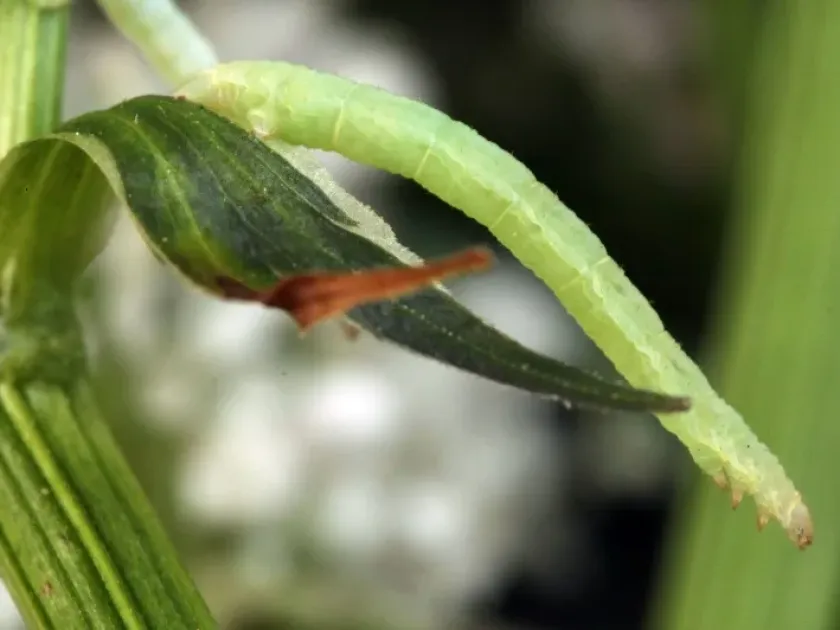
The larvae, or caterpillars, are the primary feeding stage, exhibiting a green or yellowish-green color that blends seamlessly with the host plant's flower buds.
Taxonomically, this insect is classified under the order Lepidoptera. It undergoes complete metamorphosis consisting of four life stages: egg, larva, pupa, and adult.
The species overwinter primarily as pupae, either buried in the soil or tucked away within sheltered spots in the vegetative debris of the host plant.
What it damages
The Valerian pug is primarily a specialist pest that targets the reproductive structures of the valerian plant (Valeriana officinalis).
Larvae feed extensively on developing flower buds, young blossoms, and ovaries, which directly destroys the plant's reproductive potential for the season.
This feeding behavior causes significant damage to seed production, which is a major concern for herb growers aiming to collect high-quality seeds or floral extracts.
While the focus is on the buds, heavy infestations can lead to the larvae consuming tender leaves, further stressing the plant and reducing its overall biomass.
Commercial plantations are particularly vulnerable, as even moderate population densities can lead to substantial reductions in harvest volume and commercial value.
When it appears
Adult moths emerge in late spring or early summer, coinciding with the rapid growth phase of the valerian plants in temperate climates.
The larval activity peaks during the budding and early flowering stages, as the larvae require the nitrogen-rich tissues of the buds to complete their development.
The moth is nocturnal, making it difficult to detect during daylight hours without specialized monitoring equipment like light traps or pheromone lures.
By mid to late summer, the larvae finish their feeding cycle and move into the soil or plant litter to pupate for the next generation or overwintering.
The total duration of the cycle is temperature-dependent, with warmer years potentially accelerating development and leading to multiple overlapping generations.
Signs of infestation
One of the earliest signs of infestation is the presence of frass (larval droppings) on the surface of the flower buds and the lower foliage.
Infested buds often show distinct entry holes where the larvae have bored into the tissue, eventually causing the bud to wither or fail to bloom.
Plants may show signs of premature flower drop or deformed inflorescences, which are common results of larval feeding within the cluster.
The presence of fine webbing covering the flower buds suggests that the larvae are attempting to create a protected environment for feeding.
Gardeners and farmers should inspect the flower clusters closely, as the camouflaged larvae are often perfectly adapted to hide in plain sight.
Control measures
Mechanical control through deep tillage of the field after harvest is highly effective, as it exposes the pupae in the soil to predators and adverse weather.
Maintaining a clean field environment by removing weed hosts and debris reduces the available sites for both pupation and initial colonization.
Biological control methods, such as applying Bacillus thuringiensis, offer a targeted approach that protects the crop without harming beneficial insects or the herb quality.
When chemical intervention is necessary, growers should select selective insecticides that minimize the impact on pollinators while effectively managing the pest population.
- Implement a strict crop rotation schedule.
- Monitor for adult activity using light traps.
- Encourage natural predators like parasitic wasps in the vicinity.
- Ensure balanced plant nutrition to improve the host plant's tolerance.
Taxonomy
- Latin name
- Eupithecia valerianata
- Order
- Lepidoptera (butterflies)
- Family
- Geometridae
- EPPO code
- EUPIVA
Discussion
No discussions yet — be the first.