
Juniper pug
Eupithecia sinuosaria
Description
How to identify
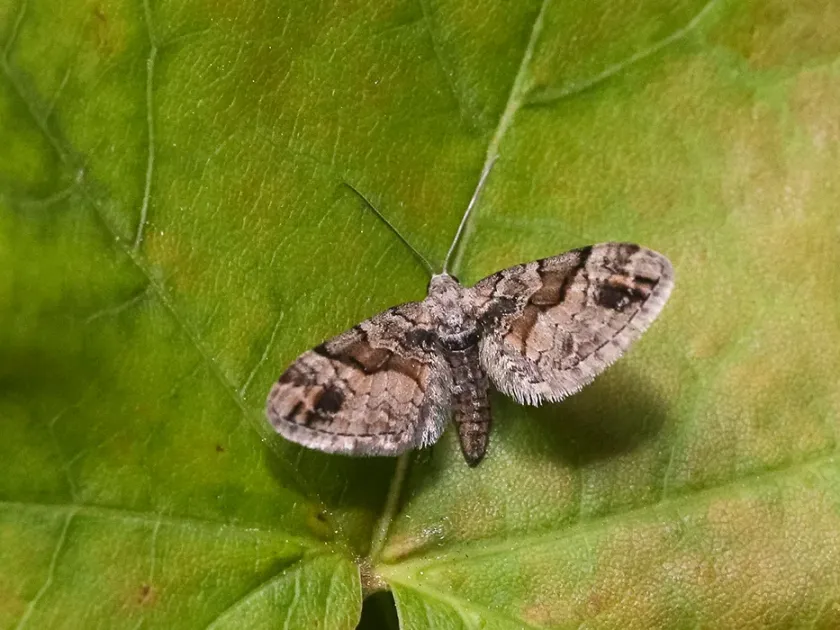
The Juniper pug is a small moth with a wingspan of approximately 20 to 25 millimeters. Its wings display a complex pattern of wavy, dark lines on a grayish or brownish background, providing exceptional camouflage when resting on plants.
The larvae are typical of the Eupithecia genus, featuring a slender, spindle-shaped body. Their color is highly variable, often mimicking the specific shades of the flowers or leaves they consume, which allows them to remain hidden from predators and observers.
What it damages
This species primarily targets plants within the Amaranthaceae family, particularly Chenopodium and Atriplex species. While they thrive on wild weeds, they can occasionally migrate to agricultural crops like spinach or beets if the fields are poorly managed.
The larvae are specialized feeders on the reproductive parts of plants. They consume developing flower buds, open blossoms, and maturing seeds, effectively damaging the reproductive capacity of the host plant and reducing overall yield.
When it appears
Adult moths are typically active during the summer months, spanning from June through August. Being nocturnal, they remain stationary during the day, tucked away within the foliage or flower heads where their coloration renders them nearly invisible.
The life cycle involves complete metamorphosis, including egg, five larval instars, and a pupal stage. Overwintering occurs as a pupa, usually located in the soil or protected under debris, which serves as a survival mechanism during colder periods.
Signs of infestation
Signs of infestation include visible damage to the floral structures, such as hollowed-out buds and chewed petals. The presence of larval frass (droppings) on the leaves or stems beneath the flower clusters is a primary indicator of their activity.
Plants affected by the larvae may show stunted or malformed growth in their reproductive zones. In severe cases, the affected clusters wither and drop, leading to significant seed loss and thinning of the plant's overall fruit-bearing potential.
Control measures
Effective management focuses heavily on the elimination of host weeds. By removing Chenopodium and related weeds from field margins and within the crops, farmers can disrupt the pest's life cycle and significantly lower the local population.
If chemical intervention becomes necessary, targeted insecticides should be applied when the larvae are in their early instars. It is essential to follow integrated pest management guidelines to maintain ecological balance while protecting the harvest.
Taxonomy
- Latin name
- Eupithecia sinuosaria
- Order
- Lepidoptera (butterflies)
- Family
- Geometridae
- EPPO code
- EUPISI
Discussion
No discussions yet — be the first.