
Juniper pug
Eupithecia pusillata
Description
How to identify
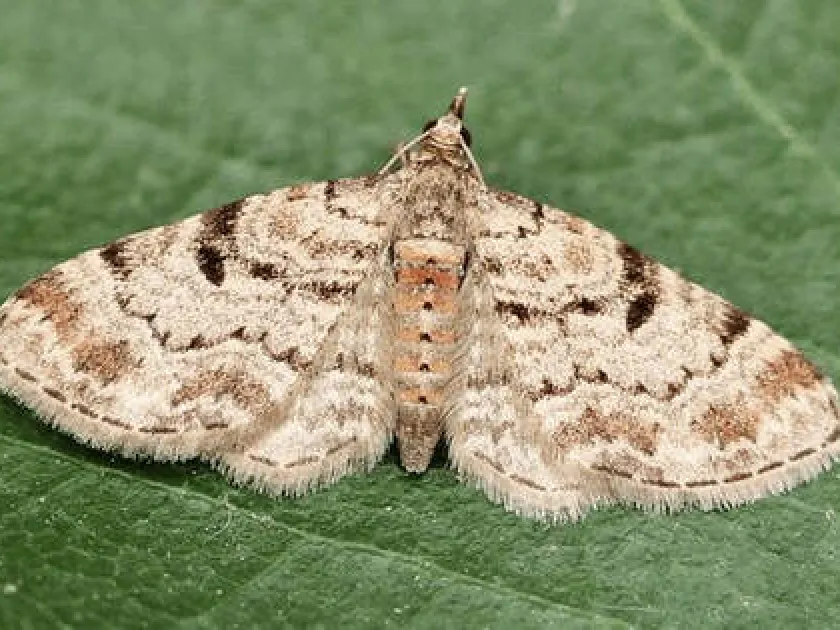
The Juniper pug (Eupithecia pusillata) is a small moth belonging to the Geometridae family, known for its ability to blend into coniferous surroundings.
Adult moths have a wingspan of approximately 20–25 mm, with brownish-grey forewings marked by intricate dark wavy lines.
The larvae are slender, greenish-brown caterpillars that bear a striking resemblance to the foliage of host plants, providing excellent camouflage.
Pupae are typically brownish and overwinter in the leaf litter or crevices of the tree bark, ensuring survival through cold temperatures.
This moth species is nocturnal and often goes unnoticed by gardeners until significant damage becomes visible on the foliage.
What it damages
The primary hosts for this pest are members of the Juniperus genus, although it occasionally infests other conifer species.
The larvae feed on young needles and developing buds, causing severe physiological stress and growth retardation in young plants.
Damaged buds often fail to develop properly, leading to the distortion of branches and a chaotic appearance of the juniper canopy.
Heavy infestations result in extensive defoliation, leaving the plant vulnerable to further damage by drought and secondary fungal diseases.
In nursery environments, even minor damage can significantly decrease the market value of the plants due to aesthetic degradation.
When it appears
Adult moths are active during the late summer, typically between July and September, when they mate and lay eggs.
The eggs overwinter on the twigs and needles of the host plant, remaining dormant until the return of warmer spring weather.
Larval emergence usually occurs in April or May, coinciding with the period of active growth for the juniper plants.
Caterpillars spend about a month feeding voraciously before descending to the soil to pupate during the early summer.
There is only one generation per year, making the spring period the critical window for monitoring and intervention.
Signs of infestation
Early warning signs include the presence of small dark frass (droppings) pellets scattered on the foliage or branches.
Needles at the tips of shoots may turn yellow or brown as the caterpillars hollow them out from the inside.
Larvae often use fine silk threads to web needles together, creating small protected feeding shelters within the dense canopy.
A thinning appearance of the branches is a classic indicator, as the foliage density decreases significantly due to consumption.
Shaking the plant over a white sheet during the spring will often reveal the larvae if they are present in the foliage.
Control measures
Manual removal of webs and caterpillars is a viable solution for smaller garden plants if caught in the early stages.
Biological control using Bacillus thuringiensis based sprays is highly effective and safe for the environment during the larval stage.
Chemical insecticides should be applied as a last resort, specifically targeting the period of egg hatching or young larvae.
Maintaining the overall vigor of juniper plants through proper watering and fertilization helps them withstand and recover from pest attacks.
Regular monitoring of the foliage in early spring is the best way to prevent widespread damage to your landscaping plants.
Taxonomy
- Latin name
- Eupithecia pusillata
- Order
- Lepidoptera (butterflies)
- Family
- Geometridae
- EPPO code
- EUPIPS
Discussion
No discussions yet — be the first.