
Foxglove pug
Eupithecia pulchellata
Description
How to identify
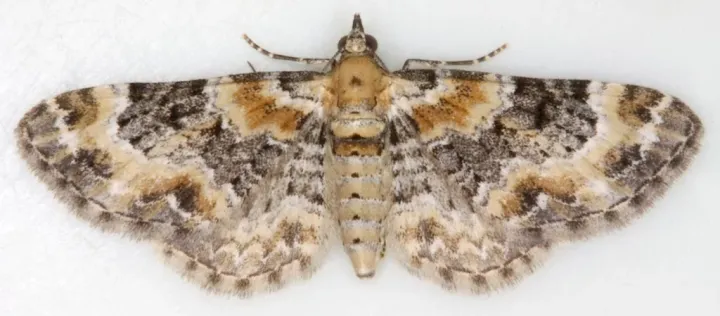
The Foxglove pug (Eupithecia pulchellata) is a moth belonging to the Geometridae family. It is a relatively small insect, often overlooked due to its cryptic coloration and nocturnal habits.
The adult moth has a wingspan of approximately 18 to 22 mm. Its wings exhibit a complex pattern of greyish-brown lines, providing excellent camouflage against the foliage and stems of its host plants.
The larvae, or caterpillars, are cylindrical and display a light green to yellowish-green hue, often marked with reddish stripes or spots that help them blend in with the foxglove flowers.
The species undergoes complete metamorphosis: egg, larva, pupa, and adult. The pupal stage is the primary overwintering phase, usually occurring in the soil or within debris beneath the host plant.
This moth is highly specialized, meaning its life cycle is tightly synchronized with the flowering period of its specific host, primarily the genus Digitalis.
What it damages
The Foxglove pug is specifically associated with the foxglove (Digitalis), with Digitalis purpurea being a frequent target for oviposition and larval development.
The damage is primarily caused by the larvae, which bore into the developing flower buds or seed capsules to feed on the reproductive parts, specifically the seeds and ovaries.
This feeding activity prevents proper seed maturation and can lead to the destruction of the entire seed crop within the affected capsules, significantly reducing yield.
Beyond seed loss, the physical damage to the floral structure degrades the ornamental quality of the plant, making it unsightly for garden or commercial nursery settings.
In cases of high infestation, the cumulative impact on the reproductive capacity of the plant population can be significant, hindering natural regeneration.
When it appears
The emergence of the adult moths typically occurs from late May through July, coinciding with the peak flowering period of foxglove species.
Adults mate and females lay eggs individually on the buds or young flowers, ensuring that larvae have an immediate food source upon hatching.
The larval stage is active throughout the summer months, during which the caterpillars grow and complete their development within the protected environment of the seed pods.
Once fully developed, the larvae drop to the ground to pupate. The pupae remain dormant in the soil throughout the autumn and winter months.
Because there is typically only one generation per year, the window for management is distinct and relies heavily on monitoring the plants during the initial flowering phase.
Signs of infestation
The most reliable sign of an infestation is the presence of small, circular holes in the seed capsules where the larvae have entered or exited.
Infested flowers or developing pods often show signs of premature wilting, yellowing, or abnormal shrinkage compared to healthy, robust capsules.
Small quantities of dark frass (larval excrement) near the entry points or on the exterior of the flower buds indicate that larvae are actively feeding inside.
- Small entry or exit holes in the seed capsules.
- Premature browning or drying of flower spikes.
- Presence of larval frass on the inflorescence.
- Hollowed-out seeds within the pods upon inspection.
- Deformed floral structure caused by internal feeding.
In some cases, fine webbing may be observed connecting damaged flower parts, as the larvae may use silk to secure their surroundings during feeding.
Control measures
Cultural control strategies include removing and destroying infested flower spikes as soon as damage is noticed, which prevents larvae from completing their life cycle.
Maintaining a clean garden environment by removing weeds and plant debris at the end of the season reduces the availability of overwintering sites for the pupae.
Soil cultivation around the base of foxglove plants in late autumn can disturb and kill overwintering pupae, effectively lowering the pest population for the following year.
Biological control, using Bacillus thuringiensis sprays, can be effective if applied during the early larval stages, before the caterpillars bore deep into the capsules.
Chemical intervention should be used cautiously, ensuring that applications do not coincide with peak pollinator activity, particularly bees, which are frequent visitors to foxglove flowers.
Taxonomy
- Latin name
- Eupithecia pulchellata
- Order
- Lepidoptera (butterflies)
- Family
- Geometridae
- EPPO code
- EUPIPU
Discussion
No discussions yet — be the first.