
Eupithecia palpata
Eupithecia palpata
Description
How to identify
Eupithecia palpata is a moth species belonging to the Geometridae family. These insects are commonly referred to as pug moths, known for their distinct wing shape and resting posture.
The adult moth is relatively small and features a cryptic coloration, usually ranging from grey to brown, which provides camouflage against tree bark and needles.
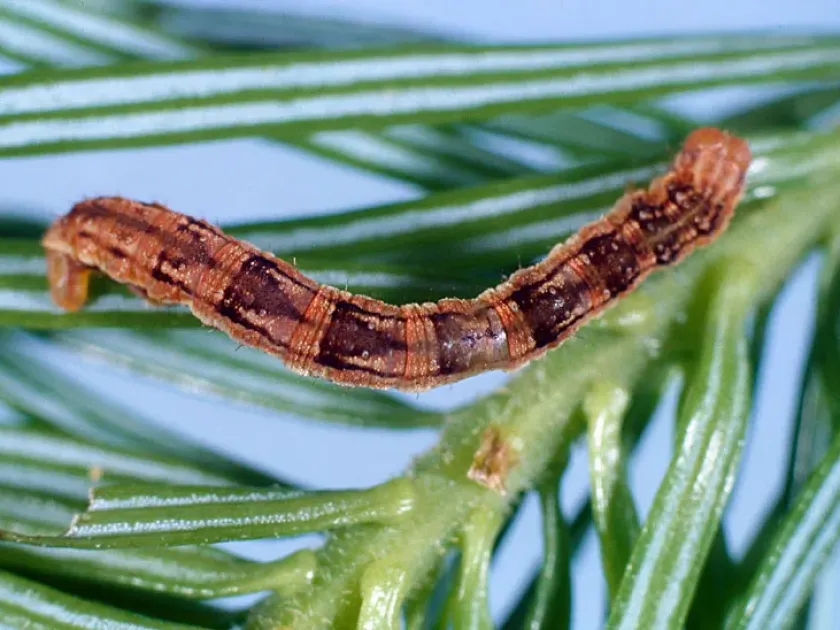
The caterpillars have the characteristic body structure of geometer larvae, often described as 'inchworms'. Their color is typically green or brownish, blending perfectly with the host plant.
Pupation usually occurs in soil or within crevices of the tree bark, where the insect remains throughout the winter season in a dormant stage.
Identification of the specific species within the Eupithecia genus can be challenging and often requires dissection of the genitalia to ensure accuracy.
What it damages
This species primarily targets coniferous trees, with a strong preference for various species within the genus Picea (spruce). Larvae are the stage responsible for the damage.
Caterpillars feed on young needles and developing buds, which can lead to significant defoliation and stunted growth of the host tree.
Heavy infestations can result in yellowing and premature needle drop, negatively impacting the tree's overall vigor and photosynthetic efficiency.
Young plantations and nurseries are particularly vulnerable, as damage to terminal buds can cause permanent deformation of the tree's structure.
- Norway spruce (Picea abies)
- Siberian spruce (Picea obovata)
- Various spruce species
When it appears
The lifecycle of Eupithecia palpata is synchronized with the growth cycle of coniferous trees. Adults typically emerge in late spring or early summer.
Mating and oviposition occur shortly after emergence. Eggs are laid on the needles or near the buds, ensuring that larvae emerge when food is most abundant.
The larval stage is most active during the first half of the summer, feeding intensively to accumulate the necessary reserves for pupation.
By late summer, the caterpillars descend to complete their development into the pupal stage, where they stay until the following year.
Weather patterns, including temperature and humidity, play a critical role in the timing of emergence and the overall population dynamics of the pest.
Signs of infestation
Evidence of an infestation often begins with the appearance of delicate silken webbing spun between needles, which shelters the young larvae.
Discolored, yellowed, or reddish needles are clear indicators of feeding activity, especially when found in clusters near the tips of branches.
Stunted or distorted shoots indicate that the larvae have targeted the terminal buds or succulent new growth during the early season.
Frass (larval excrement) found on needles or at the base of branches is a common sign of active feeding taking place within the canopy.
In cases of severe infestation, trees may show signs of thinning or premature needle loss, which can be seen from a distance during routine inspections.
Control measures
Effective management requires a combination of monitoring and integrated pest control strategies to keep populations below economic injury levels.
Biological control using microbial insecticides, such as those containing Bacillus thuringiensis, is highly effective against early-instar larvae.
Systemic insecticides may be used in nurseries or high-value landscapes to protect trees, providing long-lasting protection against foliage feeders.
Cultural practices, such as maintaining healthy tree vigor and removing severely infested branches, can help reduce the overall pest pressure in the area.
Encouraging natural predators, including insectivorous birds and parasitic wasps, is a sustainable way to manage population spikes in forest ecosystems.
Taxonomy
- Latin name
- Eupithecia palpata
- Order
- Lepidoptera (butterflies)
- Family
- Geometridae
- EPPO code
- EUPIPA
Discussion
No discussions yet — be the first.