
Heather Pug
Eupithecia nanata
Description
How to identify
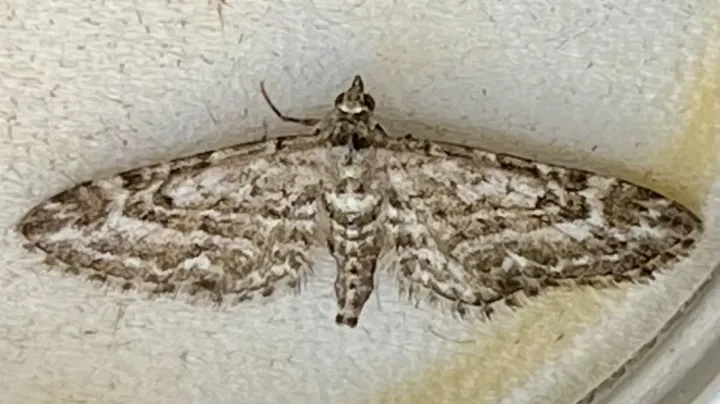
The Heather Pug (Eupithecia nanata) is a moth belonging to the family Geometridae. This species is relatively small, with a wingspan ranging from 16 to 22 mm.
The adult moth features grey or brownish wings with distinct darker transverse lines and a characteristic central spot, providing excellent camouflage against natural backgrounds.
The larvae, or caterpillars, are typically 15–18 mm long and exhibit variable coloration, ranging from green to reddish-brown, which helps them blend in with heather shoots.
This species is widely distributed across Europe and temperate Asia, frequently inhabiting heathlands, moorlands, and open forest areas where its host plants grow.
The life cycle includes an overwintering pupal stage, where the insect remains dormant in the soil or leaf litter until spring conditions trigger emergence.
What it damages
The primary host plant for the Heather Pug is the Common Heather (Calluna vulgaris). The larvae consume the foliage and delicate shoots of the plant.
While heather is the main target, the larvae can also feed on related species within the Ericaceae family, which are common in residential garden landscapes.
The feeding activity of the larvae causes noticeable skeletonization and destruction of the heather's green parts, significantly reducing its ornamental value.
Severe infestations can stunt plant growth, weaken the shrub, and make it more susceptible to environmental stress or secondary fungal infections.
In managed landscapes or heathland gardens, high populations of this moth can lead to patchy dieback and the loss of the plant's aesthetic appeal.
When it appears
The Heather Pug typically produces two generations per year. The first generation of adults emerges in late spring, while the second appears in mid-summer.
The larvae are most active during the summer months, aligning their feeding period with the vigorous growth phase of the host plants.
Adult moths are nocturnal, spending the daylight hours resting on vegetation, which makes them difficult to observe without specific search efforts.
As the summer progresses, overlapping stages of larvae can often be found on the plants, ensuring continuous pressure on the vegetation throughout the season.
By early autumn, the final generation of larvae pupates, entering a state of diapause in the soil to survive the winter months.
Signs of infestation
The most evident sign of a Heather Pug infestation is the irregular eating pattern on the leaves and young terminal buds of heather plants.
Fine, dark granular frass (excrement) found at the base of the plant or caught in small silken webs on the branches is a strong indicator of presence.
Infested plants may exhibit signs of wilting or browning in specific areas, as the feeding reduces the plant's ability to transport nutrients effectively.
Silk threads spun by the larvae to bind together foliage or flowers for protection serve as another key diagnostic sign for gardeners.
- missing leaf tissue or skeletonized foliage;
- stunted or distorted branch growth;
- presence of small dark fecal pellets;
- webs connecting plant tips or flower buds.
Control measures
Effective management begins with regular monitoring of heather beds, particularly during the late spring and summer months when larvae are active.
For small infestations, manual removal of caterpillars during the evening or early morning is a practical and environmentally friendly control method.
If the population levels threaten the health or appearance of the shrubs, targeted application of appropriate insecticides is recommended.
Cultural practices, such as clearing debris from around the base of the plants in autumn, can help disrupt the pupal cycle and reduce the next season's population.
Maintaining optimal plant health through balanced fertilization and proper hydration ensures the heather can better withstand and recover from minor larval damage.
Taxonomy
- Latin name
- Eupithecia nanata
- Order
- Lepidoptera (butterflies)
- Family
- Geometridae
- EPPO code
- TEPHNA
Discussion
No discussions yet — be the first.