
Yarrow pug
Eupithecia millefoliata
Description
How to identify
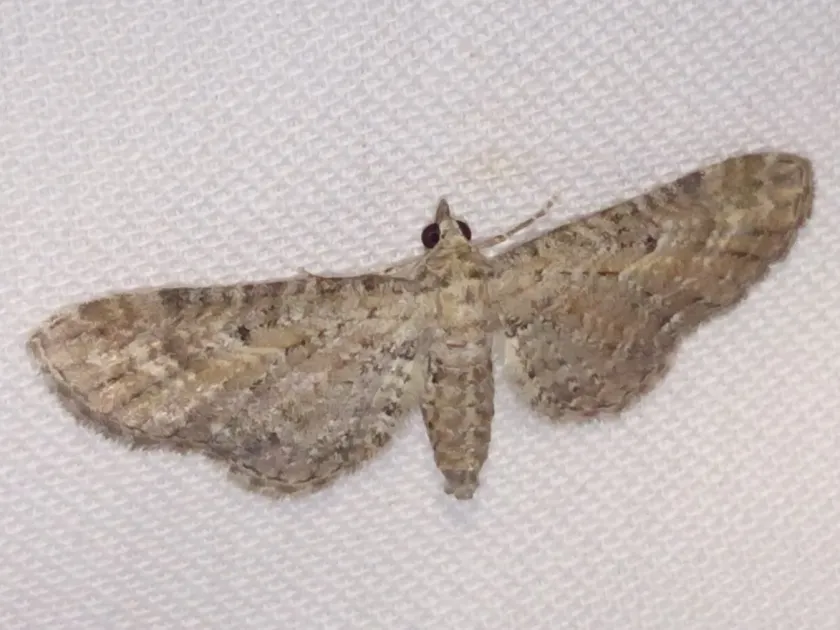
The Yarrow Pug (Eupithecia millefoliata) belongs to the Geometridae family. Adult moths are relatively small, with a wingspan of 17–22 mm, featuring cryptic coloration that provides camouflage against plant stems.
The larvae, or caterpillars, are typical of the Geometridae family, characterized by a loop-like movement and a body shape that mimics the floral stalks of their host plant.
The life cycle encompasses four stages: egg, larva, pupa, and adult. The insect typically undergoes one generation per year, with the pupal stage serving as the overwintering form in the soil.
Adult moths are nocturnal, which makes daytime observation difficult. Their presence is often identified only after significant larval damage has already occurred on the host plants.
Their ability to remain motionless and blend in with vegetation makes them one of the more elusive pests for commercial yarrow producers to monitor effectively.
What it damages
The Yarrow Pug primarily infests common yarrow (Achillea millefolium), a plant highly valued in both traditional medicine and horticultural practices.
Caterpillars feed exclusively on the generative organs of the plant, specifically targeting unopened flower buds, open florets, and developing seeds.
This feeding behavior causes significant structural damage to the inflorescences, rendering them unsuitable for high-quality medicinal or ornamental use.
Severe infestations can lead to a drastic reduction in total yield, as the larvae consume the biomass of the flower heads where essential oils and active compounds are concentrated.
Secondary damage occurs as the wounded tissues become susceptible to various fungal pathogens, further degrading the health and market value of the crop.
When it appears
Adult moths typically emerge in early summer, often coinciding with the onset of the yarrow's budding phase, creating an optimal environment for egg deposition.
Eggs are laid directly onto the budding flower heads, ensuring that larvae have an immediate food source upon hatching. This makes the budding phase a critical window for intervention.
The larval stage is most active from late June through July. During this time, they grow rapidly, consuming large amounts of floral tissue before descending into the soil to pupate.
Weather conditions, particularly temperature and humidity, play a significant role in determining the speed of larval development and the overall success of the cohort.
By late summer, the caterpillars have completed their cycle and entered the pupal stage, where they remain dormant throughout the winter until the next spring.
Signs of infestation
Visible signs of infestation include deformed flower heads and "hollowed out" buds that fail to bloom properly throughout the growing season.
- accumulation of frass (larval excrement) within the florets;
- webbing between flower clusters;
- premature browning and drying of the buds;
- visible puncture holes in the bud structure;
- presence of loop-shaped caterpillars upon closer inspection of the heads.
The presence of fine silk webbing connecting the florets is a definitive indicator of caterpillar activity, helping distinguish this pest from mechanical damage.
Affected plants often show an uneven flowering pattern, with many buds turning brown or dropping off well before the natural end of the blooming cycle.
Control measures
Cultural control is essential; removing crop residues and weeds after harvest destroys the overwintering pupae hidden in the surface layer of the soil.
In smaller-scale settings, manual removal of infested flower heads during the early stages of the attack can effectively curb the spread of the moth population.
Biological control using microbial insecticides based on Bacillus thuringiensis is recommended to minimize impact on beneficial pollinators and predatory insects.
If chemical intervention is necessary, select selective insecticides that comply with local organic or safety standards for medicinal crop production to avoid residue contamination.
Monitoring using pheromone traps can provide early warning of adult activity, allowing for timely application of protective measures before mass oviposition occurs.
Taxonomy
- Latin name
- Eupithecia millefoliata
- Order
- Lepidoptera (butterflies)
- Family
- Geometridae
- EPPO code
- EUPIMI
Discussion
No discussions yet — be the first.