
Larch pug
Eupithecia lariciata
Description
How to identify
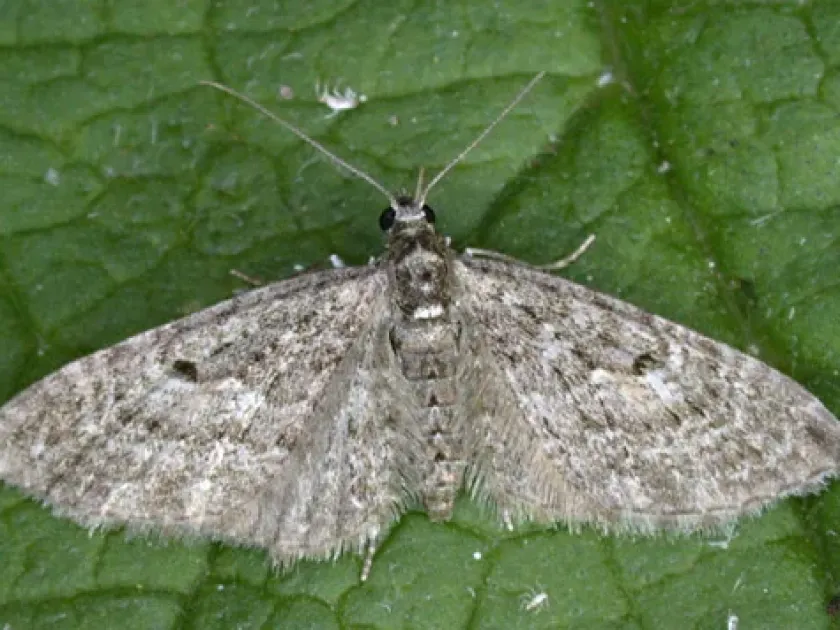
The larch pug (Eupithecia lariciata) is a member of the Geometridae family within the Lepidoptera order. The adult moth typically features a wingspan ranging from 20 to 25 mm, displaying a greyish-brown coloration with intricate, darker wavy bands across the wings.
The larvae, or caterpillars, have a slender physique and grow to approximately 18–20 mm in length. Their coloration matches the needles of the larch tree, usually ranging from vibrant green to brownish-grey, which provides excellent camouflage.
As nocturnal insects, adult moths are frequently attracted to artificial lights, which makes light traps an effective tool for monitoring their flight activity in the forest or garden.
The life cycle involves a metamorphosis through four stages: egg, larva, pupa, and adult. This species generally completes one generation per year, limiting the timeframe of potential damage to the host trees.
Overwintering occurs primarily in the pupal stage. They typically remain in the upper layer of soil, under leaf litter, or within crevices of the tree bark to survive the winter temperatures.
What it damages
The primary host for this pest is the larch (Larix). Larvae feed exclusively on the needles during the spring and summer months when the tree exhibits its most active growth.
Feeding damage is characterized by larvae nibbling on the sides of the needles or consuming them entirely. This defoliation can significantly reduce the tree's photosynthetic capacity if the infestation is severe.
The cumulative damage weakens the tree, leaving it more susceptible to secondary infestations, such as bark beetles, and increasing the tree's overall stress levels.
In nurseries and young plantations, the larch pug can cause stunted growth and a loss of aesthetic value, which is particularly concerning for commercial timber or landscape plantings.
Severe infestations can lead to partial defoliation of branches, resulting in a thin, sparse canopy that negatively impacts the health and visual appeal of the larch trees.
When it appears
Adult moths typically emerge in late spring, specifically during May and June, coinciding with the warming weather conditions that facilitate mating and egg-laying.
Caterpillars emerge shortly after, usually in late spring and early summer. This period is the most active feeding phase, where the larvae grow rapidly by consuming fresh larch needles.
Pupation takes place in mid-summer. After this stage, the insects enter a dormant phase, waiting for the cycle to begin again the following spring.
Monitoring should be synchronized with the phenological development of the larch trees. Observing the bud-burst phase helps predict the timing of the larvae's emergence.
Regular surveillance during the peak growing season allows for the early detection of the pest, ensuring that control measures can be applied at the optimal time.
Signs of infestation
The first signs of infestation include irregular holes or edges on the larch needles. Because the caterpillars mimic the appearance of the needles, they are often overlooked during casual inspection.
- Fine silken threads found between the larch needles, used by larvae for protection.
- Progressive yellowing or browning of branches caused by heavy needle loss.
- Small, dark pellet-like excrement accumulating beneath the tree canopy.
- Visible caterpillar presence when branches are gently shaken over a white surface.
A heavily infested tree will appear thin and unhealthy, lacking the lush, dense foliage characteristic of a healthy larch specimen.
In cases of high density, the defoliation becomes quite apparent as the canopy loses its vibrant green color and takes on a sickly, brownish hue.
Control measures
Biological control using Bacillus thuringiensis is highly recommended, as it effectively targets the larvae while minimizing impact on beneficial insects and the environment.
Chemical insecticides should be reserved for severe outbreaks and applied in accordance with regional agricultural regulations to ensure the safety of the surrounding ecosystem.
Cultural control methods, such as clearing debris and needles from the base of the tree in autumn, can help reduce the number of pupae that survive the winter.
Encouraging natural predators, such as insectivorous birds and parasitic wasps, provides a sustainable way to manage the larch pug population naturally.
Proactive monitoring and the implementation of integrated pest management (IPM) practices are key to keeping the larch pug under control and maintaining the health of your trees.
Taxonomy
- Latin name
- Eupithecia lariciata
- Order
- Lepidoptera (butterflies)
- Family
- Geometridae
- EPPO code
- TEPHLA
Discussion
No discussions yet — be the first.