
March Moth (Eupithecia insigniata)
Eupithecia insigniata
Description
How to identify
Eupithecia insigniata, commonly known as the March moth or pin-stripe pug, is a member of the Geometridae family, characterized by its distinctive appearance.
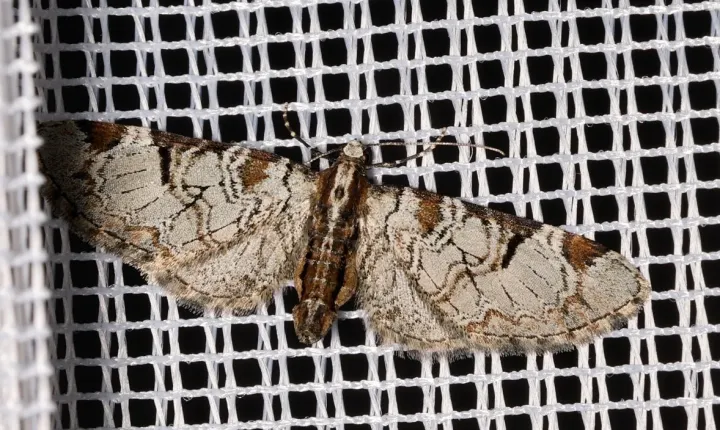
The adult moth features a wingspan of approximately 20–22 mm, with grayish-brown forewings patterned with dark cross-lines that provide excellent camouflage against tree bark.
The larvae are typically greenish or brownish in color, often blending perfectly with the buds and foliage of the host plant, making them difficult to detect.
As with other members of the Geometridae family, the larvae move in a characteristic looping fashion, earning the group the name 'loopers' or 'inchworms'.
The pupal stage is spent in soil or bark crevices, which is a critical phase for understanding the insect's survival mechanism and life cycle.
What it damages
The larvae primarily feed on rosaceous plants, with a strong preference for apple (Malus), pear (Pyrus), and occasionally hawthorn (Crataegus).
Damage is focused on the generative parts of the plant; larvae consume the interior of flower buds, effectively destroying them before they can bloom.
This feeding behavior causes the buds to wither and fall, leading to direct losses in fruit set and significantly reducing the overall harvest yield.
Besides immediate damage to flowers, the infestation can weaken the tree's health, making it more susceptible to secondary stressors and environmental challenges.
In high-density populations, the cumulative damage can lead to a sparse canopy and reduced fruit production throughout the orchard.
When it appears
Adult moths are typically active in early spring, usually between April and May, coinciding with the critical period of bud break and flowering.
The eggs are laid near the host plant's buds, ensuring that newly hatched larvae have immediate access to their preferred food source.
Larval activity reaches its peak during the blossoming stage, which is the most sensitive period for potential fruit production loss.
After completing their development, the larvae descend to the soil or find shelter to pupate, entering a period of diapause until the following spring.
The species completes one generation per year, making it essential for orchardists to time their monitoring and intervention precisely during the spring window.
Signs of infestation
One of the earliest signs of infestation is the presence of hollowed-out or wilted flower buds that fail to open during the blooming season.
Close inspection of clusters may reveal fine silk webbing between the buds, indicating the presence of larvae actively feeding within the protective structure.
Frass (larval excrement) found on leaves or twigs beneath the flower clusters is another clear indicator of active feeding by the caterpillars.
The caterpillars themselves can sometimes be observed by carefully inspecting the buds, as they tend to remain stationary when disturbed.
A sudden, unexplained drop of unopened buds from fruit trees often suggests an infestation of bud-feeding caterpillars, including Eupithecia insigniata.
Control measures
Cultural control practices, such as autumn soil cultivation beneath trees, can help disrupt the pupation cycle and reduce the number of overwintering individuals.
Monitoring with pheromone traps is a highly effective way to track adult emergence and determine the optimal timing for protective measures.
Biological control agents, such as formulations of Bacillus thuringiensis, offer an eco-friendly way to target larvae while preserving beneficial pollinators.
In cases of severe infestation, targeted insecticide applications during the 'pink bud' stage can be used to manage the pest population effectively.
Promoting a healthy orchard environment by supporting natural predators like birds and parasitic wasps helps to naturally suppress the moth's population over time.
Taxonomy
- Latin name
- Eupithecia insigniata
- Order
- Lepidoptera (butterflies)
- Family
- Geometridae
- EPPO code
- TEPHIN
Discussion
No discussions yet — be the first.