
Mugwort Pug
Eupithecia innotata
Description
How to identify
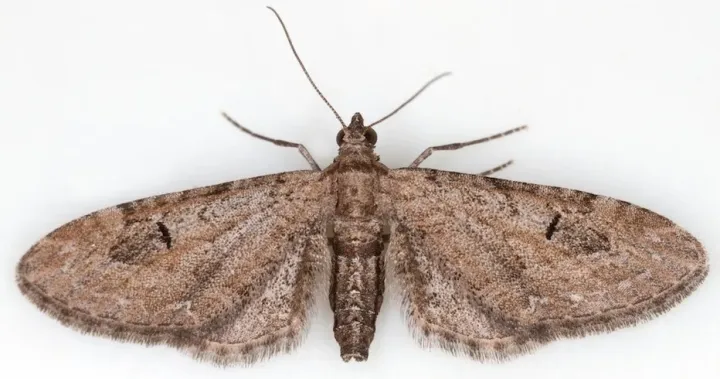
The Mugwort Pug (Latin: Eupithecia innotata) is a moth species belonging to the Geometridae family, order Lepidoptera. These moths typically have a wingspan ranging from 20 to 25 mm, featuring a greyish-brown color pattern that provides camouflage against tree bark and dry vegetation.
The larvae, known as loopers or inchworms, have a slender body, often colored in shades of green or brown. They move by arching their middle sections, a distinct locomotive trait common to all geometer moth caterpillars.
The life cycle consists of four distinct stages: egg, larva, pupa, and adult. The species commonly overwinters in the pupal stage, buried within the soil or hidden among leaf litter to survive harsh winter conditions.
Adult moths are primarily nocturnal and crepuscular, hiding during the day to avoid predators. Because of their small size and dull coloration, they are rarely seen by casual observers.
The development speed is highly dependent on ambient temperatures, with warmer seasons potentially accelerating the cycle, leading to more synchronized outbreaks in specific regions.
What it damages
The larvae are specialized feeders that primarily target plants within the Asteraceae family, with a strong preference for Artemisia species. In agricultural settings, they may transition to related crops or herbal plants.
The damage is most severe during the reproductive phase of the plant. Caterpillars consume flower buds, young inflorescences, and developing ovaries, which directly impacts seed yield.
Feeding often results in the destruction of the plant's reproductive organs, leading to stunted seed production and loss of agricultural quality in crops harvested for their flowers or medicinal properties.
Furthermore, the physical wounds caused by the larvae serve as entry points for various bacterial and fungal pathogens, potentially leading to widespread rot or secondary infections.
If left unmanaged, a high population density of these larvae can cause significant economic losses in herb gardens or seed-production fields by devastating the harvestable flower buds.
When it appears
The emergence of the first generation of adults usually occurs in late spring or early summer, depending on local climate conditions and plant development.
The larval feeding phase is most active throughout mid-summer, coinciding with the peak flowering period of host plants like common mugwort and related species.
Pupation typically occurs as the days begin to shorten in late summer, with the insects entering diapause to wait out the cold winter months.
The number of generations per year is typically one (univoltine), though in particularly warm regions or favorable microclimates, partial second generations have been recorded.
Effective monitoring should commence with the first signs of floral development in late spring to ensure that potential outbreaks are identified before they reach damaging levels.
Signs of infestation
The most reliable sign of a Mugwort Pug infestation is the presence of small, pellet-like excrement left behind by feeding larvae on leaves and buds beneath the inflorescence.
Visual inspection often reveals ragged or partially hollowed-out flower buds, showing clear evidence of insect grazing.
In some cases, the larvae use silk to bind adjacent flowers together, creating protective tents that keep them shielded from predators and environmental stressors.
Premature browning or wilting of the floral heads, without an obvious sign of wilting disease, often points to internal or external larval feeding activity.
- Hollowed or damaged flower buds.
- Small, dark frass pellets under the plant canopy.
- Webbed floral structures indicating larval nests.
- Missing seeds or stunted ovary development in mature flowers.
Control measures
Cultural control is a primary defense, focusing on the removal of wild Artemisia host plants near cultivated fields to reduce the natural breeding population of the moth.
Autumn tillage (plowing) is a highly effective method to disrupt the life cycle, as it exposes overwintering pupae to the surface, making them vulnerable to frost and predation.
Biological control, such as the use of Bacillus thuringiensis (Bt) sprays, is highly effective during the early larval stages when the caterpillars are most actively feeding and vulnerable.
If chemical intervention is necessary, targeted insecticides should be applied during the early flowering phase, ensuring compliance with local safety regulations and minimizing impact on pollinators.
Integrated Pest Management (IPM) strategies, including the use of pheromone traps to monitor adult flight patterns, allow for precise timing of interventions, reducing the need for broad-spectrum chemical use.
Taxonomy
- Latin name
- Eupithecia innotata
- Order
- Lepidoptera (butterflies)
- Family
- Geometridae
- EPPO code
- EUPIIN
Discussion
No discussions yet — be the first.