
Barberry pug
Eupithecia exiguata
Description
How to identify
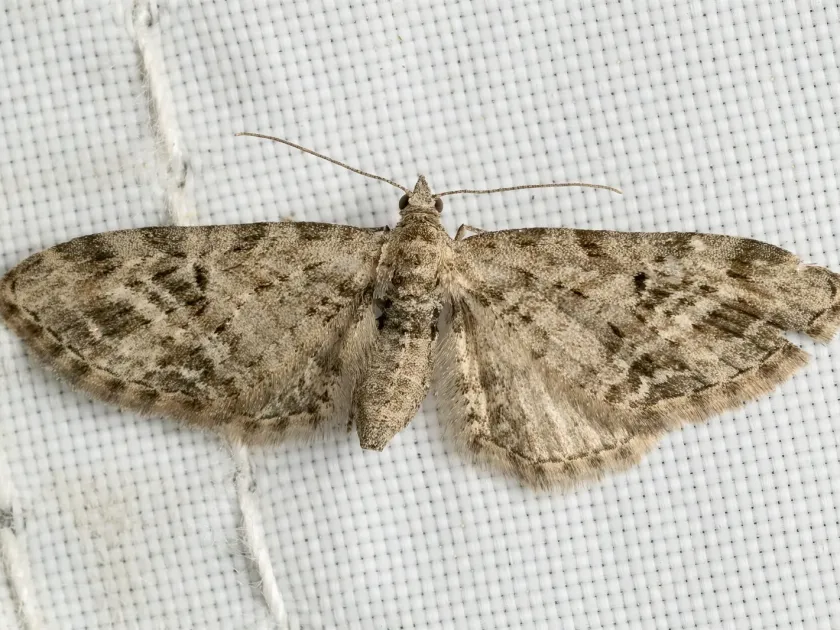
The Barberry pug (Eupithecia exiguata) is a moth species belonging to the family Geometridae. Adult moths are relatively small, typically reaching a wingspan of 20–24 mm.
The forewings are grayish-brown with a series of darker transverse lines, providing effective camouflage when the moth rests on bark or twigs.
The larvae are typical "loopers" or "inchworms," moving by arching their bodies. They are often greenish or brownish, blending perfectly with plant stems.
The life cycle involves complete metamorphosis, consisting of the egg, larval, pupal, and adult stages.
This species is widely distributed throughout temperate regions, favoring habitats where host plants like barberry are abundant.
What it damages
The primary hosts for the larvae of this moth are plants belonging to the genus Berberis, commonly known as barberry.
Larvae feed predominantly on the reproductive parts of the plant, including flower buds, developing flowers, and young berries.
In addition to floral damage, heavy infestations can lead to significant defoliation, stripping the shrub of its healthy leaves.
The feeding activity reduces the aesthetic value of the shrub and can severely stunt the growth of young, developing shoots.
By consuming buds and blossoms, the pest directly interferes with the plant's ability to produce fruit and seeds.
When it appears
Adult moths typically emerge in late spring or early summer, aligning with the flowering period of their host plants.
Egg-laying occurs on the buds and leaves, ensuring that hatching larvae have immediate access to food resources.
The larval stage is most active during early summer, with peak feeding occurring in June as the plant tissue is tender.
Once the feeding phase concludes, larvae descend to the soil to pupate, where they remain throughout the winter months.
Generally, the Barberry pug completes one generation per year, though climate variations can influence emergence times.
Signs of infestation
Symptoms of an infestation include the presence of small, dark fecal pellets on the leaves and around the base of the shrub.
Visible damage includes jagged, irregular holes in leaves and partially consumed flower buds that fail to open.
Fine webbing between leaves or around flower clusters often indicates the presence of larvae sheltering within the canopy.
Premature abscission (dropping) of flowers and fruit is a common indicator that the reproductive structures have been attacked.
- Ragged edges on foliage;
- Evidence of silk threads (webbing);
- Aborted flower buds;
- Presence of slender inchworms on the stems.
Control measures
Cultural control involves regular maintenance, such as pruning and disposing of heavily infested branches to reduce pest populations.
Tilling or loosening the soil beneath the host plants in autumn can expose and destroy pupae, preventing adult emergence next season.
Biological control using Bacillus thuringiensis is highly effective against young larvae while remaining safe for non-target species.
Chemical intervention should be considered a last resort, utilizing selective insecticides applied during the early larval development stage.
Always ensure applications are timed carefully to avoid spraying during peak pollinator activity hours to protect beneficial insects.
Taxonomy
- Latin name
- Eupithecia exiguata
- Order
- Lepidoptera (butterflies)
- Family
- Geometridae
- EPPO code
- EUPIEX
Discussion
No discussions yet — be the first.