
Spruce pug
Eupithecia analoga
Description
How to identify
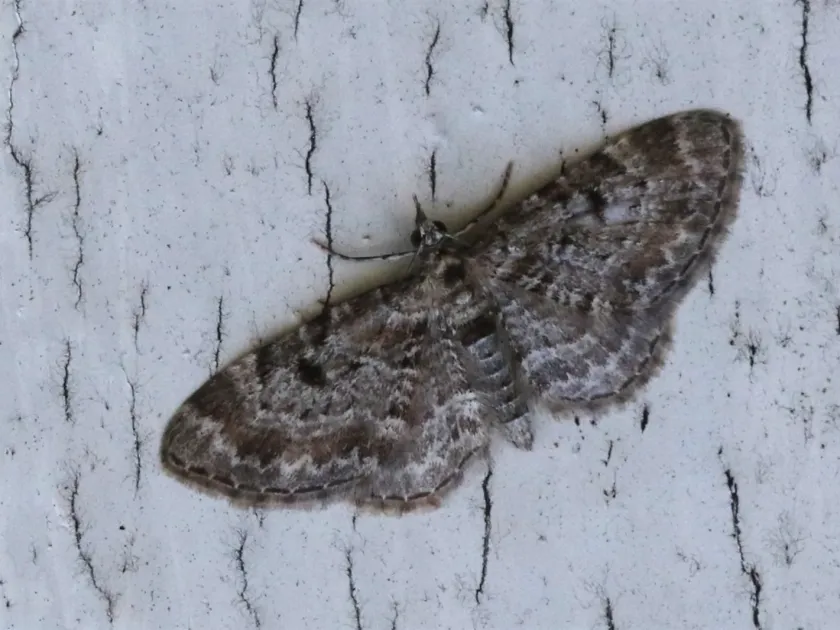
The spruce pug (Eupithecia analoga) is a moth belonging to the Geometridae family. These insects are small, with a wingspan of approximately 17–22 mm, characterized by cryptic, mottled brown or grey coloration.
The larvae are typical of the Eupithecia genus, with slender bodies that mimic the color and texture of spruce needles, making them extremely difficult to spot against the foliage.
The life cycle involves an overwintering pupal stage, typically occurring within the soil or the organic leaf litter beneath the host tree.
Adult moths are nocturnal and active during the spring and summer. They lay eggs directly on the needles or buds of host spruce trees to ensure food availability for hatching larvae.
Due to their nocturnal behavior and effective camouflage, identifying an infestation early often requires close inspection of the branch tips and buds.
What it damages
The primary host for Eupithecia analoga is the Norway spruce (Picea abies). The larvae consume fresh needles and developing buds, causing significant stress to the host tree.
By feeding internally on the needles or stripping them entirely, the larvae cause yellowing and premature needle drop, which detracts from the tree's health and appearance.
Significant infestations can lead to partial crown thinning and stunted growth, particularly in younger trees that have less foliage to spare for the insects to consume.
The damage is usually concentrated in the upper and outer parts of the canopy, where the freshest, most nutrient-rich needles are located.
Weakened trees become susceptible to opportunistic pathogens and secondary infestations, potentially leading to long-term decline if left untreated.
Signs of infestation
The presence of fine webbing spun by the larvae between needles is one of the most reliable early indicators of an ongoing infestation.
Visible yellowing, browning, and subsequent shedding of needles in specific areas of the spruce canopy are strong signs of larval feeding activity.
Accumulation of larval excrement (frass) at the base of the tree or on lower branches provides clear evidence that the insects are actively feeding above.
Malformed or eaten buds in the spring suggest the presence of larvae that have migrated to these nutrient-dense areas shortly after hatching.
Observing the moths themselves is difficult due to their nocturnal habits; however, they may be attracted to light sources near wooded areas.
Control measures
Chemical control involves the application of registered insecticides during the early larval stage to prevent significant foliage destruction.
Sanitation practices, such as removing heavily infested branches or clearing debris from under the tree, can help reduce the local population of pupae.
Promoting natural biological control through the preservation of bird habitats and predatory insect populations is essential for long-term ecological balance.
Monitoring programs using pheromone lures can effectively time intervention strategies, ensuring treatments are applied during peak adult emergence.
- Use of biological pesticides like Bacillus thuringiensis for targeted larval control.
- Implementing regular tree health inspections to catch infestations early.
- Maintaining optimal tree vigor through balanced fertilization and irrigation.
Taxonomy
- Latin name
- Eupithecia analoga
- Order
- Lepidoptera (butterflies)
- Family
- Geometridae
- EPPO code
- EUPIAN
Discussion
No discussions yet — be the first.