
Wormwood pug
Eupithecia absinthiata
Description
How to identify
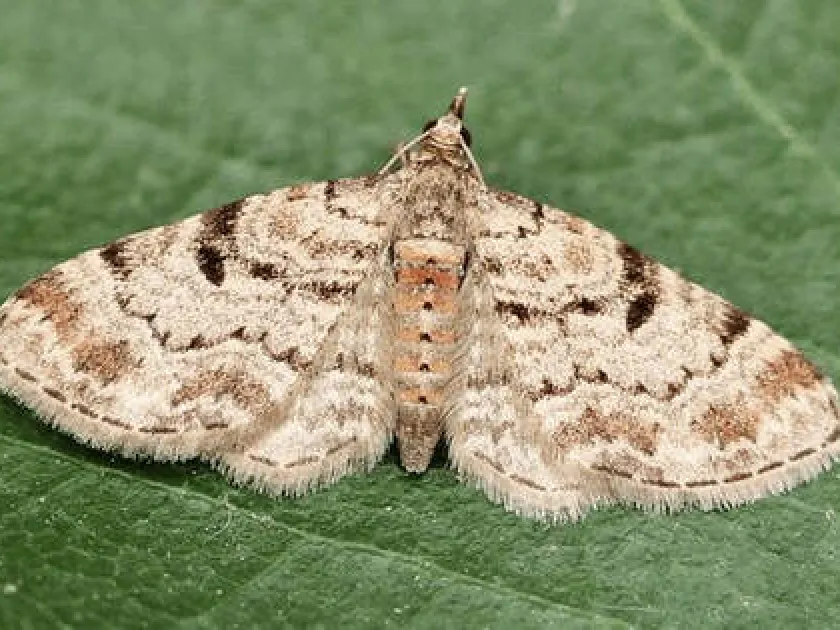
The Wormwood pug (Eupithecia absinthiata) is a moth belonging to the family Geometridae, order Lepidoptera. It is a relatively small moth with a wingspan of approximately 20–25 mm.
The moth's wings are greyish-brown in color, featuring faint transverse darker lines and a small pale spot located in the center of each forewing.
The body is delicate and covered with fine scales. When at rest, the moth keeps its wings spread flat, pressing them tightly against the surface, which provides excellent camouflage.
The larvae, known as caterpillars, have the typical "looper" appearance, moving by arching their middle sections and drawing their back legs forward.
Their coloration is variable, ranging from green to brownish-pink, allowing them to blend perfectly with the stems and floral buds of host plants.
What it damages
This species is a polyphage, but it primarily targets plants in the Asteraceae family, including wormwood, yarrow, and various decorative flowering species.
In home gardens, the larvae can damage flower crops by feeding on buds and developing inflorescences, which diminishes both aesthetic appeal and seed yield.
Caterpillars prefer to feed on reproductive plant parts, hollowing out the interior of buds and causing them to wither or drop prematurely.
In cases of high infestation, the pest can cause significant damage to medicinal herb plantings, reducing the quality of harvested plant material.
The physical damage caused by feeding creates openings in the plant tissue, making it susceptible to secondary infections and fungal diseases.
When it appears
The adult moth flight occurs during the summer months, typically between June and August, depending on regional climatic conditions.
The life cycle usually includes one or two generations per year, with pupation occurring in the soil or among plant debris, where the pupae overwinter.
The moths are primarily nocturnal, showing peak activity during twilight and night hours, which makes them difficult to observe during the day.
Larval activity is most intense during the blooming period of host plants, as the nutrients within the buds are ideal for rapid caterpillar growth.
The population density is highly dependent on weather conditions; warm and humid summers provide optimal environments for faster development.
Signs of infestation
The primary sign of infestation is the presence of damaged buds, often containing larval frass (excrement) around the entry holes.
Visually, affected inflorescences appear deformed or stunted, and one may notice premature browning of the petals.
In the early stages, tiny feeding holes may appear on the leaves or the base of the flower heads, indicating the presence of young larvae.
Searching the plants at night with a flashlight can reveal the caterpillars, which tend to remain motionless to mimic small twigs or plant debris when disturbed.
The presence of fine silken threads used by caterpillars to stabilize or bind buds together during feeding is also a strong indicator of their activity.
Control measures
An essential agronomic practice is the regular weeding of host plants, particularly those in the Asteraceae family, which serve as natural reservoirs for the pest.
Tilling the soil in garden beds during autumn helps to disrupt the life cycle by destroying pupae overwintering in the topsoil layer.
For significant infestations, biological insecticides containing Bacillus thuringiensis are highly effective and pose minimal risk to beneficial insect populations.
Chemical control should be used judiciously, following regional regulations and targeting the most vulnerable life stages of the caterpillar.
- Using light traps to monitor moth flight and reduce the adult population on the premises.
- Manual collection and disposal of damaged buds to prevent further spread of the larvae.
- Encouraging natural predators such as parasitic wasps and predatory bugs to establish themselves in the garden.
Taxonomy
- Latin name
- Eupithecia absinthiata
- Order
- Lepidoptera (butterflies)
- Family
- Geometridae
- EPPO code
- EUPIAB
Discussion
No discussions yet — be the first.