
Oak Pug
Eupithecia abbreviata
Description
How to identify
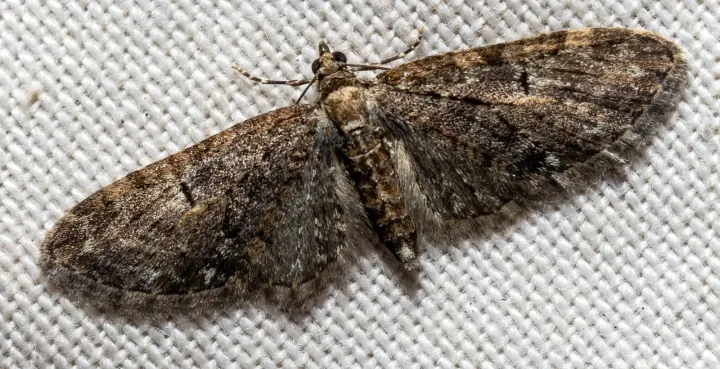
The adult Oak Pug is a small moth, typically measuring about 20–24 mm across its wingspan, characterized by its cryptic appearance.
The forewings are patterned with a blend of grey and brown shades, featuring distinct dark transverse lines that mimic bark or leaf textures.
As larvae, the caterpillars are highly adapted for camouflage, displaying shades of green or brown that blend seamlessly with oak buds and stems.
This species completes one generation per year, making its life cycle tightly integrated with the spring growth spurt of its host plants.
The winter months are passed in the pupal stage, usually hidden within the leaf litter or soil beneath the canopy of the host trees.
What it damages
The primary host plant for this species is the common oak (Quercus robur), where it specializes in feeding on generative organs and young foliage.
Young larvae initially attack developing buds, boring into them and destroying the tissue necessary for healthy spring shoot development.
In nurseries, infestation can be particularly damaging to young seedlings, often leading to stunted growth or poor crown formation.
Severe infestations can lead to partial defoliation of the canopy, stressing the tree and reducing its overall vigor throughout the growing season.
The physical damage caused by larvae provides entry points for opportunistic fungal pathogens and secondary infections.
When it appears
The adult moths emerge in early spring, usually between March and April, aligning perfectly with the budding stage of oak trees.
Larval activity reaches its peak during May and the beginning of June, during which time they feed voraciously on new plant tissue.
By early summer, the larvae descend from the branches to pupate in the soil, entering a dormant phase until the following spring.
The emergence of the species is highly dependent on local temperatures, which dictate the speed of bud burst on the host plants.
Stable spring conditions provide the best environment for larval survival, leading to increased population density in favorable years.
Signs of infestation
Small entry holes in developing buds are the most common initial sign of an infestation, often found before the leaves fully expand.
Ragged leaf margins or skeletonized tissue are common indicators that the larvae have transitioned to feeding on mature leaves.
Silken webbing found on terminal shoots is a clear sign that caterpillars are present, as they use this to tether leaves for shelter.
Distorted or withered leaf tips in the upper crown are frequently associated with the presence of feeding Oak Pug larvae.
Visual inspection during the evening is the most effective way to spot the caterpillars, as they are nocturnal and move to leaf surfaces to feed.
Control measures
Good sanitation practices, such as removing leaf litter and lightly tilling the soil around trees, help destroy overwintering pupae.
Biological control using B.t. (Bacillus thuringiensis) sprays is highly effective and safe for beneficial insect populations in garden settings.
Chemical intervention should be restricted to cases of severe infestation, targeting young larvae before they cause significant structural damage.
Promoting a healthy environment for birds and predatory insects will help keep the moth population in natural check over time.
- Monitor tree buds in early spring for signs of boring.
- Use pheromone traps to assess population levels.
- Apply systemic insecticides only as a last resort.
Taxonomy
- Latin name
- Eupithecia abbreviata
- Order
- Lepidoptera (butterflies)
- Family
- Geometridae
- EPPO code
- EUPIAV
Discussion
No discussions yet — be the first.