
Pug moths
Eupithecia
Description
How to identify
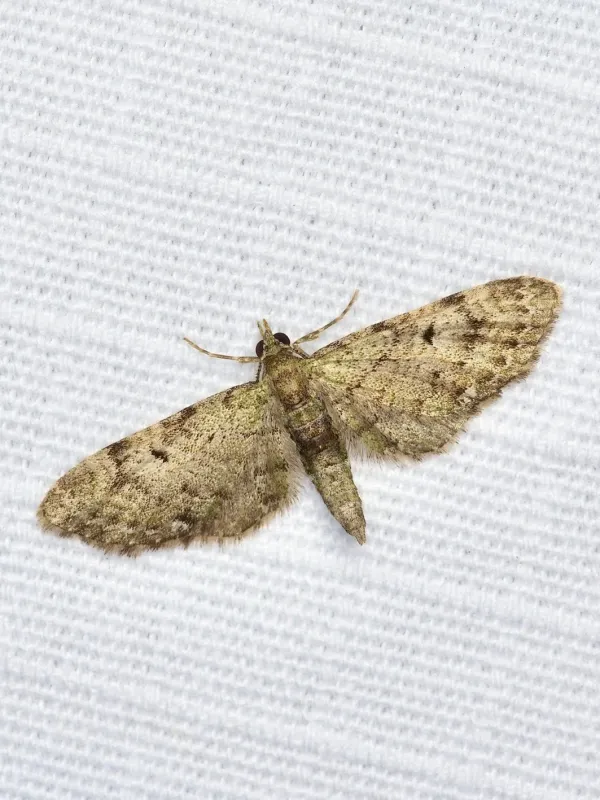
Pug moths (genus Eupithecia) are members of the Geometridae family, commonly known as inchworms or loopers. These small, often inconspicuous moths are characterized by their resting posture: they hold their wings flat against the surface, creating a distinct triangular profile.
The adult moths usually display subtle patterns of grey, brown, or sandy colors, providing effective camouflage against tree bark. The larvae, or caterpillars, are highly variable in appearance and often perfectly mimic the flowers or buds they feed on, making detection difficult.
Their life cycle includes complete metamorphosis: egg, larva, pupa, and adult. Many species are univoltine or bivoltine, with most species overwintering as pupae in the soil or in crevices of host plants to survive the winter conditions.
Host specificity is a notable trait of many Eupithecia species. They have evolved to synchronize their life cycles with the flowering periods of specific host plants, ensuring that the larvae have access to nutritious floral tissues.
Accurate species-level identification is often challenging due to the high morphological similarity among members of the genus. Entomologists typically rely on microscopic analysis of genitalia to distinguish between closely related species.
What it damages
Pug moths cause damage to a wide range of plants, including fruit trees, berry bushes, and various ornamental species. They are particularly troublesome in nurseries where they target asters, chrysanthemums, and various rose varieties.
The primary damage is inflicted by the larvae, which are voracious feeders. They typically consume flower buds and developing blossoms from the inside, leading to aborted flowers or damaged fruits that are unmarketable.
Beyond floral parts, larvae may feed on young foliage, terminal buds, and ripening fruits. High infestations can result in significant yield loss, which is particularly devastating for commercial floriculture and orchards.
Visual signs of an infestation include holes in petals and buds, the presence of frass (larval droppings) on leaves, and occasional webbing that holds damaged flower parts together as a protective shelter for the caterpillar.
Tissues damaged by Eupithecia larvae often become susceptible to secondary infections such as grey mold (Botrytis cinerea) or various fungal blights, which can cause more total plant damage than the initial feeding activity itself.
Control measures
Effective management of pug moths involves a combination of cultural practices and targeted chemical interventions. On smaller garden scales, hand-picking larvae during early morning hours is a simple and effective control method.
Tilling or deep cultivation of soil around plants during the autumn can significantly reduce overwintering populations by exposing the pupae to birds and small predators, thereby lowering the pressure for the following season.
When biological control is preferred, formulations of Bacillus thuringiensis are highly effective against young larvae while maintaining safety for non-target beneficial insects, bees, and other pollinators in the environment.
In commercial settings with high infestation levels, synthetic insecticides such as pyrethroids or neonicotinoids may be necessary. These should be applied following strict guidelines to minimize impact on the surrounding ecosystem.
- Regular monitoring of flower buds during the early blooming stage.
- Deployment of pheromone traps to track adult moth activity.
- Sanitation practices, such as removing infested plant debris.
- Encouraging natural biological controls like ichneumonid wasps.
Taxonomy
- Latin name
- Eupithecia
- Order
- Lepidoptera (butterflies)
- Family
- Geometridae
- EPPO code
- EUPISP
Discussion
No discussions yet — be the first.