
Fritillary
Euphydryas
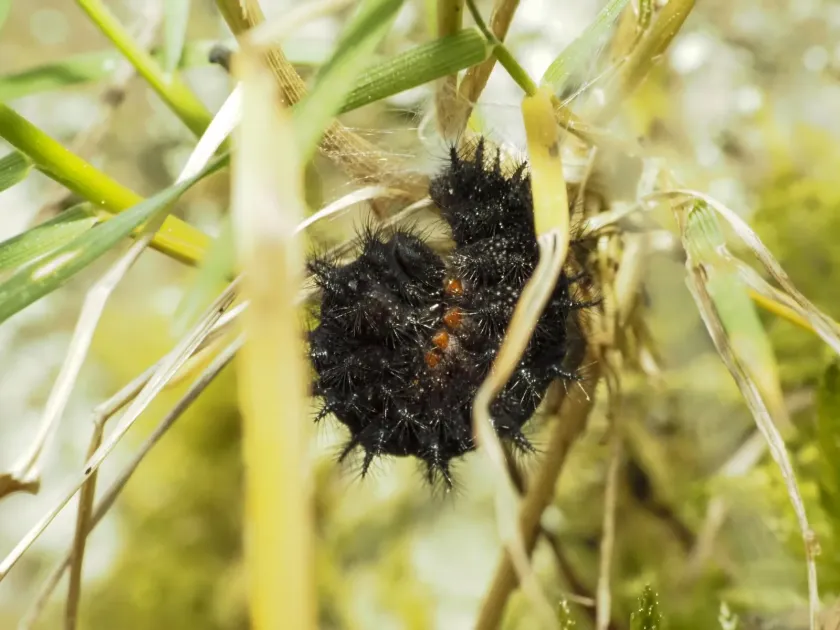
Description
How to identify
The fritillary (genus Euphydryas) belongs to the Nymphalidae family. These butterflies are widely recognized for their vibrant, orange-and-black checkered wing patterns that provide excellent camouflage in wild meadows.
The larvae, which are the stage of the insect that causes agricultural damage, are typically spiny and marked with bold patterns. They are communal creatures, often feeding together in tight groups during their early instars.
Their life cycle consists of complete metamorphosis: egg, larva, pupa, and adult. They often overwinter as half-grown larvae tucked away in leaf litter, making them resilient to changing weather conditions.
While many species are considered rare and protected in parts of the world, others can become a nuisance in home gardens where they find an abundance of preferred host plants for their offspring.
They are distributed across various climates, predominantly throughout the Northern Hemisphere, where they favor open landscapes, forest edges, and managed horticultural areas.
What it damages
Fritillary larvae are specialized feeders that target specific plant families, including Scrophulariaceae and Caprifoliaceae. In gardens, they can cause significant stress to various ornamental perennials.
The primary damage occurs when the larvae consume the leaf blade. They start by skeletonizing the leaf, leaving only the veins behind, which severely impairs the plant's photosynthetic ability.
Heavy infestations can lead to complete defoliation of the host plant. This severe loss of leaf surface reduces the plant's vigor, delays growth, and weakens its defenses against subsequent environmental stress.
Damaged tissue leaves the plant susceptible to secondary infections from airborne spores or soil-borne bacteria. This can lead to necrosis of the foliage and eventual dieback of entire plant branches.
For high-value horticultural specimens, even minor damage can lead to a significant aesthetic loss, rendering the plants unsuitable for exhibitions or landscaping purposes.
Signs of infestation
The first sign of an infestation is the appearance of communal larval groups on the undersides of leaves. These clusters are often accompanied by fine webbing that holds the group together.
Visual identification is further assisted by the presence of frass (larval excrement) on leaves beneath the feeding sites. This waste is a clear indicator that caterpillars are actively feeding above.
Irregular, jagged edges on leaves, or "window-pane" effects where only the surface layer of the leaf has been removed, are indicative of early-stage larval feeding behavior.
The presence of adult butterflies patrolling the garden during sunny periods is a strong indicator that eggs may have been deposited on preferred host plants nearby.
Wilting of foliage without a clear water-related cause often points to larval damage, especially if the larvae have consumed apical meristems or important vascular tissue on the stems.
Control measures
Manual removal of larvae is the most effective and eco-friendly control method for home gardens. Regularly inspecting the plants and removing the clusters by hand is usually sufficient to manage the population.
Biological control agents, particularly formulations containing Bacillus thuringiensis, are highly effective against these caterpillars while remaining harmless to beneficial pollinators and other wildlife.
Good garden sanitation is essential. Clearing away dead leaves and debris at the end of the season removes the overwintering habitats that the larvae rely on to survive until the next year.
When chemical intervention is necessary due to high population density, systemic insecticides should be used carefully according to local safety guidelines to minimize impact on non-target species.
- Hand-pick larvae during regular morning inspections.
- Apply biological insecticides targeting early larval stages.
- Maintain a weed-free environment to reduce secondary host sites.
Taxonomy
- Latin name
- Euphydryas
- Order
- Lepidoptera (butterflies)
- Family
- Nymphalidae
- EPPO code
- EUYYSP
Discussion
No discussions yet — be the first.