
Prune moth
Eulithis prunata
Description
How to identify
The prune moth (Latin name: Eulithis prunata) is a member of the Geometridae family, known for its caterpillars' distinctive movement pattern.
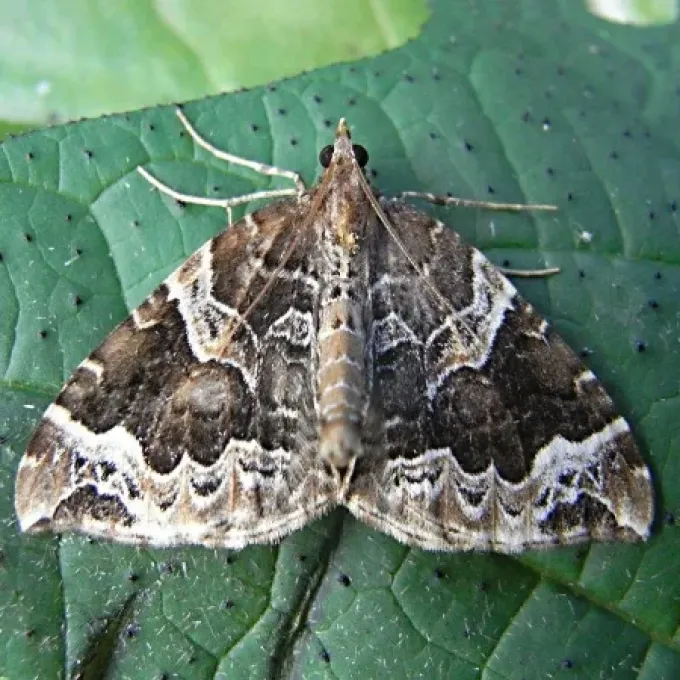
The adult moth has a wingspan of approximately 30 to 35 mm, with forewings displaying a complex pattern of brown, gray, and dark cross-bands.
The larvae, or caterpillars, are typically pale green with light lateral stripes, allowing them to blend perfectly with the foliage of their host plants.
Pupation occurs within a loose cocoon, often hidden inside rolled leaves or tucked into the bark crevices of the infested fruit tree.
Adults are nocturnal and tend to remain inactive during the day, making them difficult to spot without using light traps or night surveys.
##damage##The primary hosts for this species include plums, currants, gooseberries, and other related species within the Rosaceae family.
Larvae consume developing buds, tender young leaves, and flower parts, which severely impacts the overall vitality and productivity of the plant.
Heavy infestations can lead to significant defoliation, forcing the tree to expend energy on new foliage rather than fruit development.
In addition to tissue loss, the feeding sites create entry points for various pathogens, potentially leading to branch dieback or secondary infections.
Economic damage is most severe when larvae destroy the fruit buds, which reduces the potential harvest before the season even fully begins.
##season##The lifecycle begins with eggs deposited on branches, which serve as the overwintering stage for the species until the following spring.
As temperatures rise and buds begin to swell, larvae hatch and immediately commence feeding on the fresh, nutrient-rich plant tissue.
The period of most intensive feeding occurs during the late spring, as the caterpillars grow rapidly before reaching their pupal stage.
Adult moths emerge in early to mid-summer, mate, and lay the next generation of eggs to repeat the annual cycle on host trees.
Understanding this timeline is crucial for timing interventions, as the early larval stages are the most susceptible to control measures.
##signs##The most visible sign of infestation is skeletonized leaves, where only the tough veins remain after the larvae have consumed the soft tissue.
Larvae often tie leaves together with silk webbing to create protective shelters, which are easily noticed upon inspection of the canopy.
The absence of fruit buds on specific branches is a strong indicator that larvae have been present during the critical early spring phase.
Small amounts of dark frass (larval droppings) accumulating on leaves or on the ground beneath the tree provide evidence of active feeding.
Sudden drops of caterpillars hanging from silk threads when a branch is disturbed are a classic behavioral sign of the presence of this moth.
##control##Managing the prune moth requires a integrated approach that combines physical removal with targeted chemical or biological treatments.
Orchard hygiene, including the removal of infested leaves and winter pruning, helps disrupt the lifecycle of the pest and reduces overwintering sites.
Chemical control should be applied during the early larval development stages, targeting the pest before it causes significant canopy damage.
- Manual removal of larval nests by pruning and destroying infested shoots.
- Use of biological insecticides based on naturally occurring bacteria.
- Encouraging natural predators such as ladybirds, lacewings, and insectivorous birds.
It is recommended to monitor populations using pheromone traps, where available, to decide if and when an application of pesticides is necessary.
Taxonomy
- Latin name
- Eulithis prunata
- Order
- Lepidoptera (butterflies)
- Family
- Geometridae
- EPPO code
- LYGRPR
Discussion
No discussions yet — be the first.