
Bean blue
Euchrysops cnejus
Description
How to identify
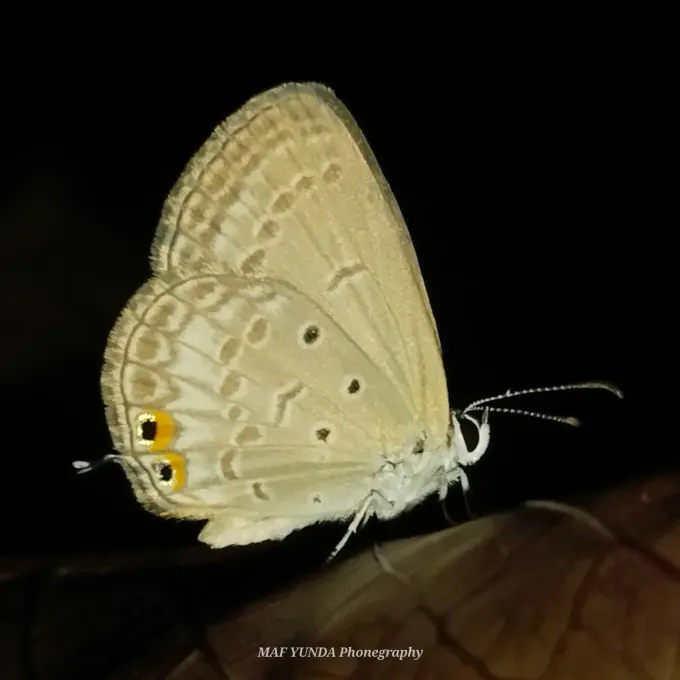
Euchrysops cnejus, commonly known as the bean blue, is a butterfly belonging to the Lycaenidae family. It is recognized as a significant pest of various leguminous crops globally.
The adult butterfly features a wingspan of approximately 25–35 mm. Males typically display a vibrant violet-blue upper wing surface with dark borders, while females show a more subdued, brownish coloration.
Eggs are small, whitish, and flattened, usually deposited singly on the buds, flowers, or tender pods of the host plant, ensuring the larvae have immediate access to nutrients.
The larvae progress through several instars. When young, they are pale, but as they mature, they often develop a pinkish or yellowish hue with dark longitudinal stripes, reaching about 15–18 mm in length.
The pupae are typically attached to plant debris or the underside of leaves, camouflaged in shades of brown and green, which helps them survive predation during their transformation stage.
What it damages
The primary economic damage is caused by the larval stage, which feeds exclusively on the reproductive parts of leguminous plants, specifically flowers and developing seeds inside pods.
Host crops include various species of beans (Phaseolus, Vigna), soybeans, peas, and lentils, making it a serious threat to legume production in tropical and subtropical regions.
By consuming the internal tissues of the pods, the larvae destroy the seeds, often leaving nothing but the outer husk and accumulated frass, rendering the crop unmarketable.
Significant infestations can lead to massive flower drop and pod abortion, which can drastically reduce the overall yield of a legume field, sometimes by more than half.
- Consumption of flower buds preventing pod set.
- Direct damage to seeds within the pods.
- Premature dropping of reproductive structures.
- Secondary rot infections entering through larval entry holes.
When it appears
The seasonal activity of Euchrysops cnejus is highly dependent on climate, with the pest thriving in warm, humid conditions that favor rapid development.
The life cycle from egg to adult is relatively short, allowing for multiple overlapping generations within a single growing season if temperature conditions remain stable.
In most regions, peak infestation levels correlate with the flowering and early pod-filling stages of the host plants, which provide the most suitable food sources.
As temperatures drop, the rate of development slows down, though in equatorial regions, the pest may remain active and reproductive throughout the year.
Late-season plantings of legumes are particularly vulnerable, as the accumulated population density of the pest is often highest by the end of the agricultural year.
Signs of infestation
Early symptoms of an infestation include the presence of wilting or prematurely dried flower buds, which often fail to develop into pods.
Small, perfectly round entry holes on the surface of young pods are a definitive sign that larvae have bored into the interior to feed on the developing seeds.
Dark granular frass (excrement) around the entry holes or accumulating at the base of the plant indicates the presence of active larvae feeding inside.
Pod deformation is a common sign; as the internal seeds are consumed, the affected area of the pod becomes shriveled or stunted compared to healthy pods.
When an infested pod is opened, the presence of the larva itself or the hollowed-out remains of the seeds provides clear evidence of Euchrysops cnejus activity.
Control measures
Effective management starts with cultural practices, such as rigorous weed control, as many wild legumes serve as alternative hosts during the off-season.
Crop rotation and timely planting to avoid peak pest emergence periods can significantly reduce the pressure of the infestation on commercial legume fields.
Biological control methods involve the conservation and introduction of natural enemies, including egg parasitoids and predatory wasps that can regulate larval numbers.
Chemical control should be implemented during the early stages of infestation, specifically targeting the larvae before they bore into the pods, where they are protected.
Regular monitoring using pheromone traps or visual inspections of flower buds is essential for determining the correct timing for pesticide applications to ensure maximum efficacy.
Taxonomy
- Latin name
- Euchrysops cnejus
- Order
- Lepidoptera (butterflies)
- Family
- Lycaenidae
- EPPO code
- CATOCN
Discussion
No discussions yet — be the first.