

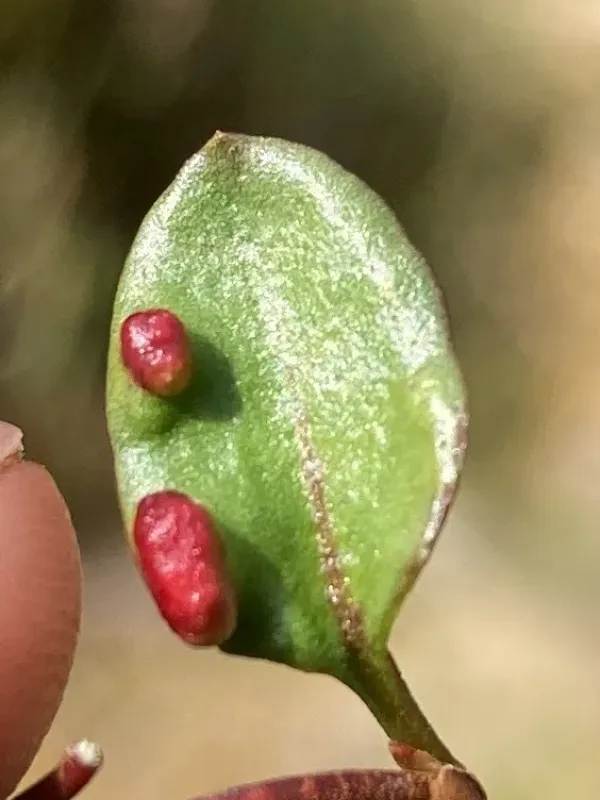
Description
How to identify
Gall mites (genus Eriophyes) are microscopic pests belonging to the Eriophyidae family. Measuring only 0.1 to 0.3 mm in length, they are invisible to the naked eye and require magnification to be identified.
They possess a unique worm-like body, usually yellowish or white, with only two pairs of legs situated at the front of the body, which distinguishes them from common spider mites.
The life cycle of these mites is intimately linked to their host plants. They overwinter in bark crevices, buds, or under bud scales, emerging to feed and reproduce as soon as temperatures rise in the spring.
These mites exhibit high host specificity, meaning most species are adapted to feed exclusively on one or a few closely related plant species, causing specialized tissue responses.
Reproduction is rapid, with multiple generations developing throughout the growing season. This high biotic potential allows infestations to spread quickly within a crop if left unmanaged.
What it damages
Gall mites primarily affect fruit trees (pear, apple) and various shrubs, including currants and grapes, leading to significant economic losses in both commercial and home orchards.
The mites feed by piercing plant cells and injecting enzymes that induce abnormal tissue growth, resulting in the formation of galls, which serve as both food sources and shelters for the colony.
By consuming plant sap, mites weaken the host plant, reducing its vigor and photosynthetic capacity. Heavy infestations can lead to stunted growth and reduced yields.
Specifically, bud-infesting species cause buds to swell and fail to open, which directly destroys future floral or vegetative development in the affected areas.
Plant health is further compromised as weakened tissues become highly susceptible to secondary infections by bacteria and fungi, which can exacerbate the damage.
Signs of infestation
The most visible symptom is the development of galls — abnormal growths or wart-like bumps on leaves, which may appear green, reddish, or even black depending on the plant species.
Leaves often become distorted, curled, or crinkled. This loss of surface area and structural integrity significantly impairs the plant's ability to produce energy through photosynthesis.
Infested buds appear enlarged, rounded, and dry, often failing to break dormancy. In severe cases, the entire shoot development is stunted and deformed.
Fruit may also be impacted, showing corky spots, discoloration, or irregular shapes, which diminishes the quality and market value of the harvest.
- Formation of leaf galls or irregular bumps.
- Swollen, deformed, or "blasted" buds.
- Curling and distortion of young apical leaves.
- Premature leaf drop and decreased overall plant vitality.
Control measures
Control of gall mites is challenging because the pests reside deep within plant tissues or inside galls, providing them with natural protection against surface-applied sprays.
The use of systemic acaricides is generally the most effective strategy, as these chemicals are absorbed by the plant and kill the mites as they feed on the sap.
Good agricultural practices are essential for suppression. This includes pruning and destroying severely infested branches and buds during the dormant season to reduce the population.
Preventative applications of sulfur-based products during the early spring bud-burst period can effectively target mites as they migrate from their overwintering sites.
It is vital to rotate different chemical classes of acaricides to prevent the development of mite resistance and to ensure long-term effectiveness of the integrated pest management program.
Content graph
Connections · Gall mite
Most often together:
Marketplace
Products · 1
Biology
Taxonomy
- Latin name
- Eriophyes
- Order
- Mites
- Family
- Eriophyidae
- EPPO code
- ERPHSP
Community
Discussion
No discussions yet — be the first.